
Pattadakal, on the banks of the Malaprabha River in Karnataka, is one of the finest examples of early Chalukya temple architecture. Here, temples built in the northern Nagara and southern Dravidian styles stand alongside one another, creating an extraordinary architectural landscape. Once an important ceremonial centre associated with the coronation of Chalukya kings, Pattadakal is now recognised as a UNESCO World Heritage Site.

The Group of Monuments at Pattadakal represents a remarkable period of architectural experimentation during the 7th and 8th centuries. The temples bring together different styles, designs and sculptural traditions, reflecting the artistic achievements of the Chalukyas.
A Morning at Pattadakal
In October 2019, my friend Amitabha and I visited Pattadakal on the final day of our North Karnataka trip. We had already explored Hampi, Lakkundi, Banashankari , Mahakuta and Badami. That morning, we started early from KSTDC Maurya in Badami and reached Pattadakal at around 9 AM.
Before entering the temple complex, we stopped for breakfast at Shivaprasad Bhojanalaya, just opposite the entrance to Pattadakal. We ordered puri-sabji, a simple and satisfying breakfast before setting out to explore the magnificent Chalukya temples.
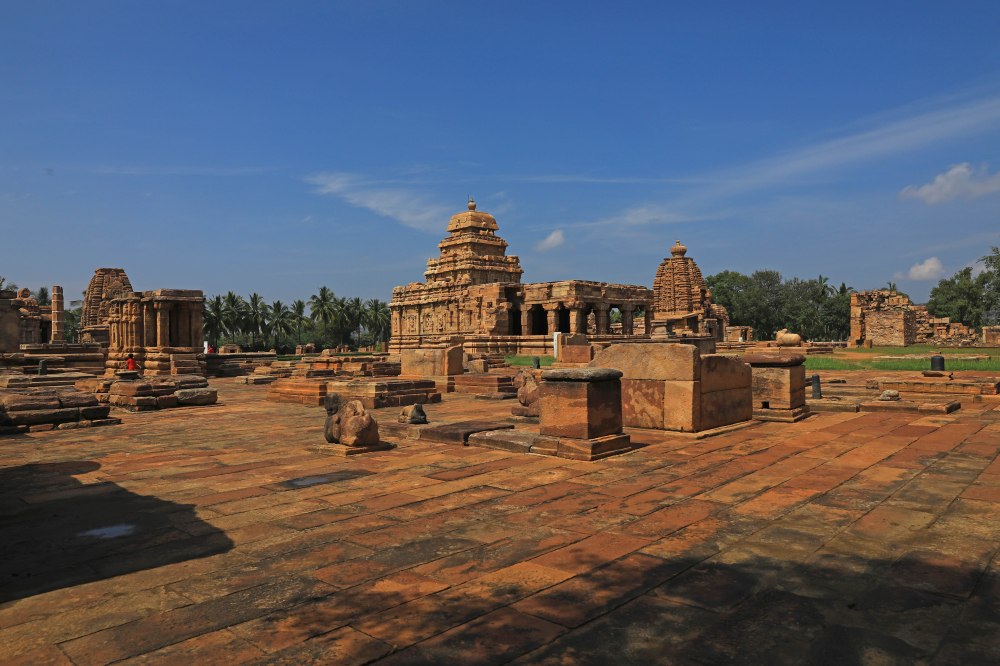
We bought our entry tickets and walked into the magnificent complex. There was already a crowd around the southern section, so we decided to begin our exploration from the northern end.
Pattadakal is often described as the meeting point of northern and southern Indian temple architecture. Walking through the complex, it becomes easy to understand why. The curvilinear towers associated with the northern Nagara tradition appear alongside the stepped, pyramidal vimanas of the southern Dravidian tradition.

The Northern Temples
Kadasiddheshvara Temple
We began with the Kadasiddheshvara Temple, a relatively small shrine with a northern-style tower. The eastern entrance is guarded by sculpted figures, while the exterior walls feature images of Hindu deities, including Harihara and Lakulisha.
Despite its modest size, the temple offers a good introduction to the architectural vocabulary found across Pattadakal.
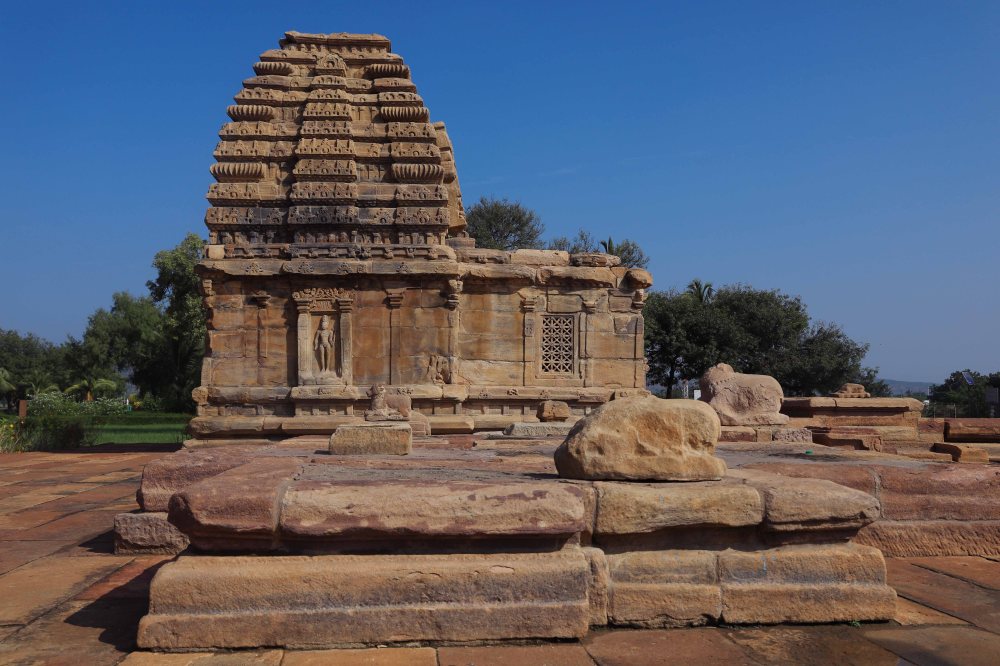

Jambulinga Temple
A short walk away stands the Jambulinga Temple. It follows a structural pattern similar to that of Kadasiddheshvara, with a curvilinear tower characteristic of the Nagara style.
The exterior walls feature sculptures of deities such as Surya and Vishnu. The temple is small, but its proportions and decorative details make it an interesting stop.

Galaganatha Temple
The Galaganatha Temple is one of the most striking structures in this northern group. Built in the Nagara tradition, it stands on a raised platform and has an elaborate tower.
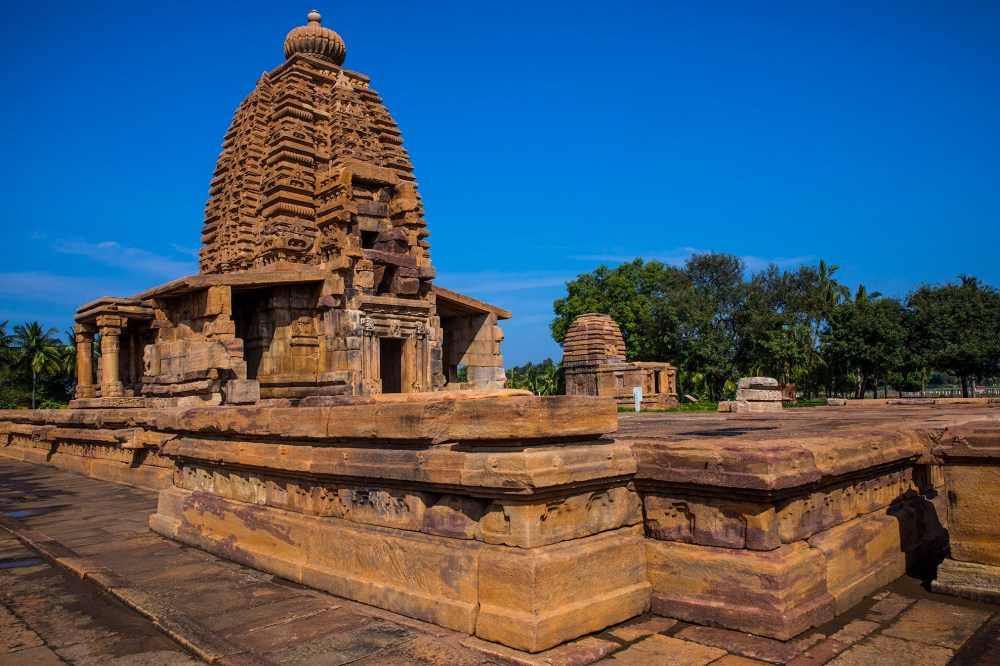
What caught my attention was a sculpture on the southern wall. Shiva is shown attacking the demon Andhaka, wearing a garland of skulls. The dynamic composition gives the sculpture a sense of movement and drama.
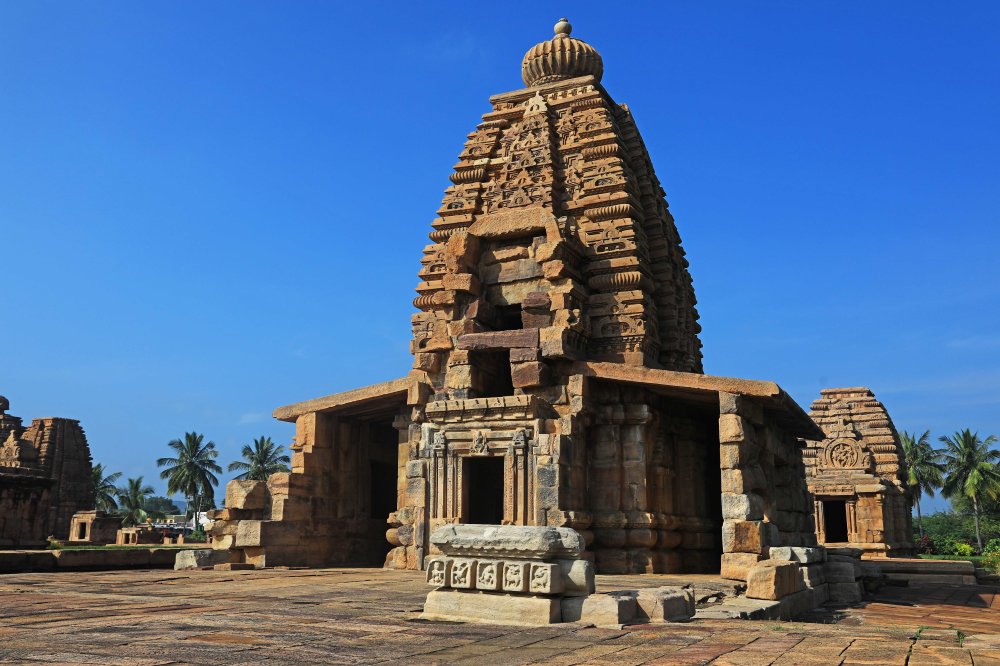
It is one of those details that makes a slow walk around an old temple so rewarding. The overall structure is impressive, but the smaller sculptural stories often stay with you longer.

Chandrasekhara Temple
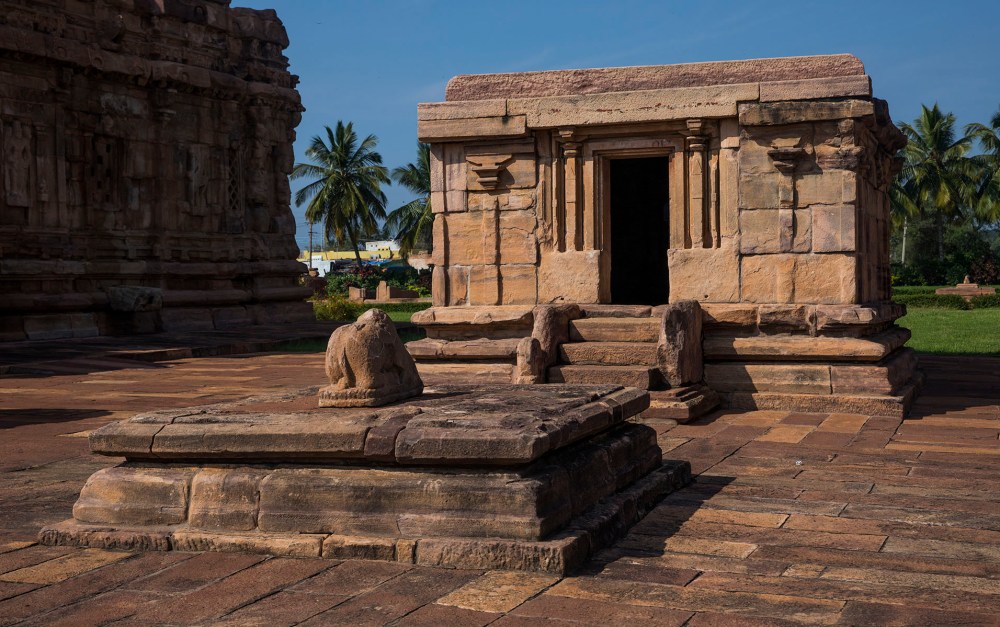
The Chandrashekhara Temple is a relatively plain structure compared with some of its neighbours. Its modest exterior and limited ornamentation make it easy to overlook, but it is an important part of the architectural ensemble.
The temple is generally dated to a later phase of the Pattadakal complex.
Sangameshvara Temple
Moving further south, we reached the Sangameshvara Temple, also known historically as Vijayeshvara. It was commissioned by the Chalukya king Vijayaditya and is among the earliest major structural temples at Pattadakal.
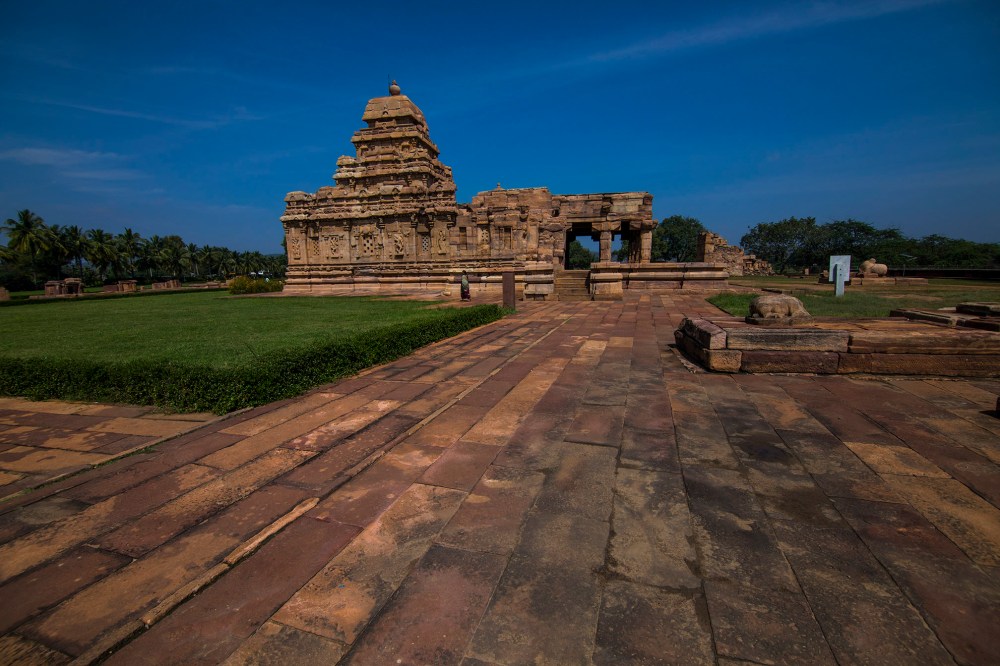
The temple remains unfinished, but that does not take away from its architectural significance. Its imposing proportions, columned hall and richly decorated exterior walls make it one of the most interesting monuments in the complex.

The walls feature several sculptural panels, including Shiva spearing Andhaka, dancing Shiva, Ardhanarishvara and images of Vishnu and Varaha. The perforated stone windows are particularly attractive, with bold geometric patterns that allow light to enter the interior.
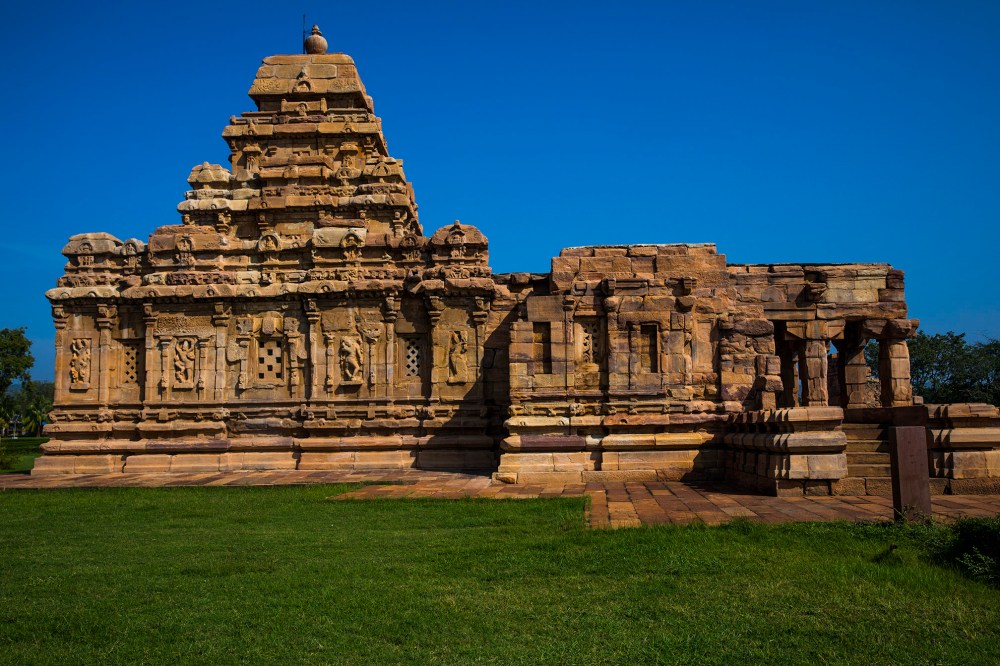
I found the temple impressive even in its unfinished state. Its scale and sculptural details offer a glimpse of the ambition and craftsmanship behind early Chalukya temple building.
Kashi Vishvanatha Temple
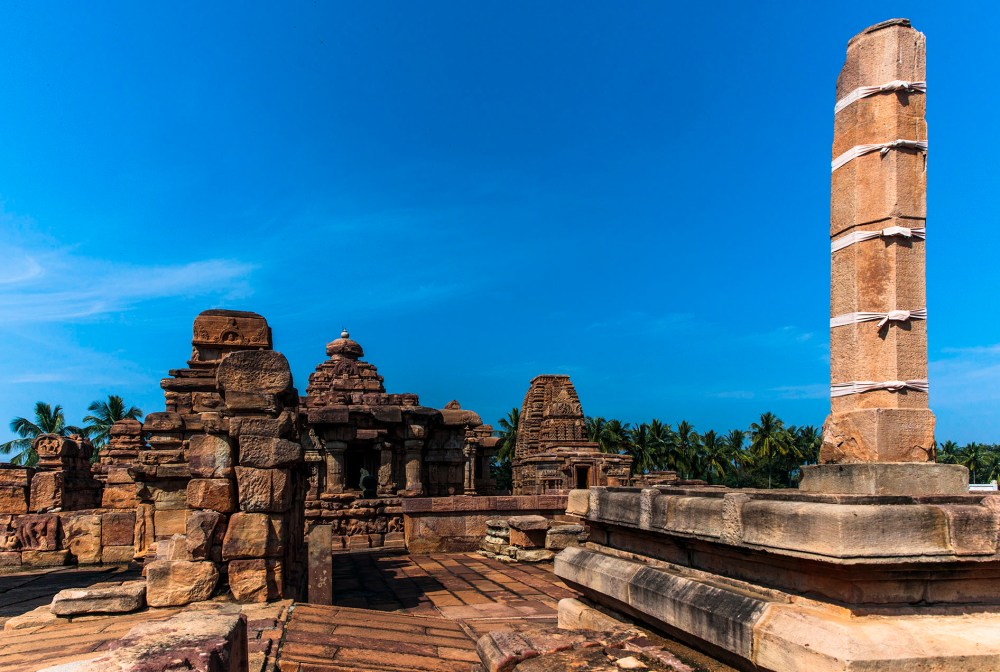
The Kashi Vishvanatha Temple represents the northern Nagara tradition within the Pattadakal complex. It consists of a sanctuary and a small mandapa, with a tower that rises above the shrine.
The exterior walls have a series of shallow projections and decorative architectural motifs. Inside, the pillars are particularly noteworthy. Their surfaces carry intricate carvings and sculptural panels inspired by stories from Hindu mythology.
The temple is a fine example of how the architects of Pattadakal experimented with different architectural forms within the same sacred landscape.
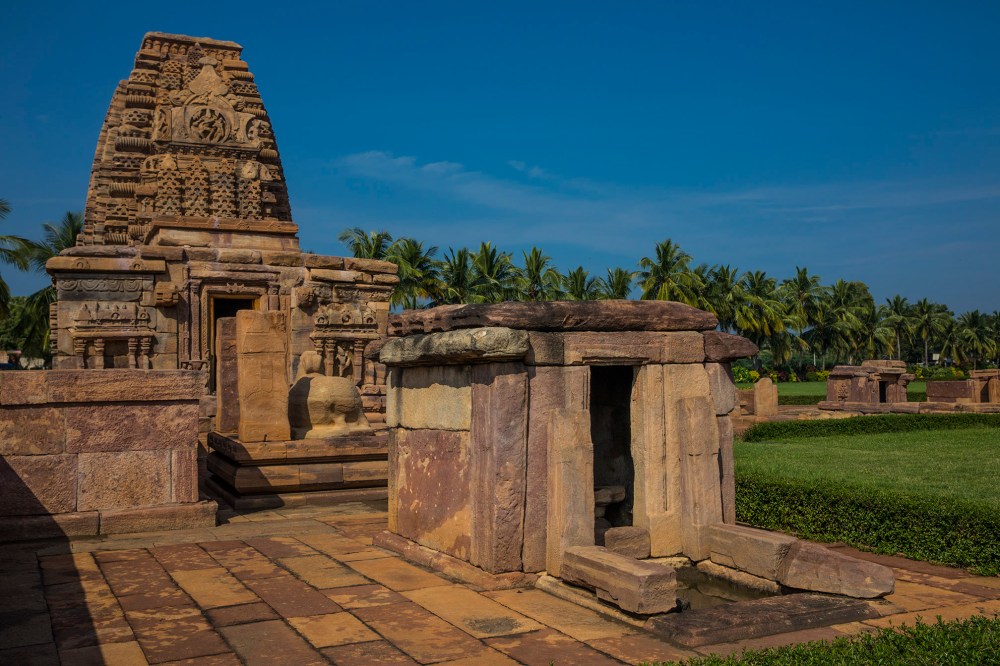
Virupaksha Temple: The Grandest Monument at Pattadakal
The Virupaksha Temple is undoubtedly the centrepiece of Pattadakal. Commissioned by Queen Lokamahadevi around 740 CE, it was built to commemorate the military victories of her husband, Chalukya king Vikramaditya II.
The temple is an outstanding example of the southern Dravidian style. Its architectural plan includes an entrance gateway, a Nandi pavilion, a pillared mandapa, an antechamber and the main sanctum. The different sections are aligned along an east-west axis.

The exterior walls are covered with sculptures depicting episodes from Hindu mythology. Images of Shiva in different forms, along with other deities and mythological figures, decorate the temple.

The interior is equally fascinating. The pillars carry elaborate carvings depicting stories from the Ramayana and the Mahabharata. Walking through the mandapa, I found myself looking closely at the individual panels, each telling a story through stone. Scenes from the Ramayana and the Mahabharata unfold across the stone surfaces, bringing familiar mythological stories to life. It was fascinating to pause and examine the craftsmanship rather than simply walk through the temple.

The Nandi pavilion stands in front of the temple, with a large sculpture of Nandi facing the main shrine. The pavilion is an architectural feature in its own right, and its position adds to the grandeur of the entire complex.

The Virupaksha Temple is often compared with the Kailasanatha Temple at Kanchipuram. Its architectural influence is also associated with the later Kailasa Temple at Ellora.

Mallikarjuna Temple
Next to the Virupaksha Temple stands the Mallikarjuna Temple, commissioned by Queen Trailokyamahadevi, another queen of Vikramaditya II.
The temple shares several architectural features with Virupaksha, although it is smaller. Its richly decorated pillars and sculptural panels make it another remarkable example of Chalukya craftsmanship.
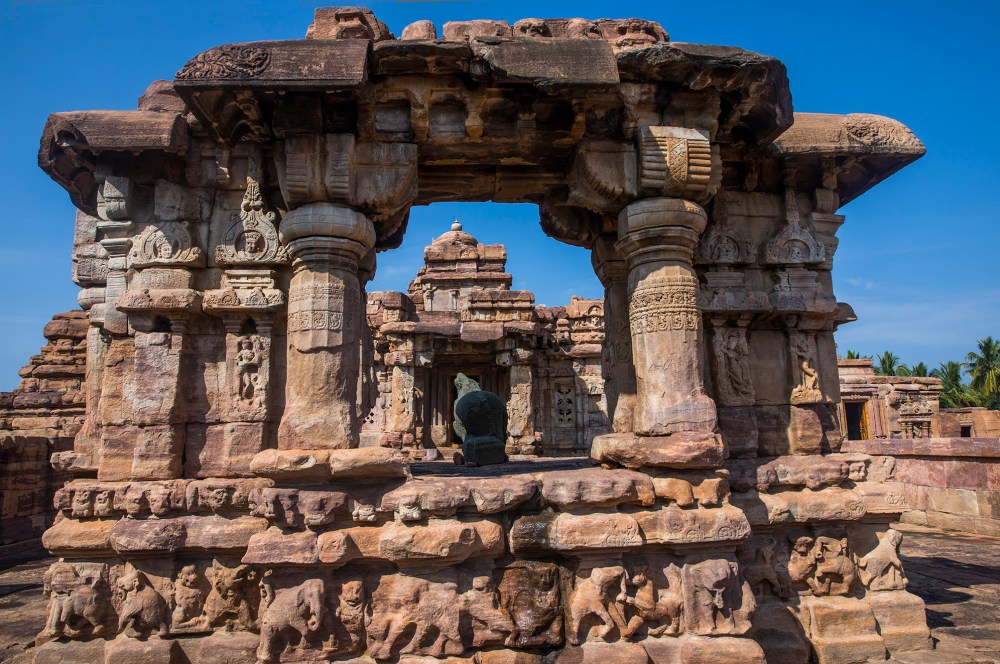
The walls and columns contain scenes from Hindu mythology, including episodes associated with Krishna and the Puranas. I particularly enjoyed examining the smaller carvings along the passageways. Some of these details are easy to miss unless you take your time.
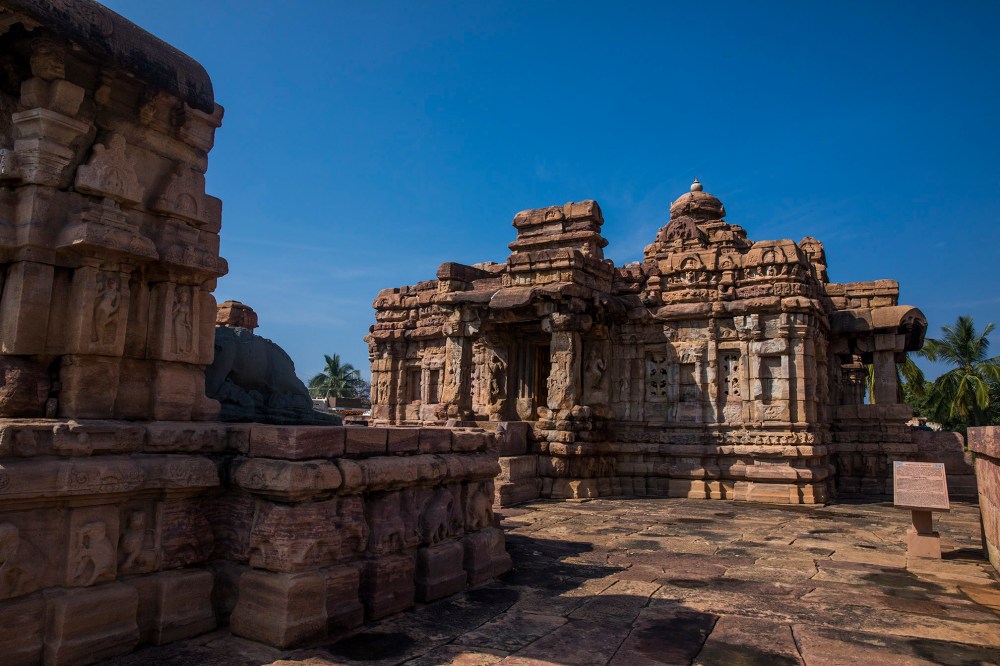
The Mallikarjuna and Virupaksha temples together demonstrate the artistic achievements of the Chalukya period and the patronage extended by its royal women.
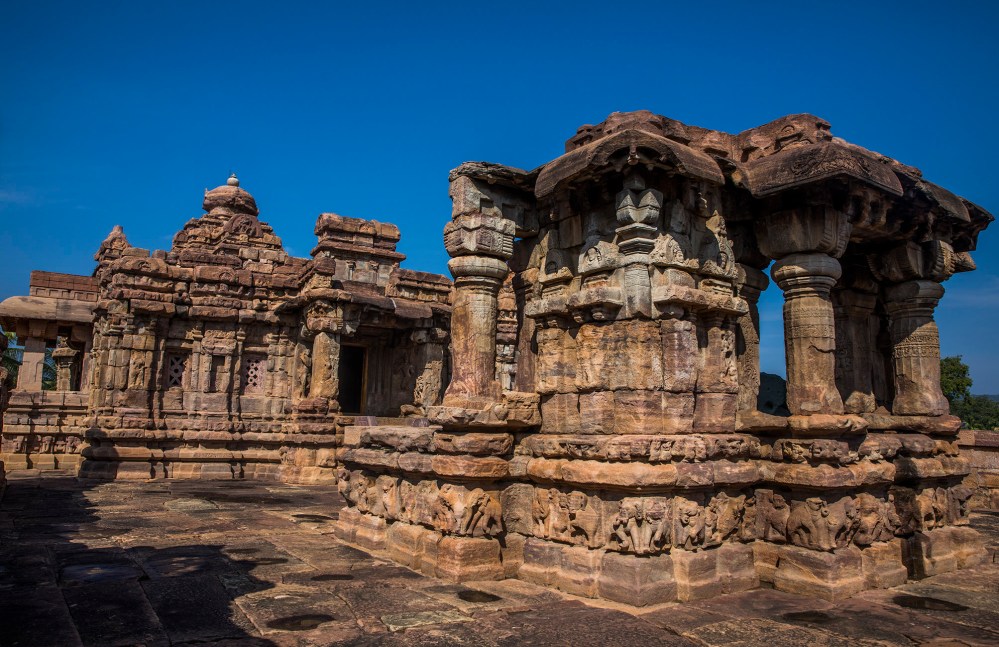
Beyond the Main Temple Complex
After exploring the main group of temples, we left the central enclosure to visit two more important monuments in the surrounding area. These structures are also part of the wider Pattadakal heritage landscape.
Papanatha Temple
Our first stop was the Papanatha Temple, located a short distance from the main group.
Unlike the larger Virupaksha Temple, Papanatha is particularly interesting for its combination of architectural elements. Its design brings together features associated with the Nagara and Dravidian traditions.
The temple stands on a raised platform and has a series of mandapas. Its exterior walls are decorated with sculptural panels and ornamental motifs. Scenes from the Ramayana are among the highlights.
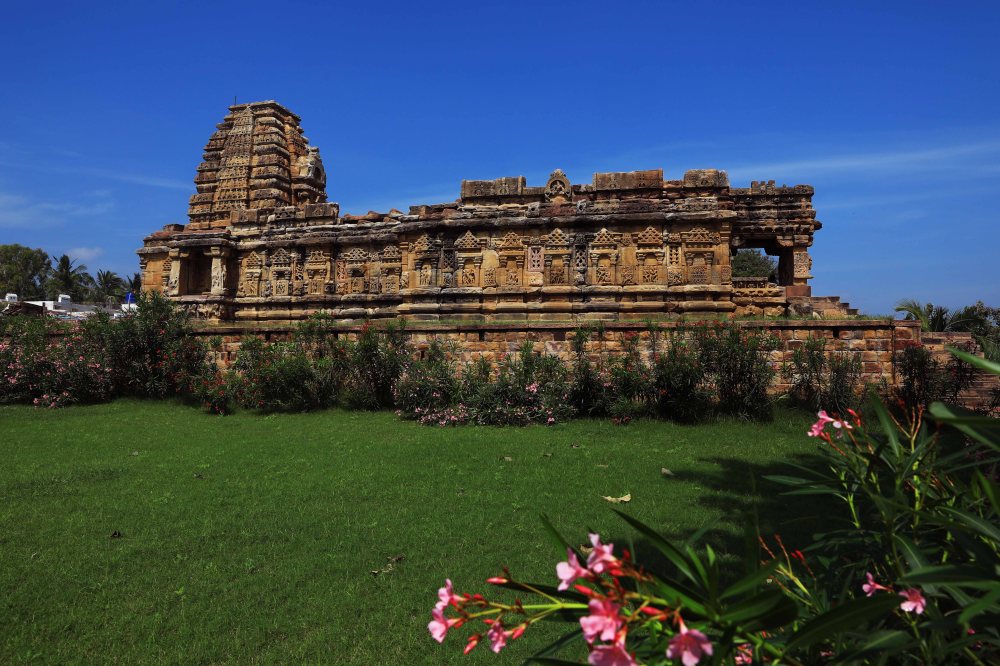
I was especially interested in the arrangement of the mandapas. I had not come across this particular combination before, and it made the temple worth exploring at a leisurely pace.
Jain Temple
Our final stop was the Jain temple, located close to the main group. Also known as the Jaina Narayana Temple, it belongs to a later phase of the region’s architectural history and is generally associated with the Rashtrakuta period.
Its presence is a reminder that Pattadakal was not associated with a single religious tradition. The wider monument group reflects the region’s diverse religious and cultural history.

Leaving Pattadakal
By around 12.30 PM, we had finished exploring the temples. It was time to leave for Aihole, the next stop on our North Karnataka heritage trail.
Looking back, Pattadakal was a fitting conclusion to our exploration of the Chalukya heritage of the region. If Aihole offered a glimpse of architectural experimentation and Badami revealed the splendour of rock-cut and structural monuments, Pattadakal brought together many of those ideas in a remarkable collection of temples.
The place is not just about individual monuments. It is about seeing how different architectural traditions developed, interacted and eventually produced some of the finest temple architecture in the Deccan.
For anyone interested in history, architecture or heritage travel, Pattadakal deserves more than a hurried visit. Give yourself time to walk around the temples, study the sculptures and notice the details. There is much more to discover than what first meets the eye.
Tramp’s Tips
- Best time to visit: October to February, when the weather is relatively pleasant. Start early to explore the monuments comfortably.
- How to reach: Pattadakal is around 22 km from Badami. Hiring a taxi or taking a local vehicle is a convenient option. Aihole is approximately 10–15 km away.
- Time required: Keep at least 2–3 hours for the temple complex. Architecture enthusiasts may want to spend longer.
- What to look for: Don’t miss the sculptural details inside Virupaksha Temple, the unfinished Sangameshvara Temple and the distinctive architecture of Papanatha Temple.
- Food: Shivaprasad Bhojanalaya, just opposite the temple complex, is where we enjoyed puri-sabji for breakfast.
- Photography: Carry a camera or phone with sufficient storage. There are plenty of architectural details worth photographing.
- Nearby attractions: Combine Pattadakal with Badami and Aihole for a rewarding Chalukya heritage circuit.
Traveller’s advice: Wear comfortable footwear, carry drinking water and allow yourself enough time to explore the temples without rushing. The details are best appreciated at a leisurely pace.
Reference:
- Badami Aihole Pattadakal by George Michell


[…] trail was coming to an end. We had started the day in Badami, visited the magnificent temples of Pattadakal, and were now heading towards […]
LikeLike
[…] We had included Mahakuta in our North Karnataka heritage circuit, which also covered Hampi, Badami, Pattadakal and Aihole. Little did I know that this quiet village would give me one of the most memorable […]
LikeLike