
One of the popular sayings in India goes, “Your pilgrimage is possible only after God summons you.” For Amitabha Gupta, my friend and fellow traveller, and me, discovering architectural treasures in lesser-known places is a pilgrimage of its own.
After an extensive trip through Hampi, we were driving towards Badami when a friend suggested that we visit Lakkundi, a village in Karnataka’s Gadag district. A quick search revealed a remarkable collection of temples built during the Western Chalukya, or Kalyani Chalukya, period. The Lakkundi temples are among the finest surviving examples of Kalyani Chalukya architecture, with beautifully carved shrines, Jain monuments and historic stepwells. We looked at each other and decided: “Let’s Lakkundi!”

A Little History of Lakkundi
Lakkundi, historically known as Lokki-gundi, flourished between the ninth and fourteenth centuries. It became an important centre under the Later Chalukyas of Kalyana, whose rulers and patrons supported temple building, Jain institutions and Kannada literature.
The village is particularly associated with the eleventh and twelfth centuries, when its temples and stepped wells reflected the remarkable craftsmanship of the period. One of its most celebrated historical figures was Dana Chintamani Attimabbe, a Jain patron of religion and literature. She supported the Kannada poet Ranna and is associated with the establishment of Brahma Jinalaya in 1007 CE.
Today, Lakkundi is a quiet village, but its architectural remains reveal the importance it once enjoyed as a centre of religion, learning and craftsmanship.
Finding the Temples
Lakkundi was not as easy to explore as we had expected. We used Google Maps, but only a few temples were marked, and the narrow village lanes made navigation difficult. Neither Amitabha nor I knew Kannada, and communicating our requirements to local residents was not always easy.
Fortunately, our driver came to our rescue. After understanding what we wanted to see, he helped us find our way through the village. There were around twenty temples scattered across the settlement, and we managed to visit seven of them.
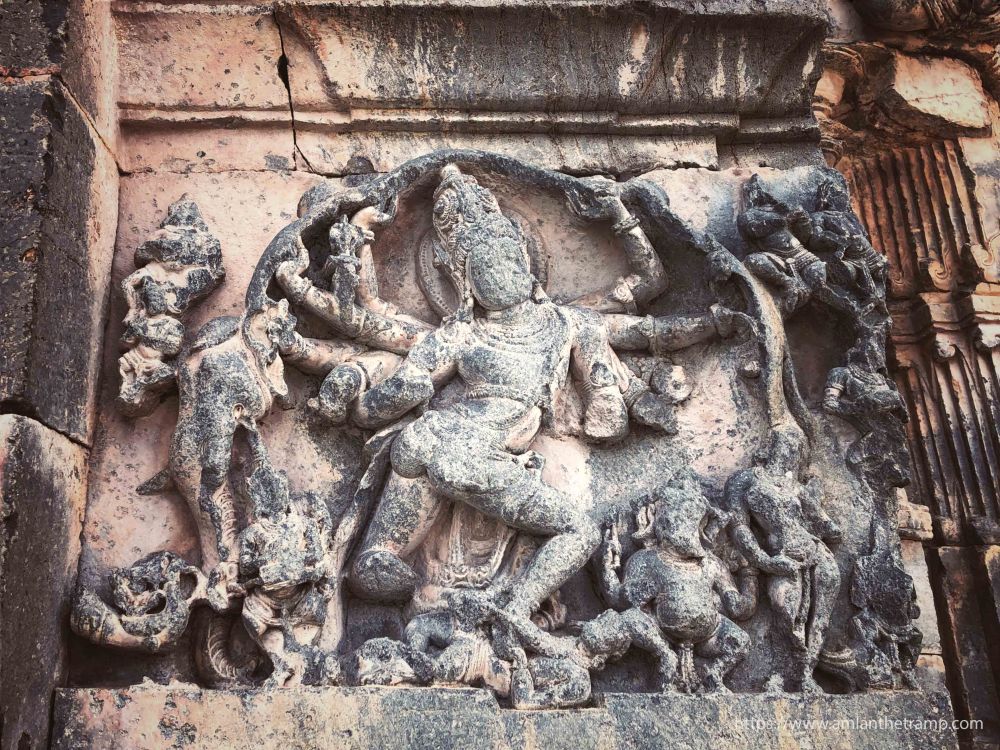
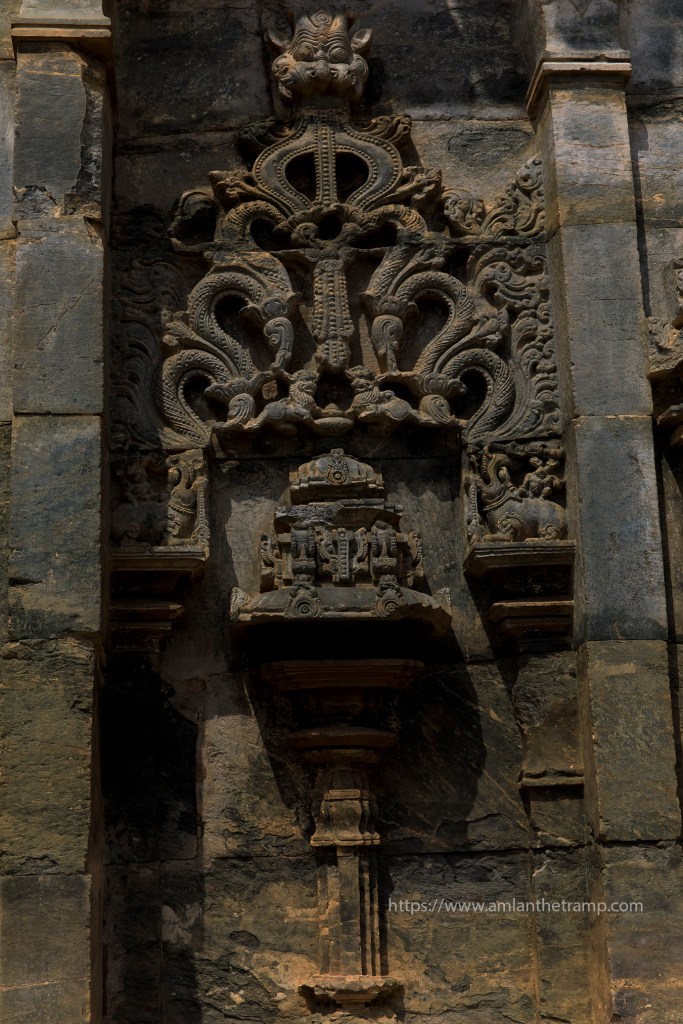
One detail that caught my attention was the frequent appearance of Kirtimukha, the fierce face known as the “Face of Glory”. Usually associated with Shaivite temples, these decorative motifs appear in different forms across Lakkundi’s monuments, including its Jain temples. Their variety made me think of Lakkundi as the Land of Kirtimukha.
Brahma Jinalaya: A Jain Architectural Treasure
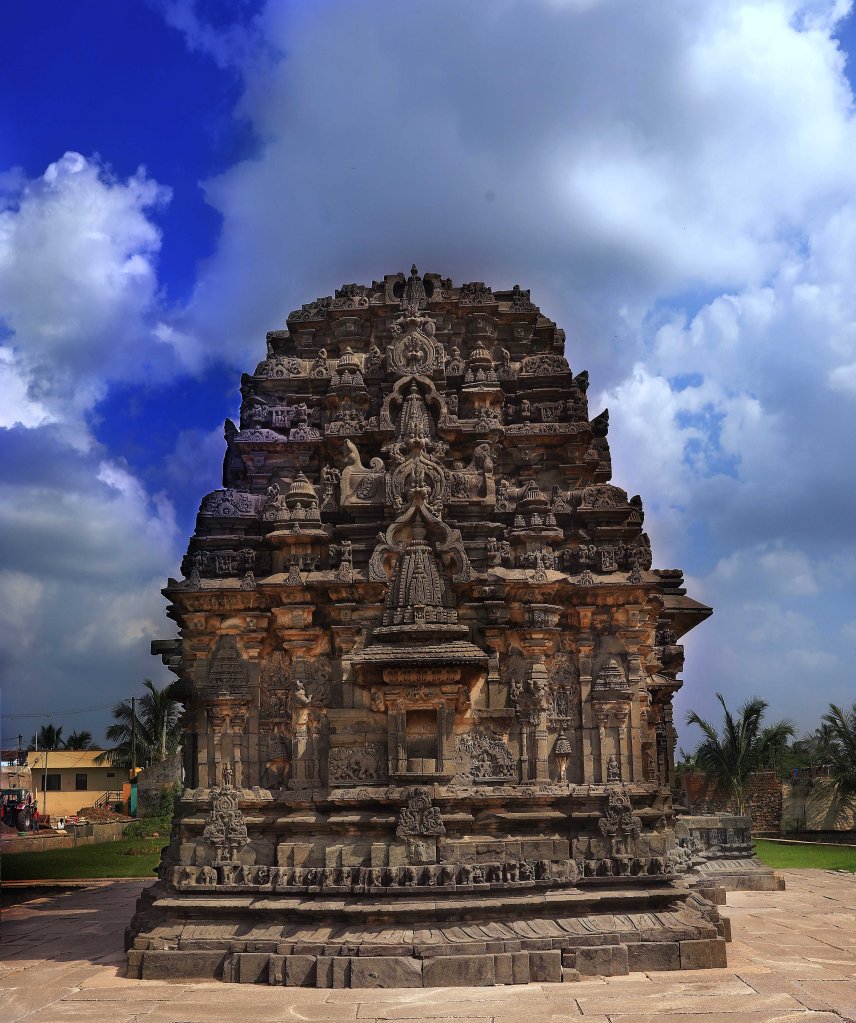
Our first stop was Brahma Jinalaya, situated behind the Archaeological Survey of India office. Associated with Dana Chintamani Attimabbe, it is one of the most important Jain monuments in Lakkundi and a fine example of Kalyani Chalukya architecture.
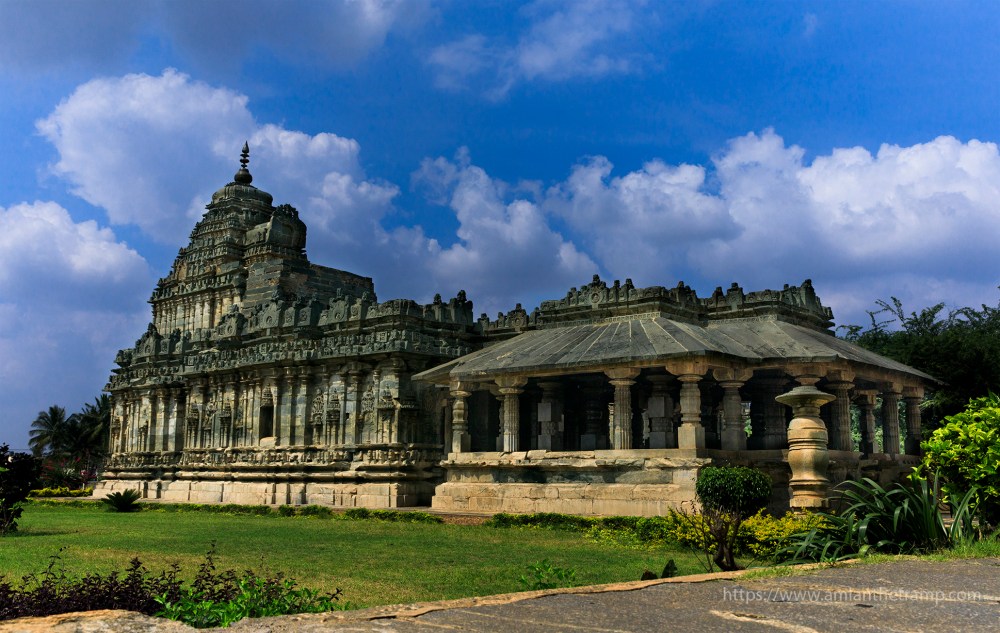
We crossed the entrance and climbed a few steps to reach the main hall, or mukhamandapa. Its thirty-two polished pillars immediately caught my attention. The doorway of the antechamber features Gajalakshmi, while the main sanctum doorway carries a Jain image on its lintel.
The temple’s interior, particularly its doorways, pillars and sanctum, displays an extraordinary attention to detail. The multi-storeyed tower above the sanctum adds to its architectural character.
There is also a smaller, partly ruined shrine to the north of the main temple. A damaged Jain image rests on its remaining platform, offering a reminder of how much of Lakkundi’s heritage has survived only in fragments.
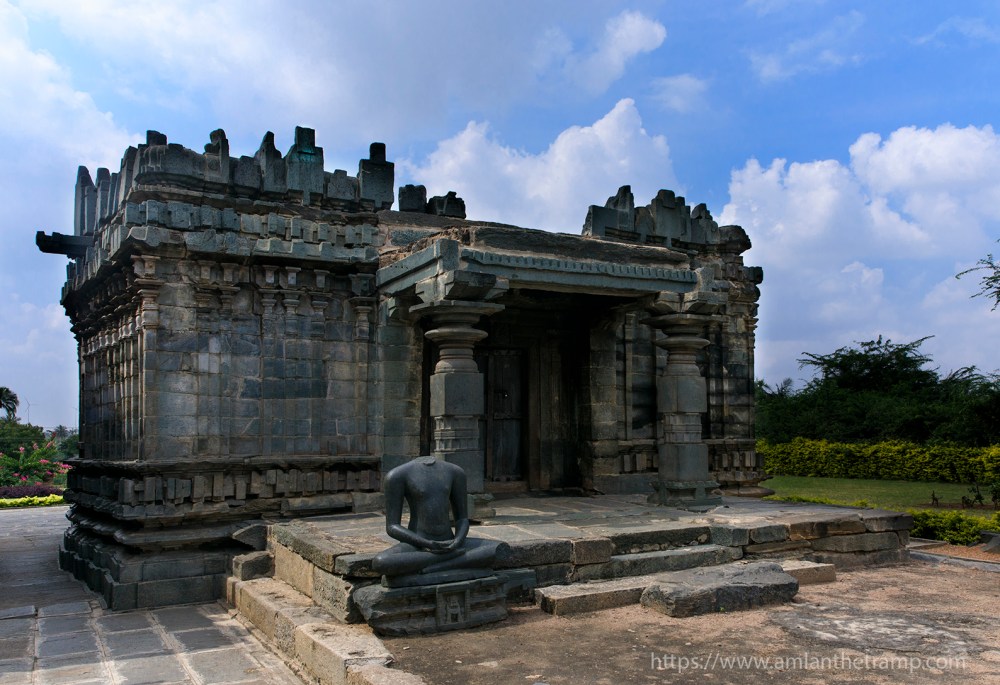
Nanneshwara and Kashi Vishveshwara Temples
A local man working with the ASI told us that Nanneshwara and Kashi Vishveshwara were among Lakkundi’s most important temples. The two monuments face each other, making it easy to explore them together.
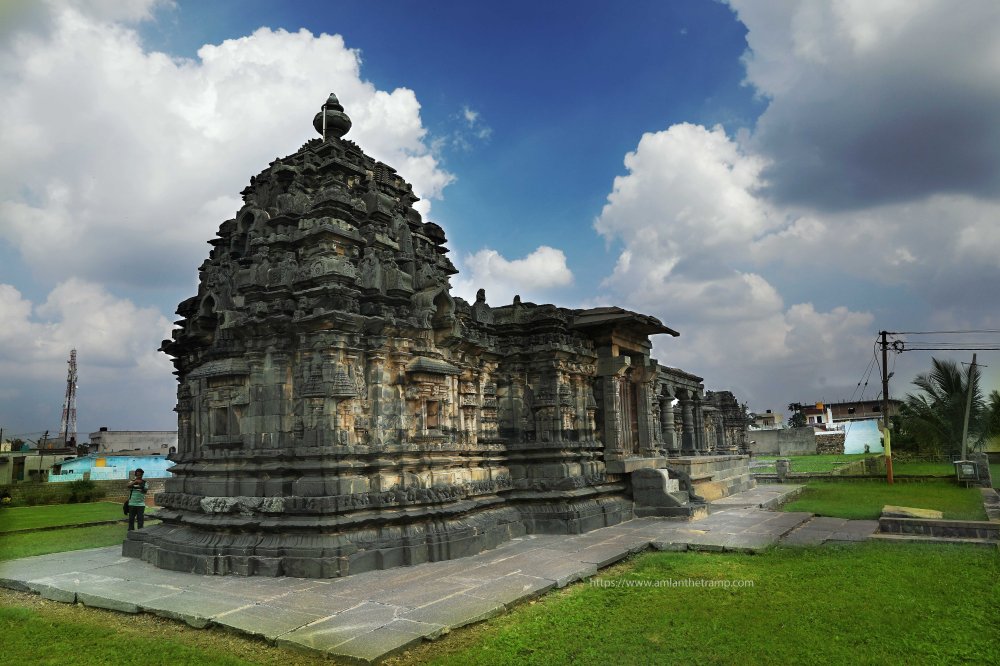
We entered Nanneshwara Temple first. Built on a raised platform, it has a sanctum, an antechamber and pillared halls. The polished pillars and decorative doorways were particularly appealing. I also liked the small shrine-like niches on the exterior walls.
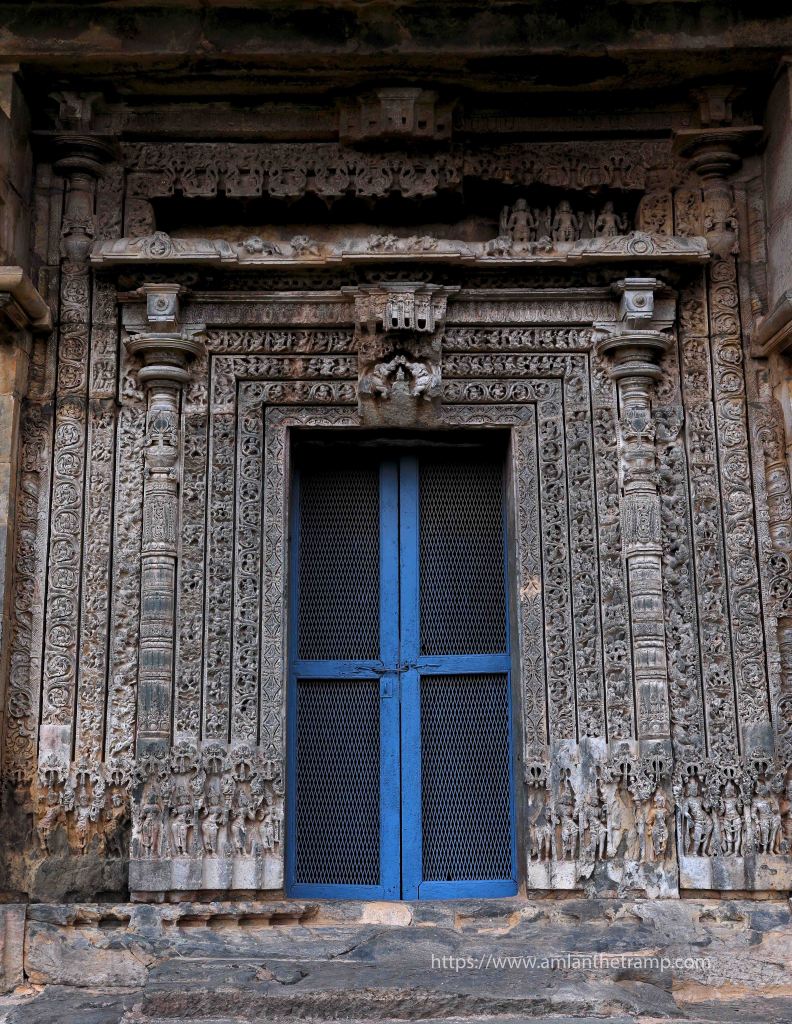
Across from it stood the magnificent Kashi Vishveshwara Temple, accompanied by the Surya Narayana shrine. The temples share a mandapa, creating an interesting architectural arrangement.
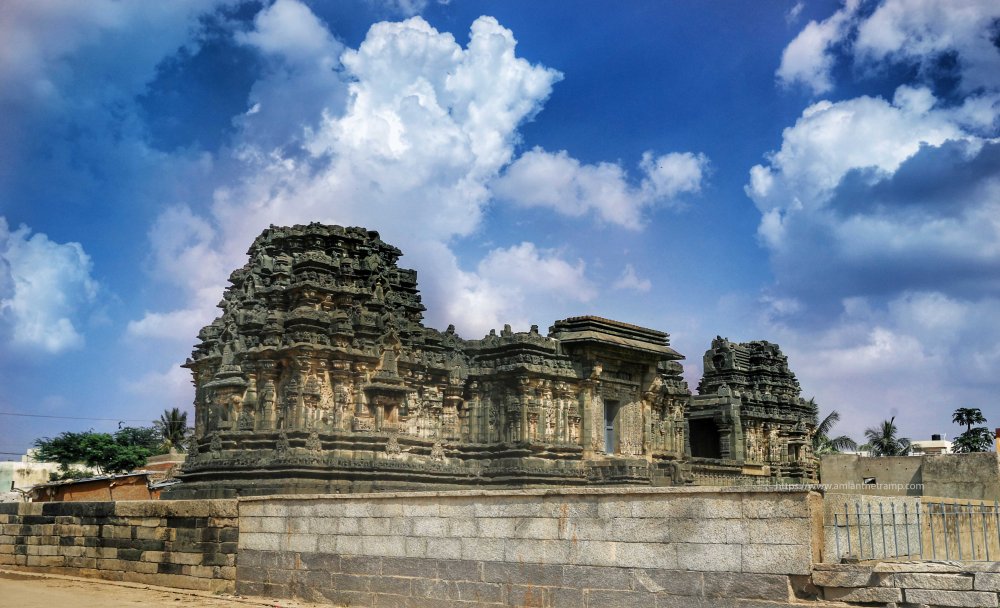
Kashi Vishveshwara was one of the finest examples of the decorative craftsmanship we encountered in Lakkundi. Its doorways, pillars and richly sculpted exterior walls deserve a leisurely look. Among the sculptures, the Dashamahavidya panel was my favourite. Unfortunately, several of the exterior carvings have suffered damage over time.
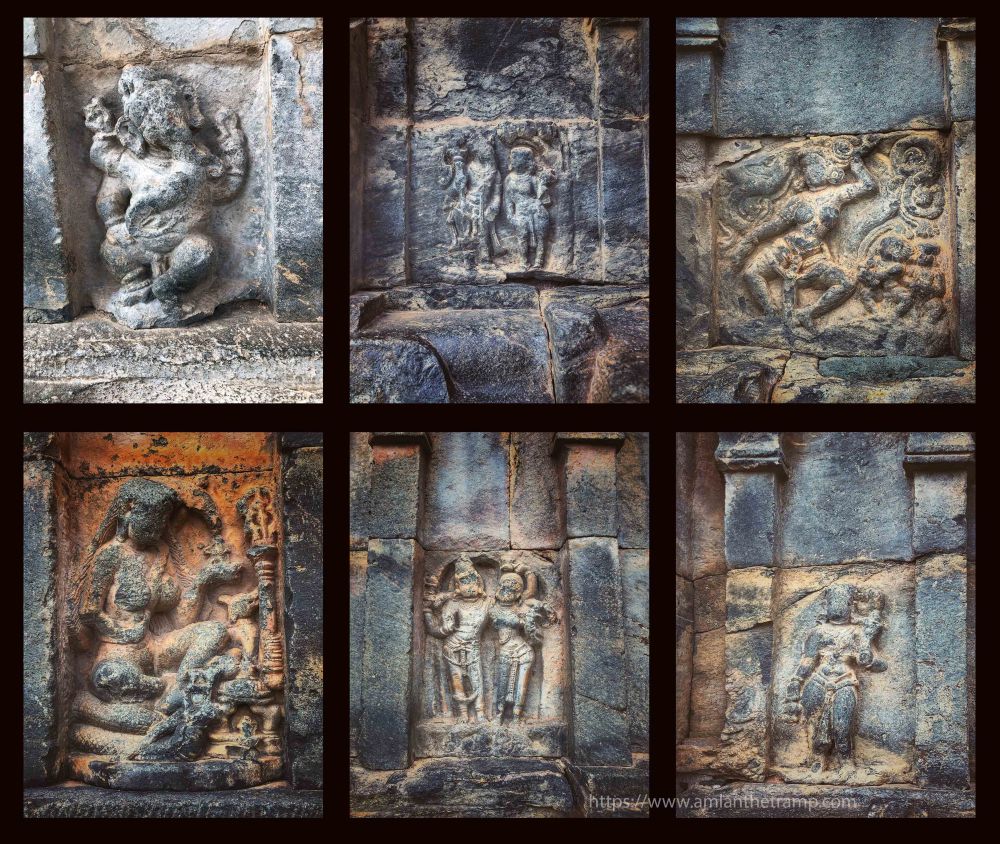
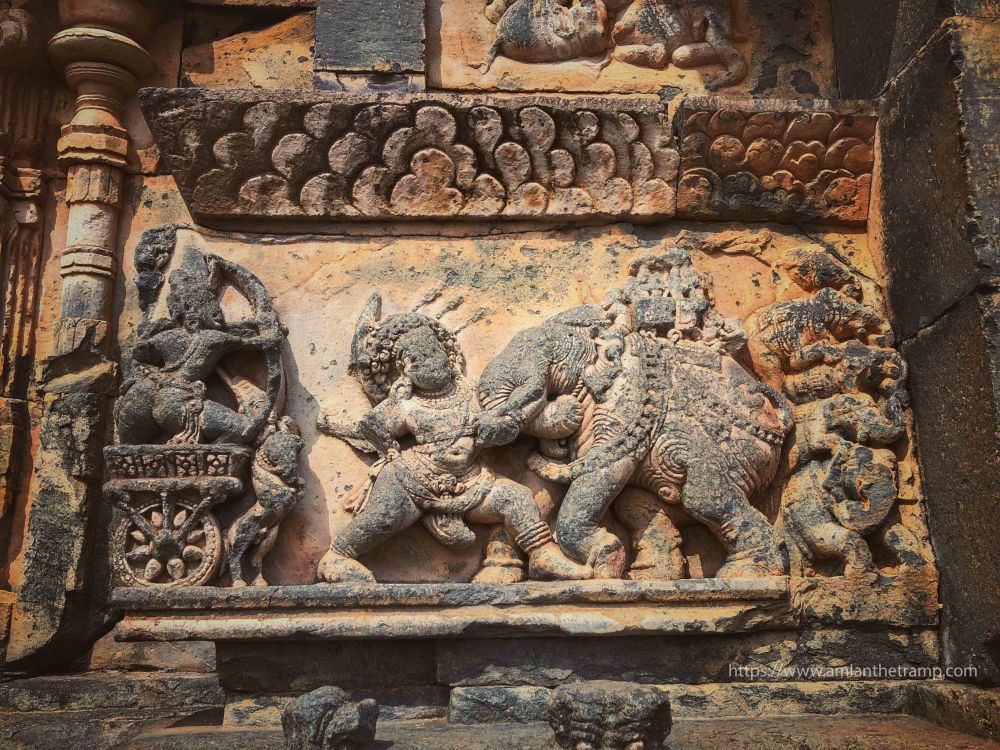
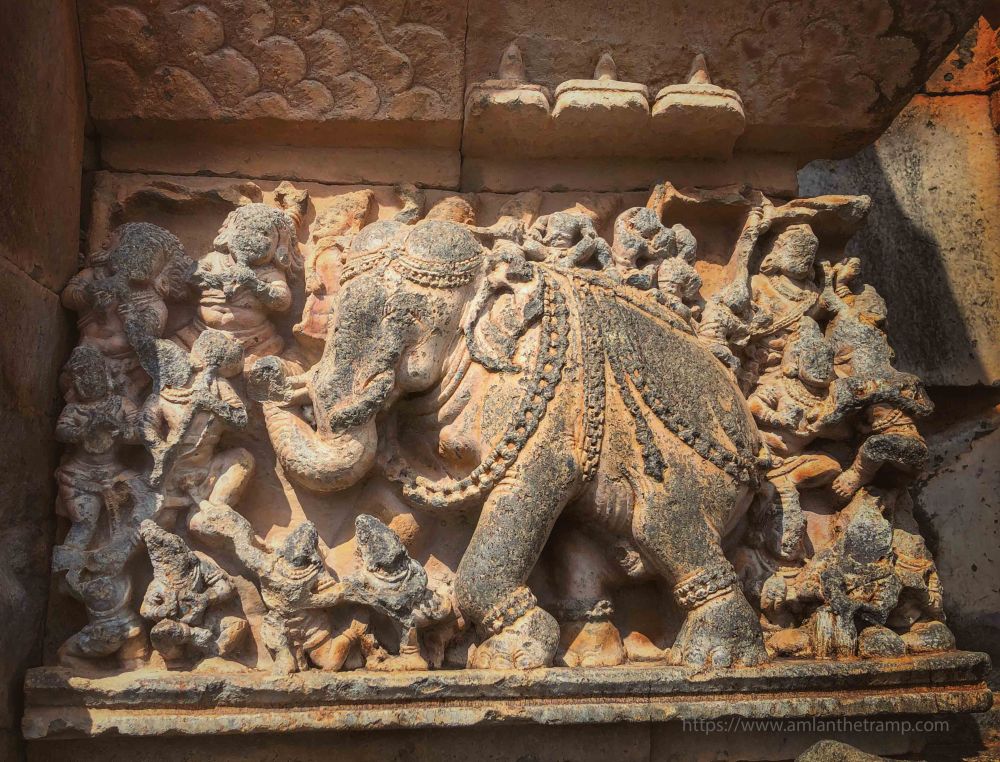
The Surya Narayana shrine, which faces west, struck me as unusual. Amitabha reminded me of the Martand Sun Temple in Kashmir, which also faces west. We found no deity inside the Surya Narayana shrine.
The Temples Along the Village Lanes
Our exploration continued through the narrow lanes. We walked towards Halugonda Basaveshwara Temple, but maintenance work prevented us from going inside.
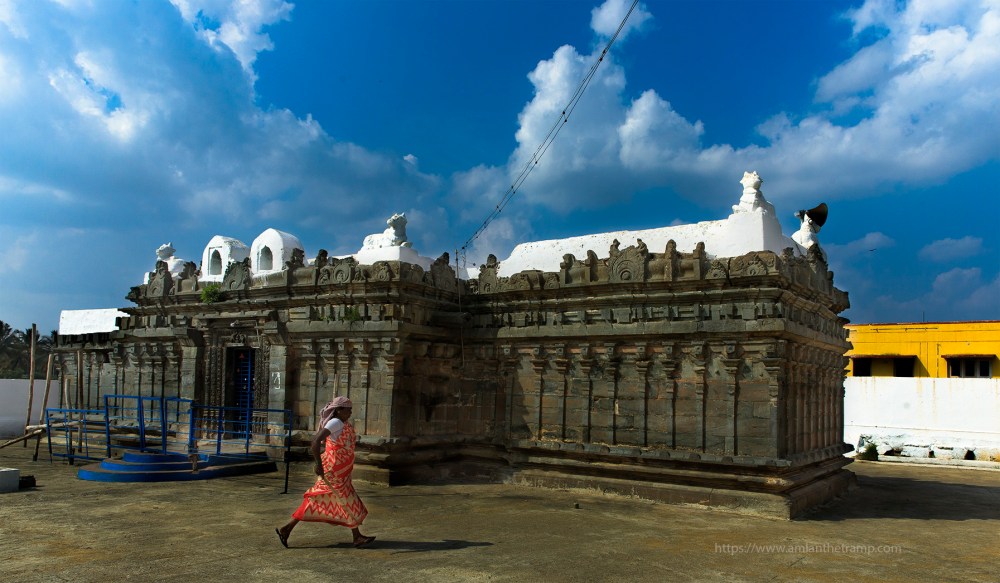
We then headed to Virupaksha Temple. It was not particularly impressive to us, and a parked car in front of the monument did little to improve the view!
Next came Manikeshwara Temple, set within a large complex. It is a triple-shrine temple, although the towers above its sanctums have not survived. The exterior is relatively restrained compared with some of the other monuments we had seen.
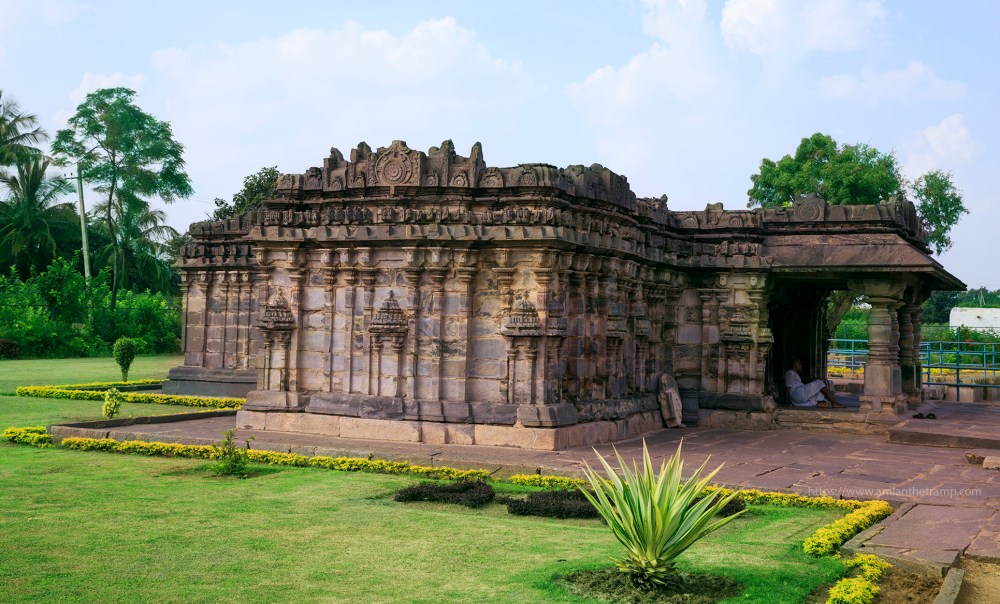
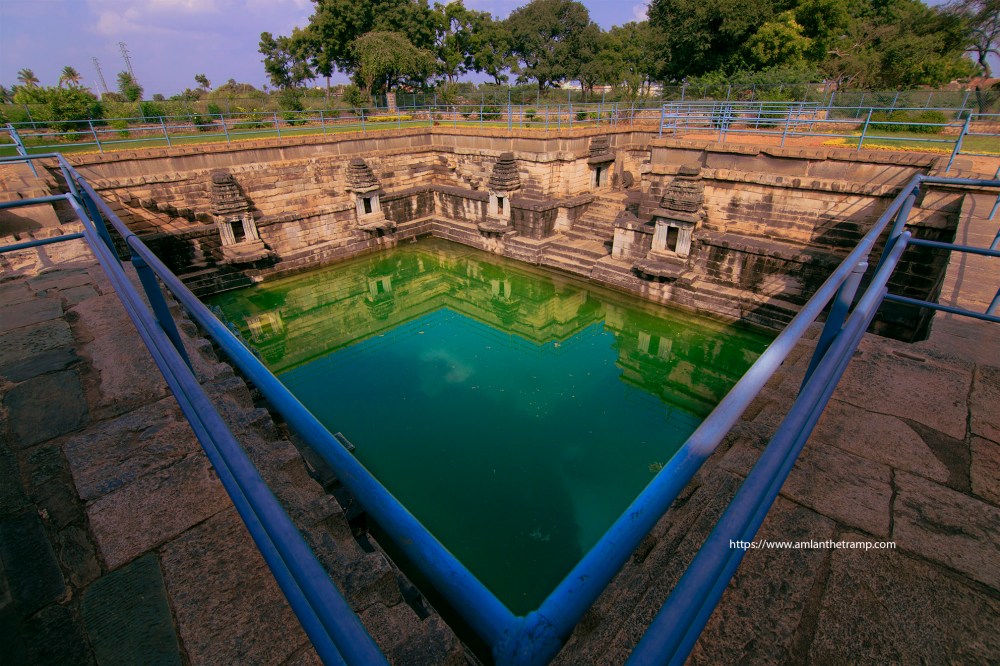
The real attraction here was Musukina Bavi, a beautiful stepped well. Its carefully arranged stone steps and architectural details made it one of the most memorable structures of our visit. Lakkundi is well known for its historic wells, which were not merely water sources but also impressive works of architecture.
An Unexpected End to Our Exploration
Time was running out, but we decided to make one final stop at Kumbareshwara Temple. Like Manikeshwara, it is a triple-shrine structure. Much of its original architectural detail has been lost, and the temple appeared neglected during our visit.
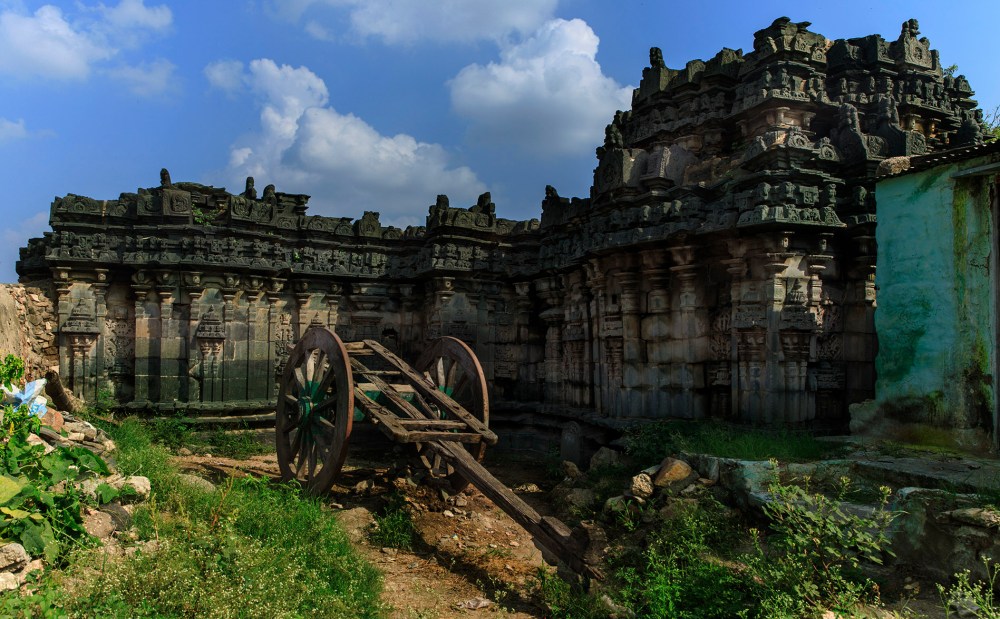
As we entered, we encountered snakes. That was quite an unexpected way to end our temple trail! We decided not to linger and soon called it a day.
After exploring seven temples and discovering the remarkable heritage hidden in Lakkundi’s lanes, we finally headed towards Badami. Before leaving, we called the friend who had suggested the detour and thanked him for introducing us to this fascinating village.
Lakkundi may not enjoy the same popularity as Hampi or Badami, but its temples, Jain heritage, intricate sculptures and stepped wells make it a rewarding destination. Sometimes, the most memorable discoveries happen when we take an unexpected turn along the way.
Tramp’s Tips
- Location: Lakkundi, Gadag district, Karnataka.
- Nearest town: Gadag, approximately 12 km away.
- Getting there: A taxi or private vehicle from Gadag is convenient for exploring the scattered monuments.
- Best time: October to February is generally comfortable for exploring.
- Don’t miss: Brahma Jinalaya, Kashi Vishveshwara, Nanneshwara and Musukina Bavi.
- Time required: Allow at least half a day for a relaxed exploration.
- Nearby destinations: Badami, Aihole and Pattadakal can be combined into a wider North Karnataka heritage trip.
Traveller’s advice: Many temples are scattered through narrow village lanes. Keep some extra time for finding the monuments, wear comfortable footwear and consider hiring a local guide if available.
References:
Lakkundi: Hallelujah in Stone by Amitabha Gupta


[…] attractions: Combine Aihole with Badami, Pattadakal, Lakkundi and Mahakuta for a rewarding North Karnataka heritage […]
LikeLike
[…] I visited Pattadakal on the final day of our North Karnataka trip. We had already explored Hampi, Lakkundi, Banashankari , Mahakuta and Badami. That morning, we started early from KSTDC Maurya in Badami and […]
LikeLike
[…] evening, my senior friend Amitabha and I had arrived in Badami by car from Hampi, stopping at Lakkundi along the way. We checked into Hotel Maurya, run by KSTDC. During dinner, we noticed a group of […]
LikeLike