
Right after we entered the gate of the Badami cave temples a monkey greeted us with what looked like a mischievous smile. It was hardly the welcome I had expected!
The previous evening, my senior friend Amitabha and I had arrived in Badami by car from Hampi, stopping at Lakkundi along the way. We checked into Hotel Maurya, run by KSTDC. During dinner, we noticed a group of school students whose teacher was explaining the do’s and don’ts of their visit, including how to behave around monkeys.
I was less worried about the monkeys than about the possible chaos of sixty teenagers exploring the caves at the same time. When I mentioned this to Amitabha, he calmly reminded me that three students were sharing a room. They would need some time to get ready in the morning, he reasoned, so we could start early!
We did exactly that. Before sunrise, we drove to Banashankari Temples. After our visit, we returned to Badami and reached the cave complex before the ticket counter opened. The gatekeeper, too, warned us about the monkeys. Taking the warning seriously, we began exploring the remarkable rock-cut temples.

Badami, known in ancient times as Vatapi, was the capital of the Early Chalukyas. The town developed under Pulakeshin I in the sixth century CE, and its surrounding sandstone hills became an extraordinary centre of temple building and sculpture.

The Four Cave Temples
The four caves are carved into the southern hill overlooking Agastya Lake. A stepped path connects them, with each cave revealing a different aspect of the artistic and religious world of the Chalukyas.
Cave 1 is dedicated to Lord Shiva. Its most striking sculpture is an eighteen-armed Nataraja, Shiva performing his cosmic dance. The surrounding figures and carvings include Ardhanarishvara, the composite form of Shiva and Parvati, as well as Harihara, the combined form of Shiva and Vishnu. The ceiling is decorated with a striking serpent motif.


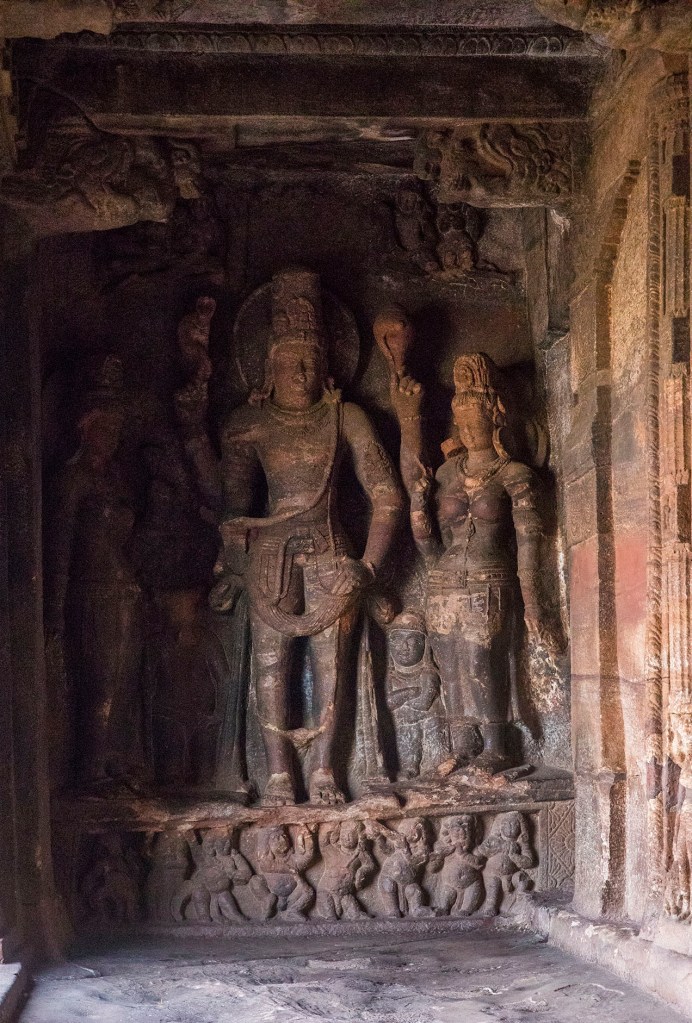

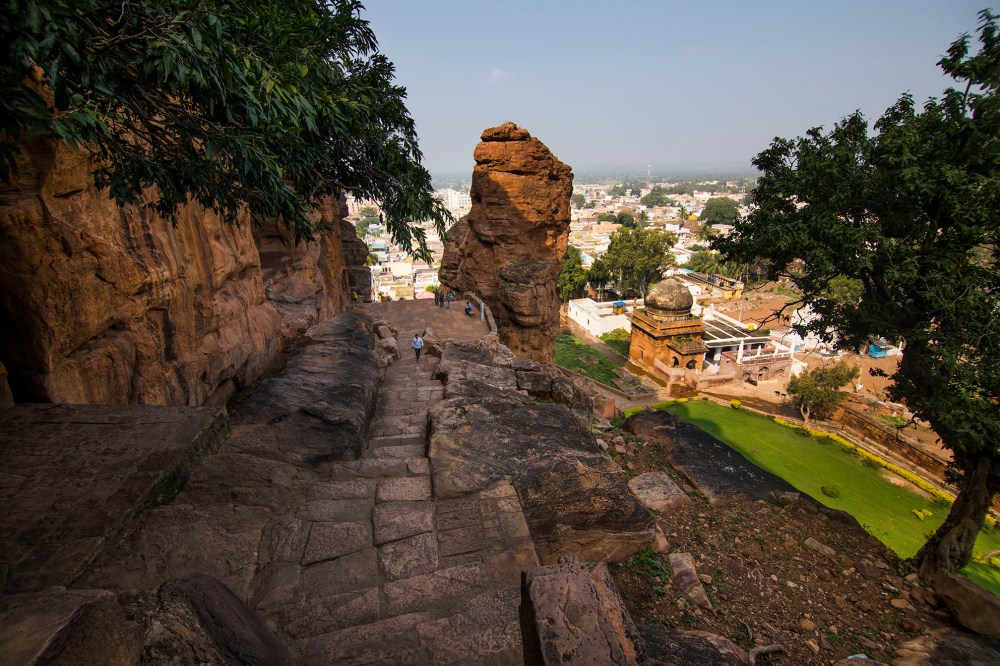
A flight of steps took us to Cave 2, where the focus shifts to Lord Vishnu. The sculptures of Trivikrama, Vishnu measuring the universe in three strides, and Varaha, his boar incarnation rescuing the Earth, caught my attention. The ceiling carvings were equally fascinating.

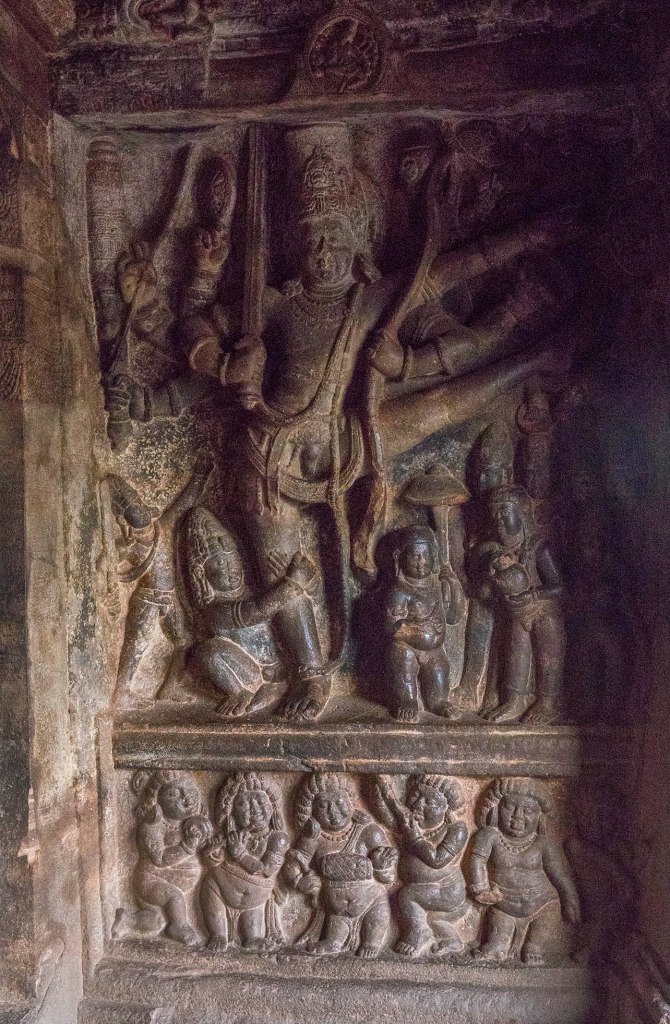
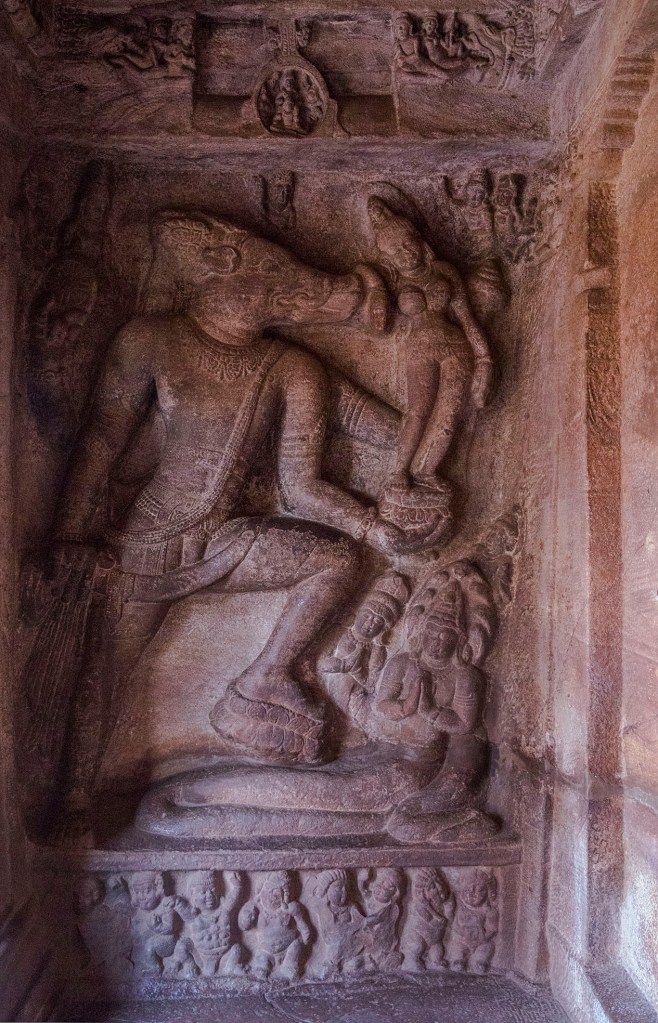
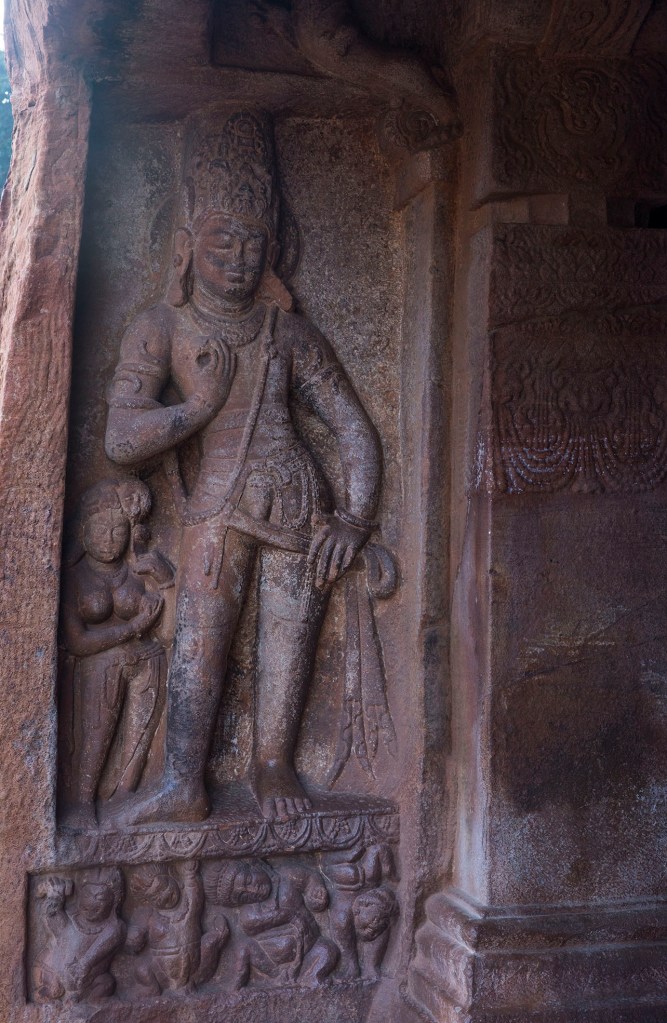

Cave 3, the largest of the four, was perhaps the most impressive. Its elaborate pillars and sculptural panels display the artistic confidence of the Chalukyan craftsmen. Among the finest works are Vishnu seated on the serpent Shesha, Trivikrama, Narasimha and Varaha. I was particularly drawn to the richly decorated pillars and the extraordinary attention given to their details.
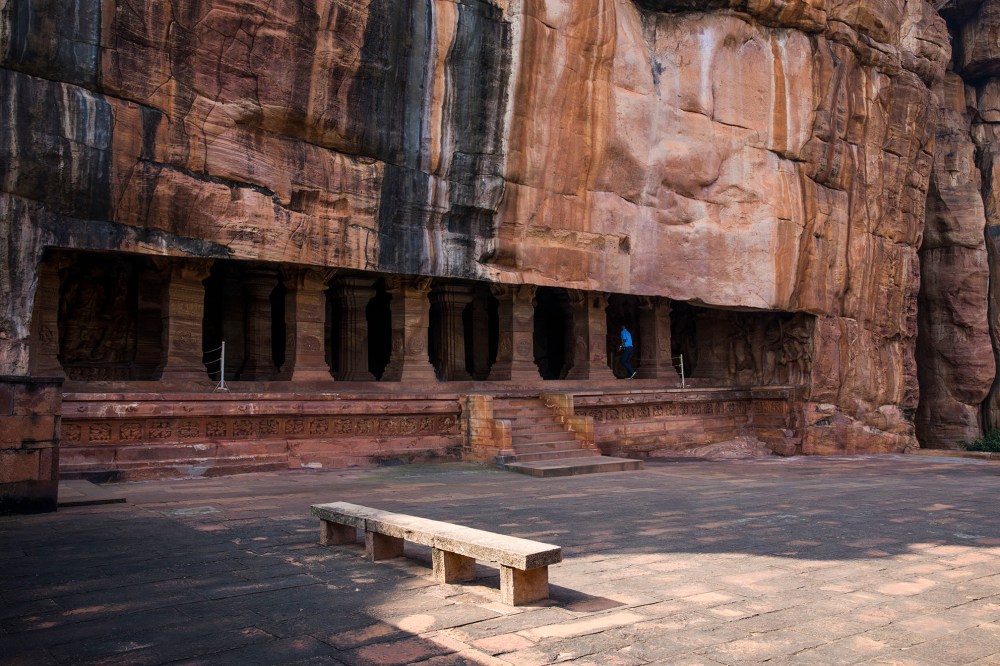


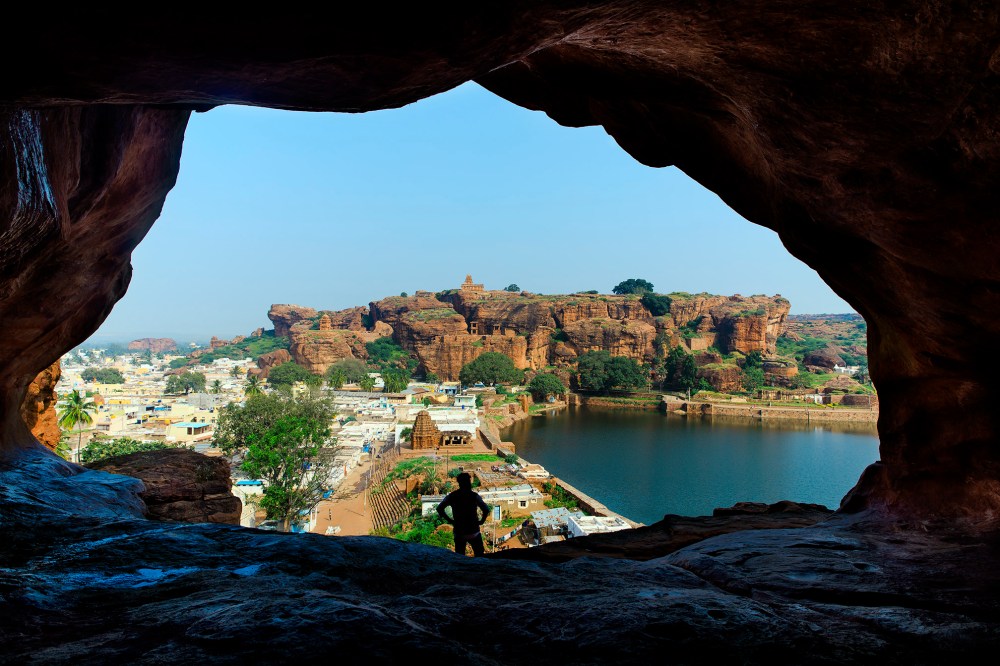
But the view from the veranda was almost as captivating as the sculptures. Badami unfolded below us, with its colourful houses, the North Fort and the waters of Agastya Lake. The Bhutanatha Temple stood beside the lake, completing a picture that seemed to bring the entire town together.


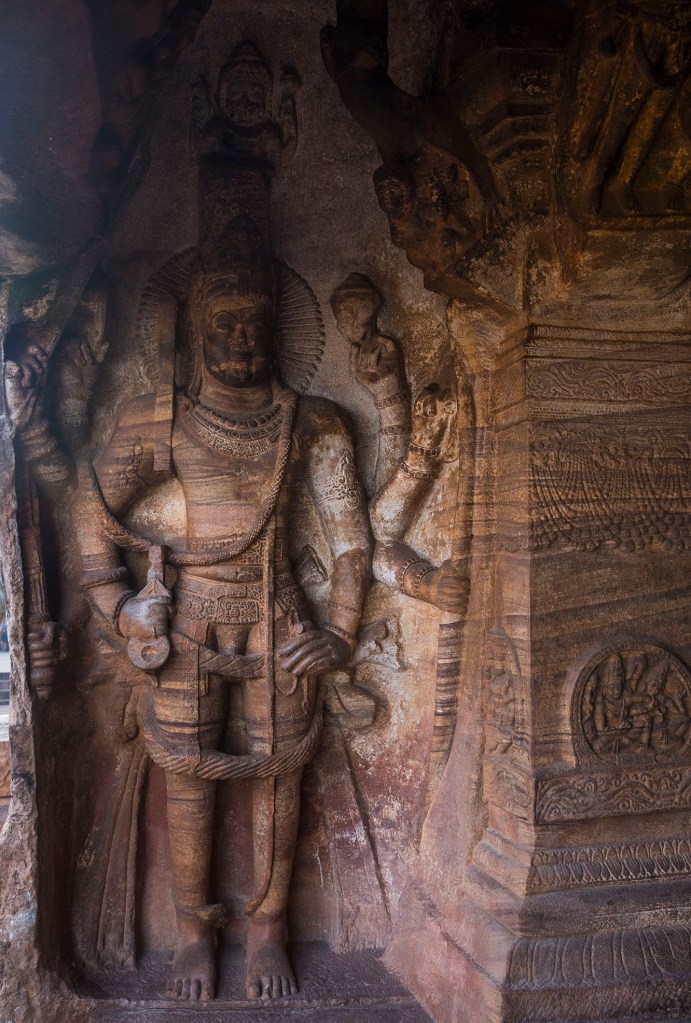
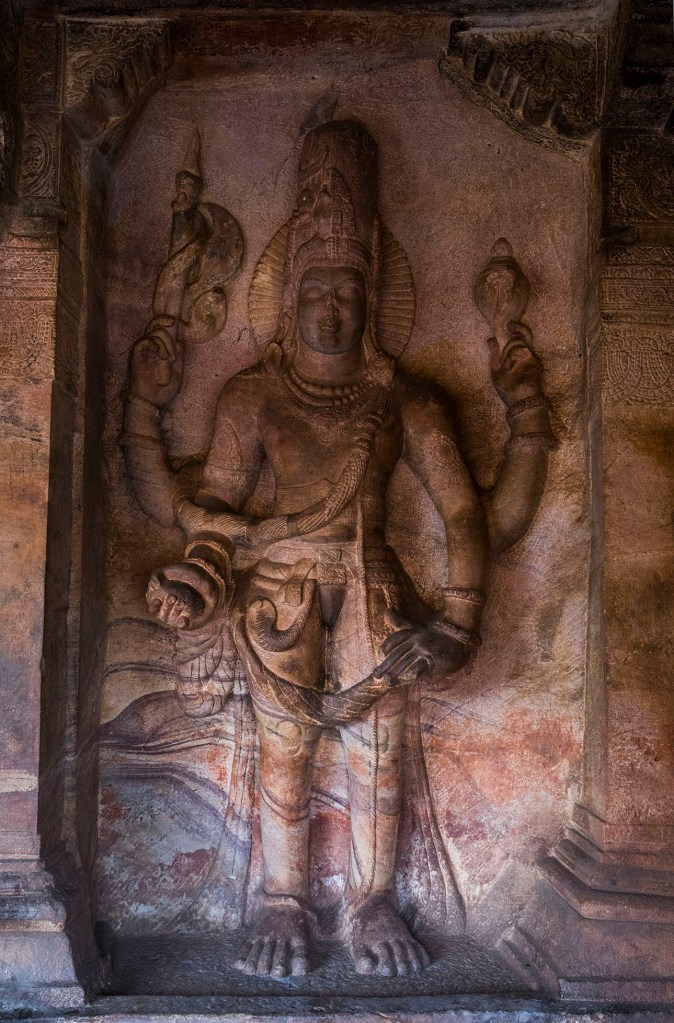


Cave 4, the smallest of the group, is dedicated to Jainism. Its sculptures include the Jain Tirthankaras, particularly Parshvanatha, identified by the multi-hooded cobra above his head, and Bahubali, whose legs are entwined with climbing vines. The presence of these Jain images alongside the Hindu caves reflects the varied religious traditions that found expression in the region.
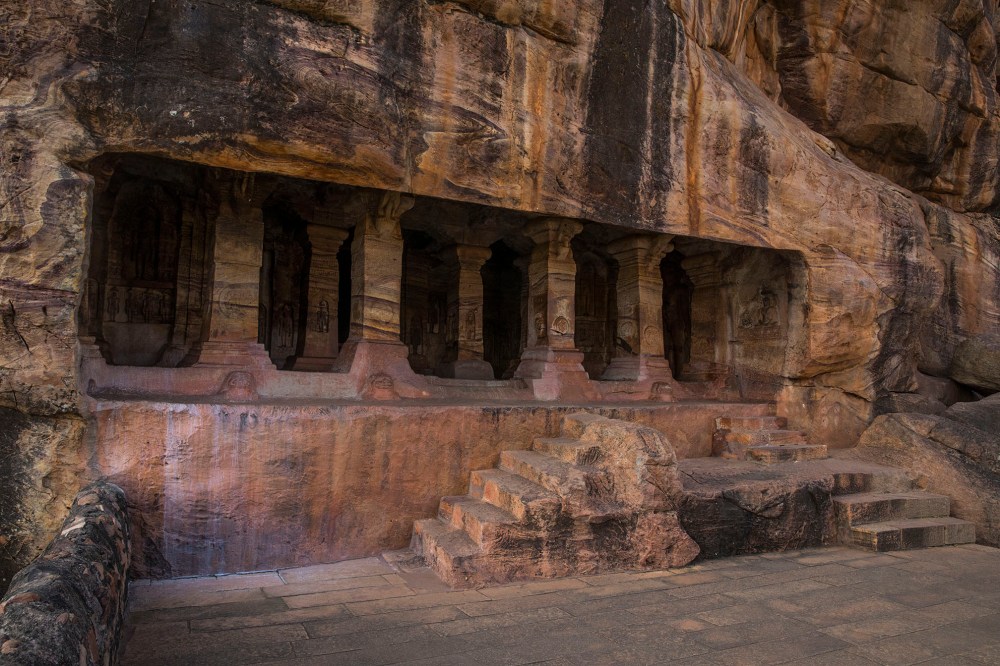


After exploring all four caves, we returned to the parking area. It was around 12.30 PM, and the school group we had been anticipating was finally arriving. Amitabha’s prediction had been spot on!
A Walk Through Old Badami
After lunch, we decided to explore the older neighbourhood of Badami. The town has monuments from different periods, reflecting the many dynasties and communities that shaped its history.
Near the cave complex, we came across Markaj Jumma, an eighteenth-century tomb associated with Abdul Malik Aziz. Its red sandstone exterior and delicate jali work offered a different architectural experience from the Chalukyan monuments.

A little further along, we visited Yellamma Temple and Virupaksha Temple. We also came across Jambulinga Temple, with its modest structure and open architectural arrangement.
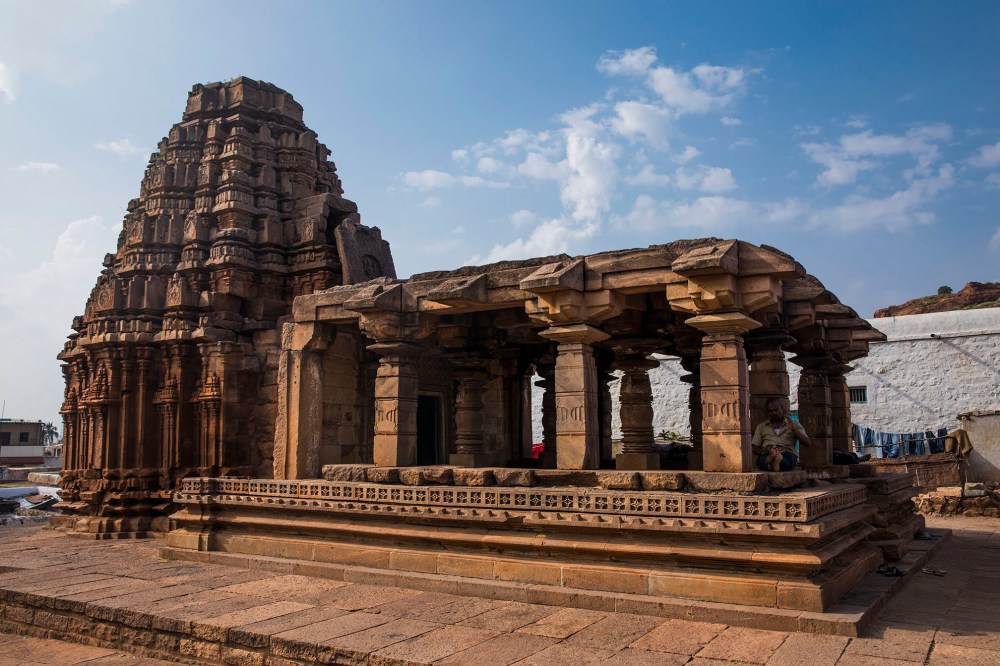

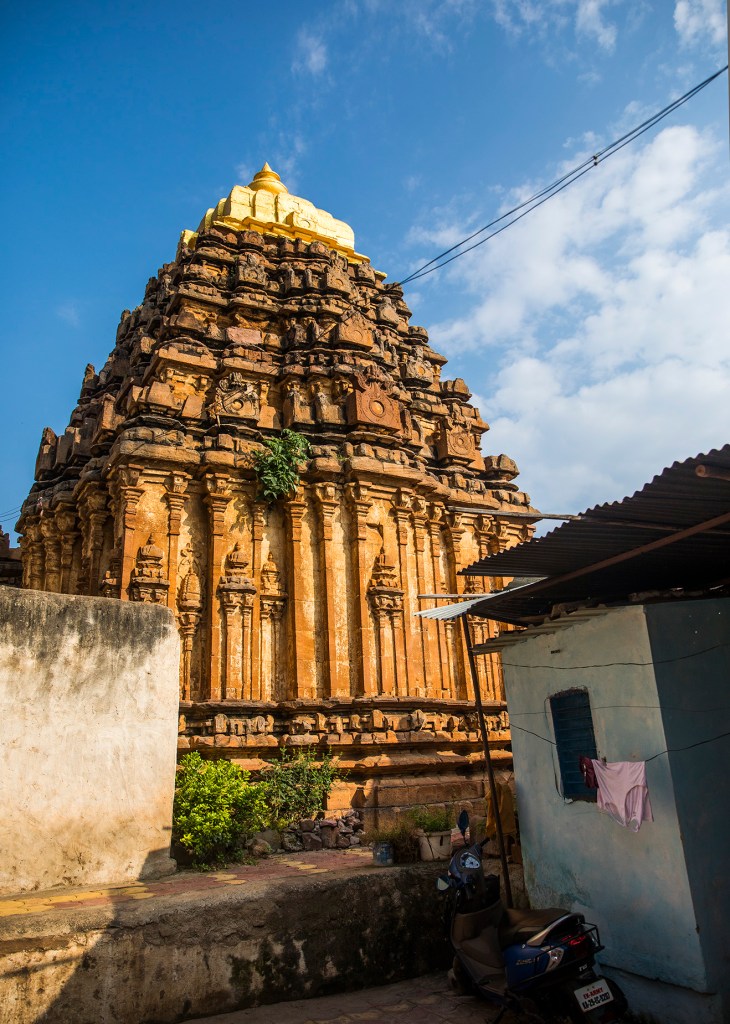
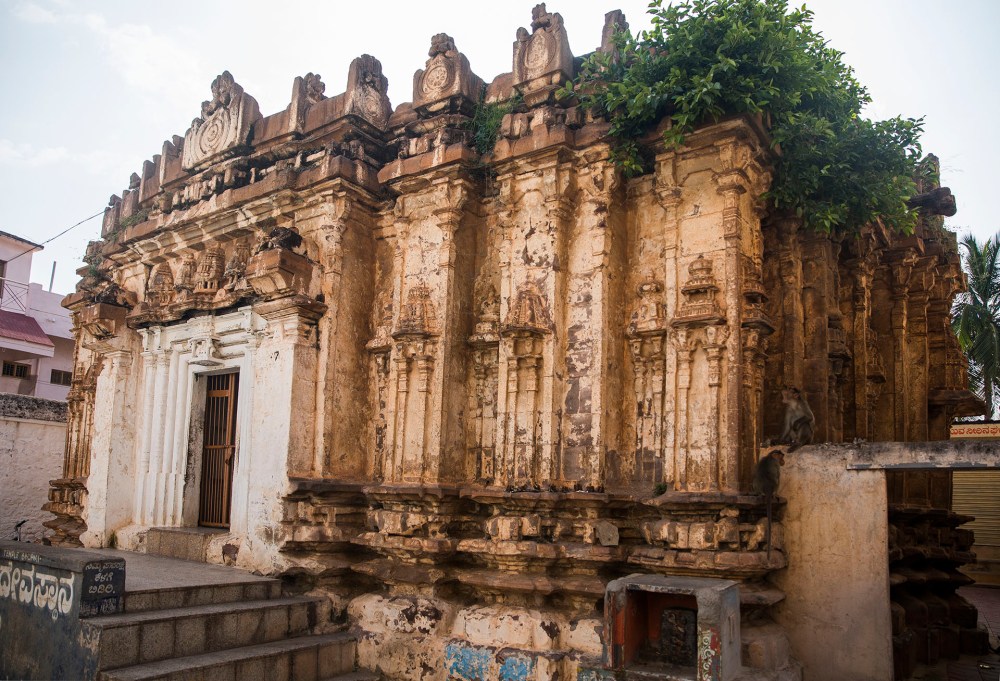
I enjoyed walking through the old neighbourhood. It was my first experience of an ancient town in South India, and its narrow lanes and colourful houses had a character of their own. The streets felt different from those of northern Indian towns, yet some of the painted walls seemed strangely familiar.

Climbing the North Fort
Our next stop was the North Fort. Before beginning the climb, we visited the Badami Archaeological Museum. It offered a useful introduction to the region’s history and its sculptural heritage.
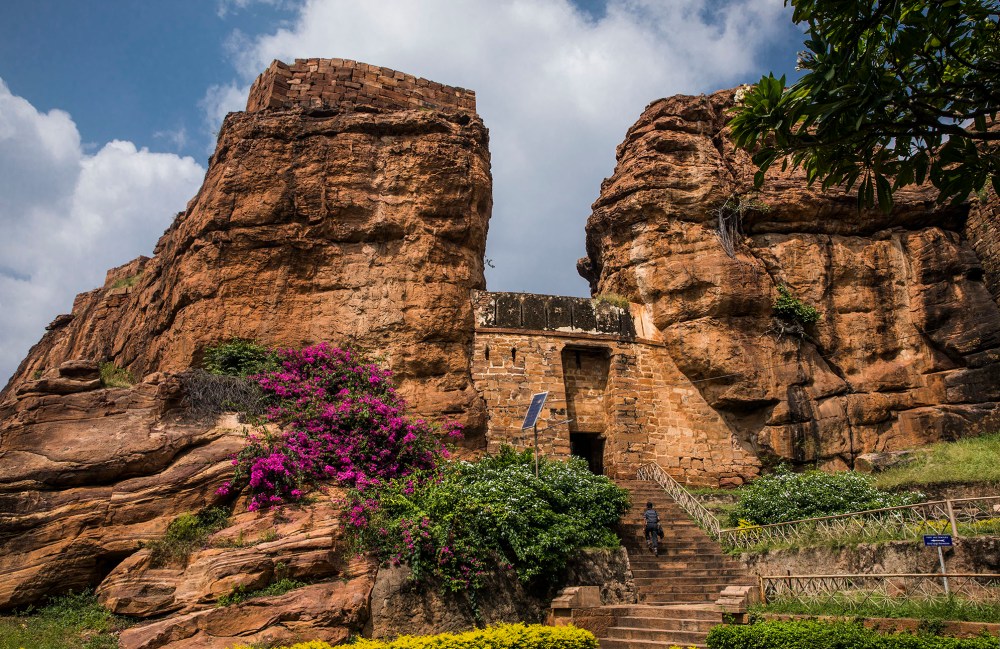

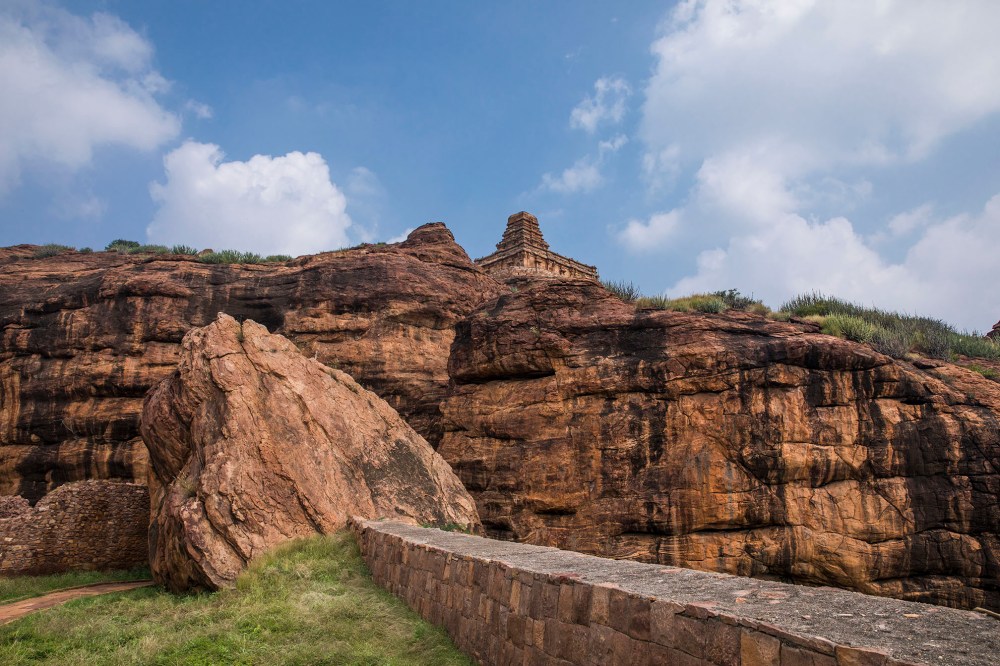

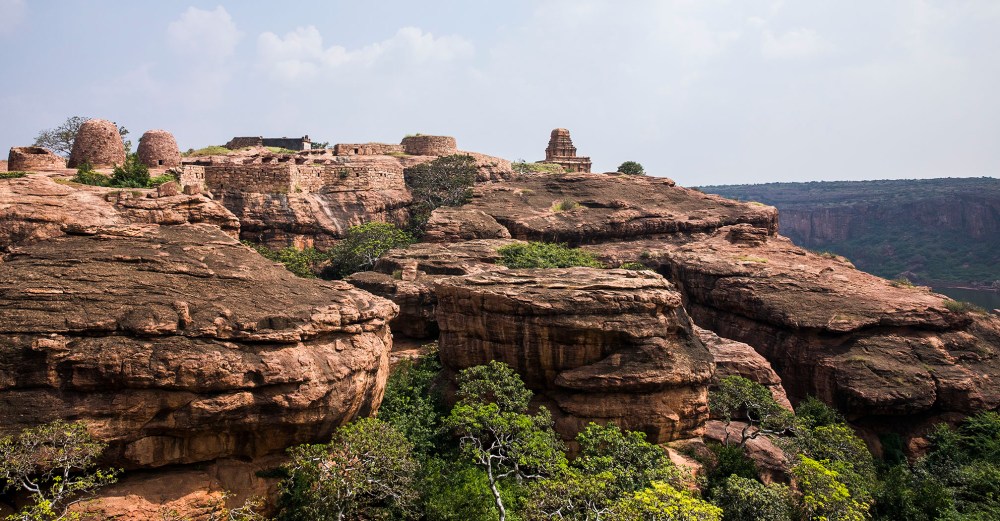
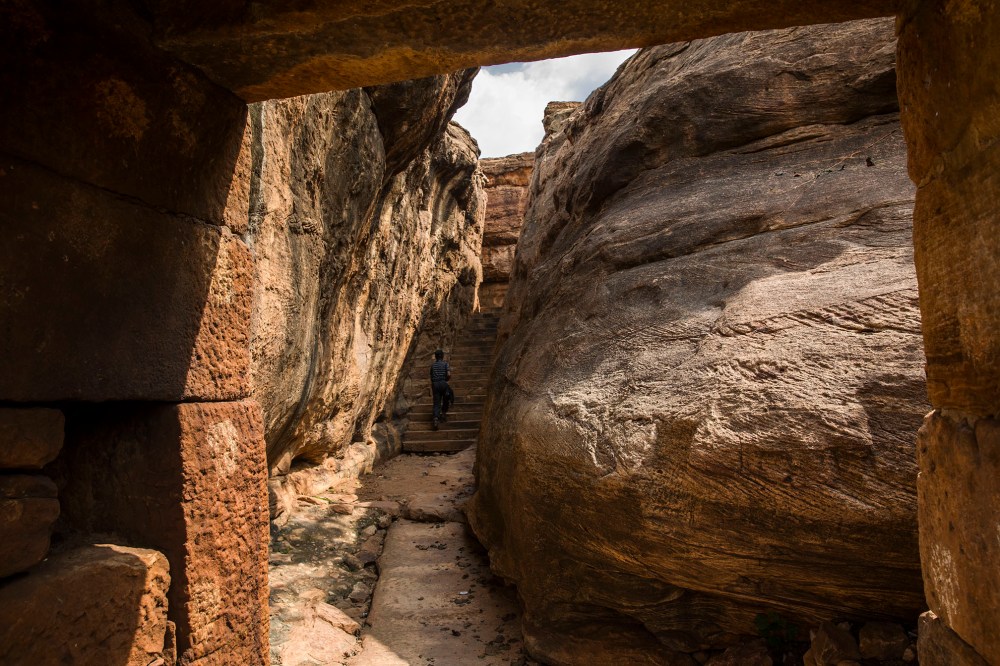
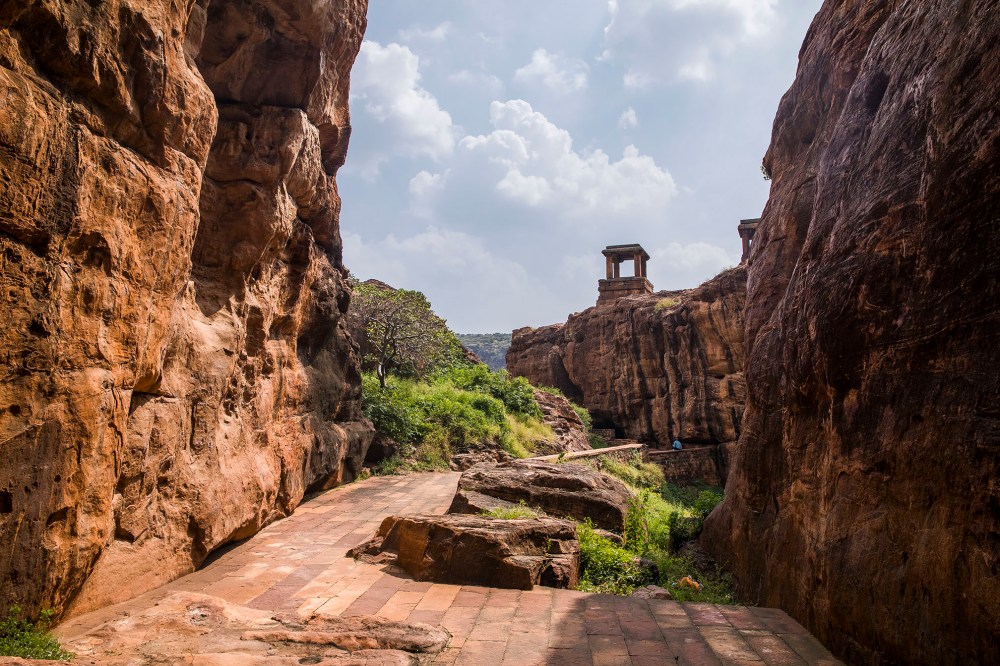
The route through the fort was an adventure in itself. We passed through gateways and narrow passages, with steep sandstone cliffs rising on either side. Open mandapas stood on rock-cut terraces, while the remains of fortifications revealed how carefully the hill had been turned into a defensive stronghold.
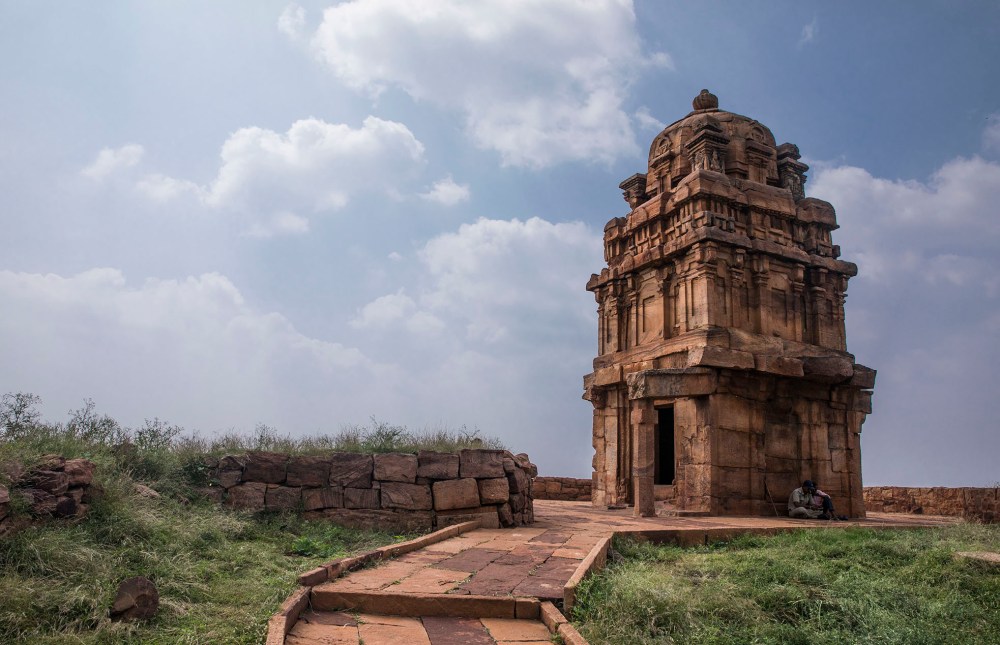
We came across the remains of Lower Shivalaya and continued towards a circular lookout. From here, the elevated position offered a commanding view of the town. We also passed a group of circular granaries before reaching Upper Shivalaya, perched near the top of the fort.


We met the priest there, who told us that worship at the temple had continued through the centuries. He also spoke of Tipu Sultan’s association with the temple. It was an interesting conversation, although the view from the hill was reason enough to linger.

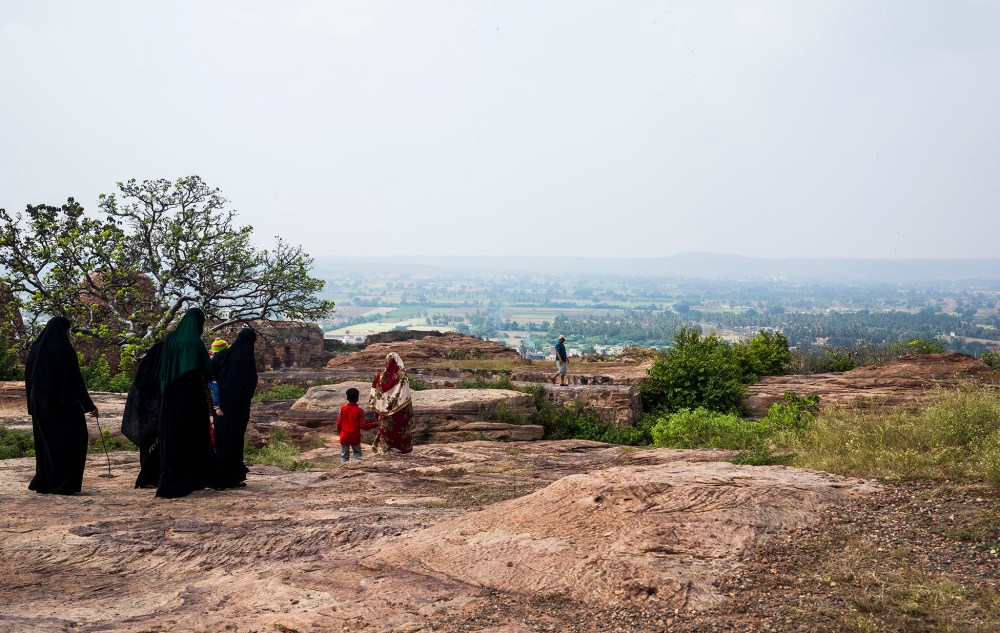
A little further away stood the Dargah of Sayyid Hazrat Badshah. We noticed three Muslim women walking towards it. As they passed Upper Shivalaya, they showed respect to the temple. It was a simple gesture, but one that stayed with us. In that moment, the shared cultural fabric of India seemed more meaningful than any history book could explain.

On our way down, we took a narrow, steep passage. It was quite a climb, and Amitabha remarked that the experience felt like Mackenna’s Gold. I couldn’t have put it better!

Malegitti Shivalaya and Bhutanatha Temple
We later visited Malegitti Shivalaya, an elegant temple set on a rocky elevation. The approach, with its steps and landscaped surroundings, offered a pleasant change after the climb through the fort.

Our final destination was Bhutanatha Temple, standing beside Agastya Lake. Surrounded by water on three sides, the temple seemed to belong naturally to the landscape. Of all the places we visited that day, I found its atmosphere particularly appealing.


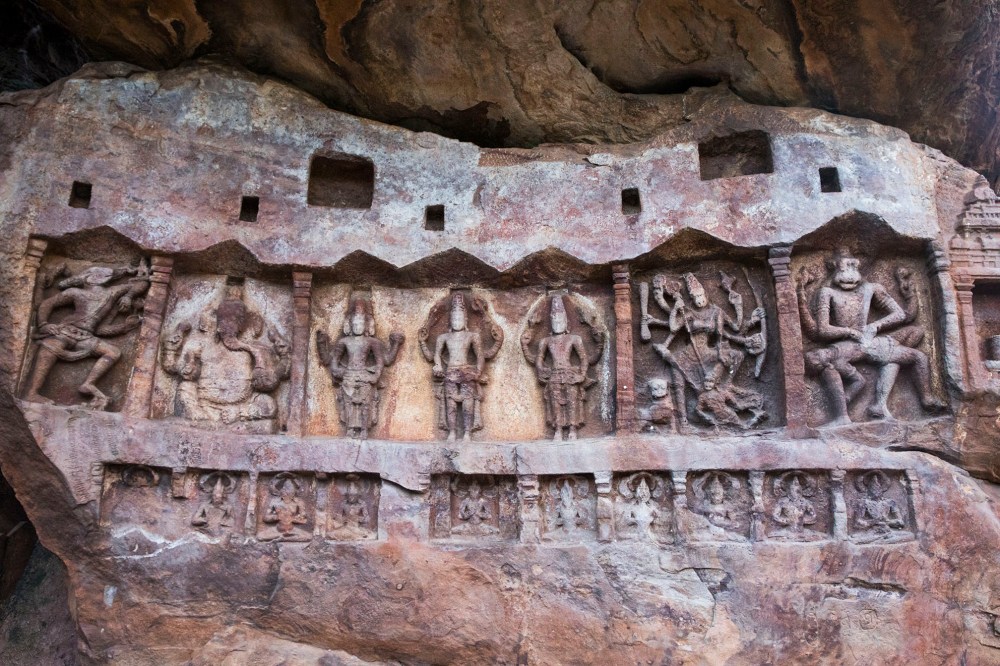
Behind the temple, we discovered a remarkable rock carving featuring several Hindu deities, including Vishnu, Ganesha, Varaha and Narasimha, along with Shiva and Nandi. The figures seemed to emerge from the rock itself.

On our way back to the hotel, Amitabha and I reflected on the extraordinary achievements of ancient India. The work at Badami was not simply an expression of religious devotion or artistic skill. It also demonstrated an impressive understanding of stone, geometry and engineering. The craftsmen had transformed massive sandstone cliffs into detailed figures, pillars and entire architectural spaces.
Badami had given us much more than a collection of ancient monuments. It was a day of discovery, unexpected conversations, spectacular views and moments of quiet reflection. And, of course, a memorable encounter with a very confident monkey!
Tramp’s Tips
- Best time to visit: October to February is generally comfortable for exploring Badami.
- Cave temples: Allow around 1.5–2 hours to explore the four caves at a relaxed pace.
- North Fort: Keep additional time for the climb, temples and viewpoints.
- Getting around: The caves, old town, North Fort, Malegitti Shivalaya and Bhutanatha Temple can be explored as part of a full-day visit.
- What to carry: Drinking water, comfortable footwear, sun protection and a camera.
- Watch out for: Monkeys around the cave complex. Keep food packed away and avoid feeding them.
- Nearby destinations: Aihole, Pattadakal, Banashankari and Lakkundi can be included in a wider North Karnataka heritage trip.
Traveller’s advice: Badami involves plenty of walking and climbing. Start early, take your time and don’t rush through the caves. The sculptures, views and little details deserve your attention.
References
- Badami – Aihole – Pattadakal by George Michell
- Outlook Traveller Gateaways 52 weekend breaks from Bengalore


[…] was travelling with my friend Mr. Amitabha Gupta. We were at Banashankari, a village near Badami in Karnataka’s Bagalkot district. The village, also known as Cholachagudda, is home to the […]
LikeLike
[…] and discovering the remarkable heritage hidden in Lakkundi’s lanes, we finally headed towards Badami. Before leaving, we called the friend who had suggested the detour and thanked him for introducing […]
LikeLike
[…] of our North Karnataka trip. We had already explored Hampi, Lakkundi, Banashankari , Mahakuta and Badami. That morning, we started early from KSTDC Maurya in Badami and reached Pattadakal at around 9 […]
LikeLike
[…] Karnataka heritage trail was coming to an end. We had started the day in Badami, visited the magnificent temples of Pattadakal, and were now heading towards […]
LikeLike
[…] Gupta. We had included Mahakuta in our North Karnataka heritage circuit, which also covered Hampi, Badami, Pattadakal and Aihole. Little did I know that this quiet village would give me one of the most […]
LikeLike