
At the break of dawn, we reached Banashankari. Ursa Major was still visible in the northern sky, and the village lay wrapped in an almost uncanny silence. Our driver parked the car in a field. As we stepped out, a melodious voice suddenly caught our attention.
We stopped to listen. Someone was singing Raga Ahir Bhairav, a morning raga I have always loved. The vocalist’s treatment of the komal Rishabh was particularly beautiful. The music, the quiet surroundings and the first light of the morning created an atmosphere that seemed to transport me to another age.
I was travelling with my friend Mr. Amitabha Gupta. We were at Banashankari, a village near Badami in Karnataka’s Bagalkot district. The village, also known as Cholachagudda, is home to the revered Banashankari Temple, dedicated to Goddess Banashankari, worshipped as a form of Parvati and Shakambhari.

The name Banashankari is commonly associated with Vana, meaning forest, and Shankari, another name for the goddess. The surrounding area was traditionally known as Tilakaranya. The goddess also appears in the Skanda Purana, where she is associated with the legend of the demon Durgamasura.
The Temple and Its Sacred Tank
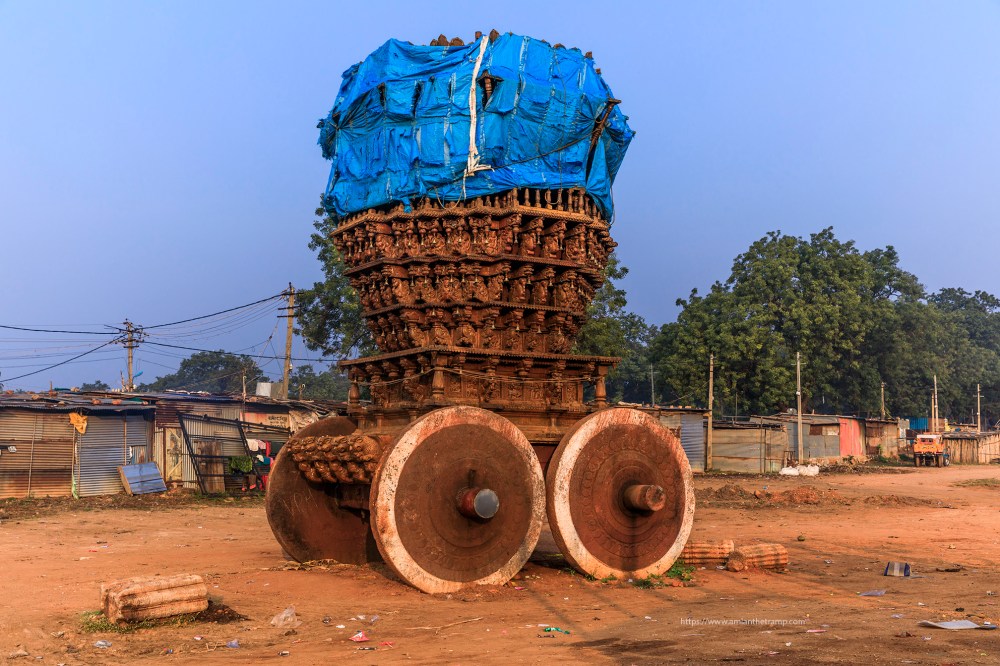
We began exploring after the vocalist finished his performance. The first thing that caught our attention was a large temple chariot. Its body was made of wood, while its wheels were built of stone. Beautiful images of deities decorated its surface. The temple priest later explained its significance to us.
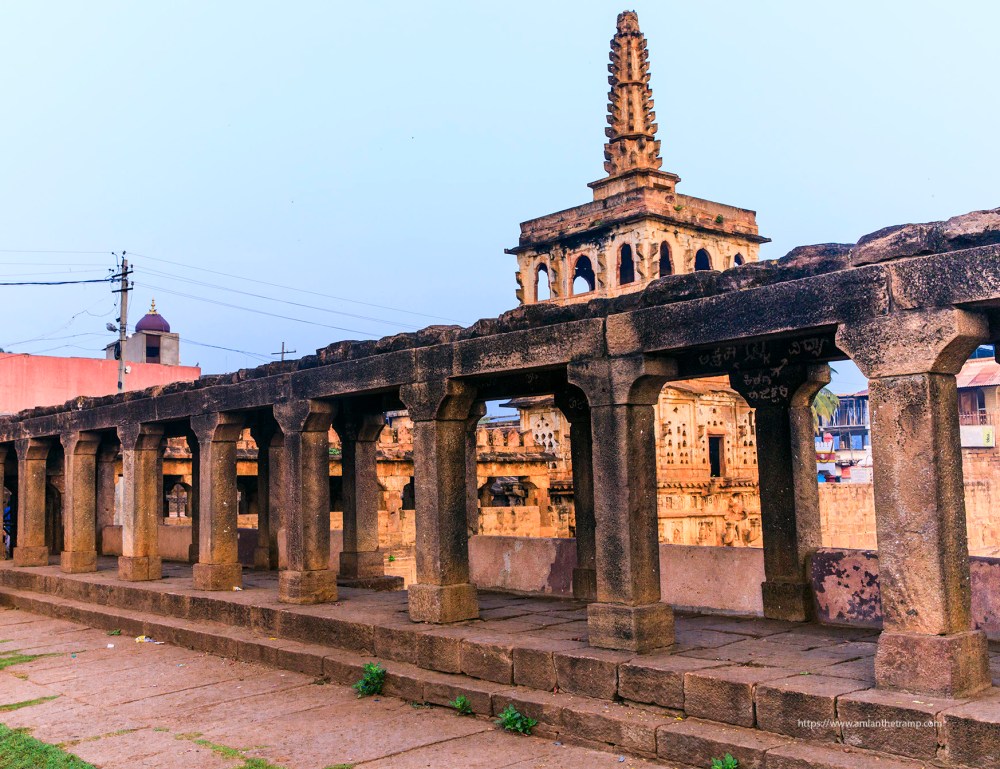
In front of the temple lies Harida Tirtha, a large sacred tank surrounded by stone mantapas on three sides. We decided to walk along the pillared corridors. The still water reflected the temple and the surrounding structures, creating a beautiful composition. In the soft morning light, it was difficult not to pause and admire the scene.

The temple itself follows the Dravidian architectural tradition. Its main structure includes a pillared hall, an entrance porch and a sanctum topped by a tower or vimana.
Inside the sanctum is the image of Goddess Banashankari, seated on a lion and depicted with eight arms. She holds various weapons and objects associated with her divine power. The image represents the goddess as a fierce protector, with the demon beneath her feet.
Banashankari Jatre and Palleda Habba
Since it was early morning, devotees and temple staff were busy with their daily activities. We met the priest, who suggested that we return during Banashankari Jatre.
The annual festival is held around January or February, during the month of Pushya. The village comes alive with decorations, religious ceremonies and cultural activities. The goddess is taken out in a grand chariot procession, and the celebrations attract devotees from different parts of Karnataka and neighbouring regions.
The priest also told us about Palleda Habba, popularly associated with the festival. The name refers to the vegetable offerings and food traditions connected with the goddess Shakambhari, who is revered as the provider of nourishment.
Women from nearby villages bring local food to sell around the temple. We heard about dishes such as jolada rotti, mosaru, brinjal preparations and other regional delicacies. Music, drama and other cultural performances add to the festive atmosphere.
What appealed to me was that the festival was not simply a religious gathering. It also brought together people from surrounding villages, creating a shared celebration of faith, food and local culture.
A Morning I Still Remember
After exploring the main temple, we walked towards a newer temple built in the Vijayanagara architectural tradition. Amitabha went inside, while I decided to wait outside.
The vocalist was singing again, this time a Kannada bhajan. I stood listening, taking in the quiet village surroundings. The morning had begun with a beautiful raga and was ending with a devotional song. Between the two, we had discovered an ancient shrine, admired its architecture, listened to the priest’s stories and experienced a little of the village’s cultural life.

It has been some time since that visit, but the memory of Banashankari remains vivid. I still remember the music, the reflection of the temple in the sacred tank and the extraordinary calm of that early morning.
Some journeys stay with us not because of how many places we visit, but because of a moment that touches us unexpectedly. For me, Banashankari was one such morning.
Tramp’s Tips
- Location: Cholachagudda, approximately 5 km from Badami.
- Getting there: Auto-rickshaws and taxis are available from Badami.
- Best time: Early morning is particularly atmospheric.
- Festival: Banashankari Jatre takes place around January–February; check the annual dates before travelling.
- What to see: The main shrine, Harida Tirtha, pillared corridors and temple chariot.
- Local experience: Look out for traditional food stalls and regional specialities during the festival.
- Stay: Badami is a convenient base for visiting the temple.
Traveller’s advice: Visit early if you want to experience the temple in a quieter atmosphere. During the annual Jatre, expect larger crowds and a lively village setting.


[…] did exactly that. Before sunrise, we drove to Banashankari Temples. After our visit, we returned to Badami and reached the cave complex before the ticket counter […]
LikeLike
[…] Pattadakal on the final day of our North Karnataka trip. We had already explored Hampi, Lakkundi, Banashankari , Mahakuta and Badami. That morning, we started early from KSTDC Maurya in Badami and reached […]
LikeLike