
Our Karnataka heritage trail was coming to an end. We had started the day in Badami, visited the magnificent temples of Pattadakal, and were now heading towards Aihole.
It was a journey through centuries of architectural experimentation, religious traditions and artistic excellence. If Badami had introduced us to the rock-cut wonders of the Chalukyas and Pattadakal had impressed us with its magnificent temple complexes, Aihole offered something different.
Here, the story was about beginnings.
Spread across a quiet village in Karnataka’s Bagalkot district, Aihole is home to more than a hundred ancient temples and shrines. Built over several centuries, these structures represent an important phase in the development of Indian temple architecture. The Early Chalukyas experimented with different plans, shapes, towers and decorative elements here, many of which found more mature expression in the temples of Badami and Pattadakal.
Often described as the Cradle of Indian Temple Architecture, Aihole is a fascinating destination for anyone interested in history, archaeology and architecture.

Aihole: Where Temple Architecture Took Shape
Aihole, historically associated with the names Aryapura and Ayyavole, was an important centre during the Early Chalukya period, particularly between the sixth and eighth centuries CE.
The Chalukyas of Badami were great patrons of art and architecture. Under their rule, the Malaprabha River valley became an important centre of temple construction. Aihole, Badami and Pattadakal together offer an extraordinary account of this architectural development.
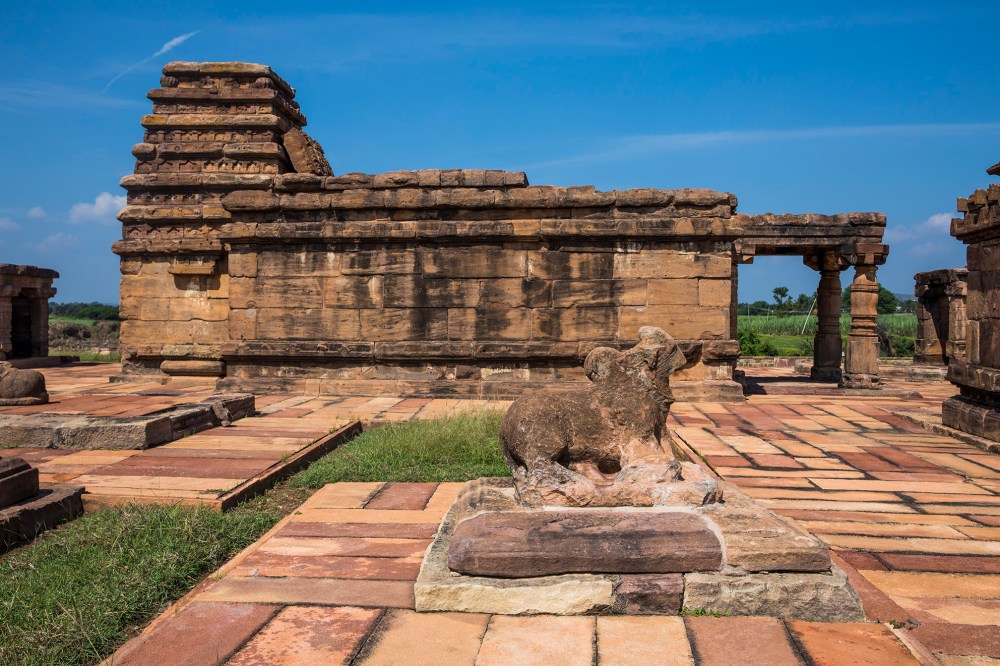
The temples at Aihole are particularly interesting because they do not follow a single architectural formula. Some have flat roofs, others have curvilinear towers, while several display stepped pyramidal superstructures. There are also temples with apsidal plans, reminiscent of ancient Buddhist chaitya halls.
Hindu, Jain and Buddhist traditions all contributed to the region’s religious and artistic landscape.
There is also a popular legend connecting Aihole with Parashurama, the sixth incarnation of Vishnu. According to the tradition, after defeating the Kshatriyas, Parashurama washed his bloodstained axe in the Malaprabha River, turning its waters red. This is part of the sacred folklore associated with the region, while the documented history of Aihole is closely connected with the Chalukyas.

Galaganatha Temple Complex
We entered Aihole from its southern side, having travelled from Pattadakal. Our first stop was the Galaganatha Temple Complex.
The complex was relatively quiet. Compared with the more celebrated monuments we had visited earlier, these temples appeared less embellished. Yet their architectural details deserved attention.

The Galaganatha temple is an important example of the early Chalukya architectural tradition. Its main shrine has a curvilinear superstructure associated with the Kadamba-Chalukya style. The arrangement of the sanctum and mandapa, along with the decorative features of the porch, offers an interesting glimpse into the architectural ideas being explored during this period.
We did not spend too long here. Our next destination was Meguti Hill.

Meguti Hill and the Aihole Prashasti
Leaving our car at the foothill, we climbed the stone staircase towards the summit.
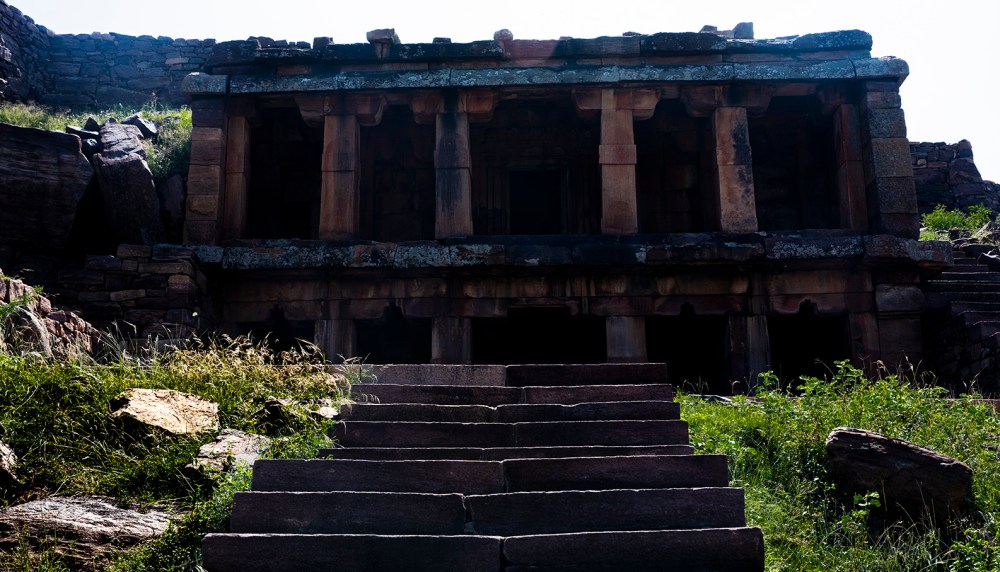
The ascent was worth the effort. Along the way, we came across a two-storeyed structure with an unusual arrangement of colonnades. Its position on the hillside and its architectural form made it an interesting stop.
At the summit stands the Meguti Jain Temple.
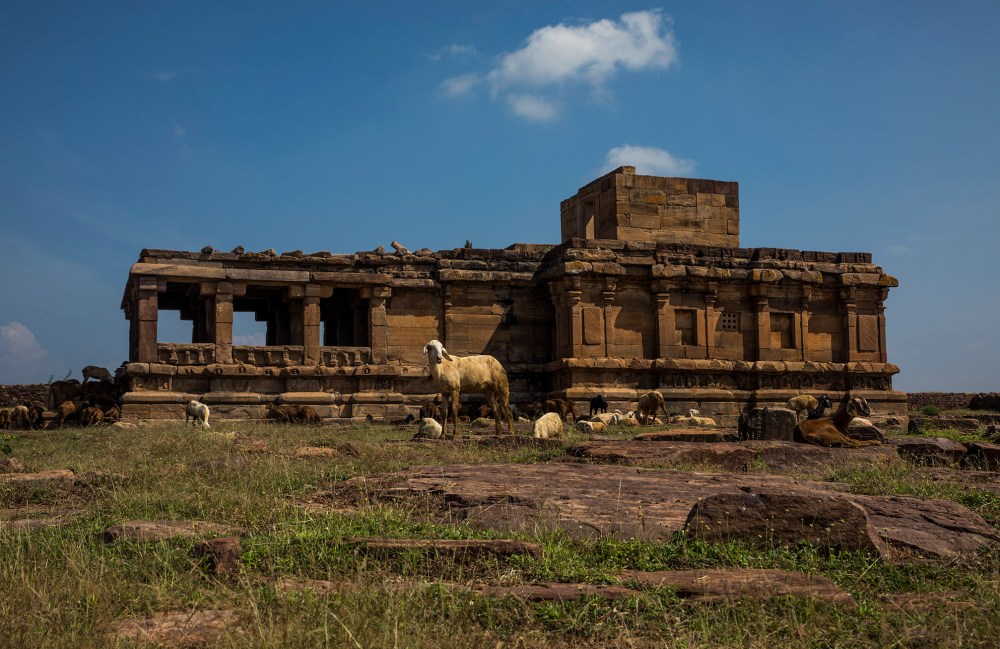
Although partly ruined, the temple has immense historical importance. Its eastern wall carries the famous Aihole inscription, also known as the Aihole Prashasti. Dated to 634 CE, the Sanskrit inscription was composed by Ravikirti, a Jain poet and court scholar of the Chalukya king Pulakeshin II.
The inscription records the achievements of Pulakeshin II and is an important source for understanding the political history of the Early Chalukyas. It is also notable for its references to the celebrated poets Kalidasa and Bharavi.
Standing before the ancient inscription, I was reminded that monuments are not just architectural remains. Their walls and inscriptions often preserve stories that would otherwise have disappeared with time.
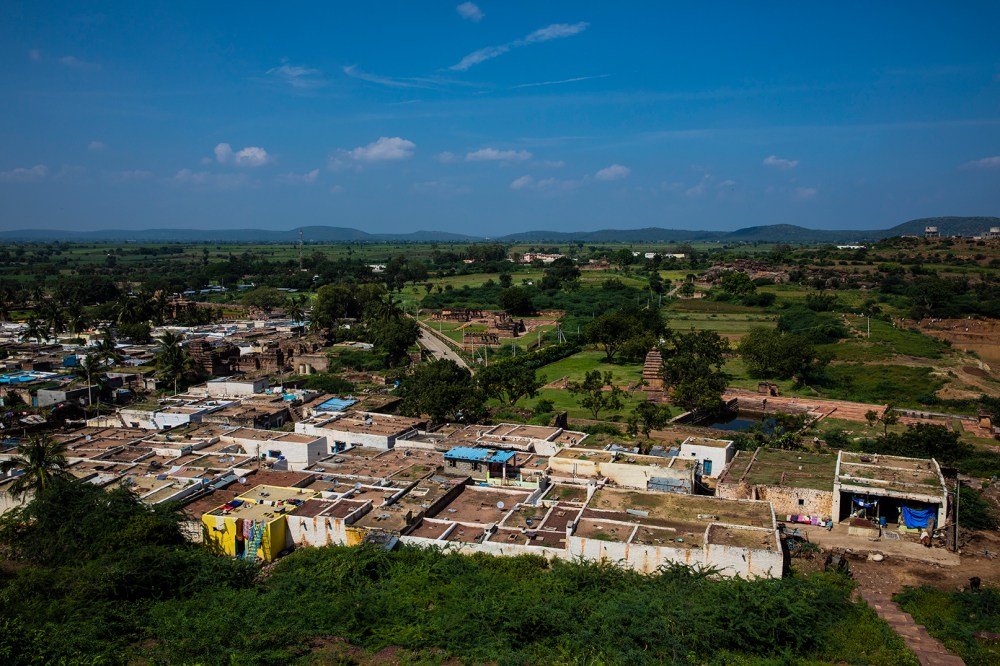
The view from Meguti Hill was another reward. Looking down at the village, we could see the scattered temples and the landscape that had witnessed centuries of artistic activity.
We retraced our steps and descended towards the next group of monuments.
Mallikarjuna Temple Complex
A short walk from Meguti Hill brought us to the Mallikarjuna Temple Complex.
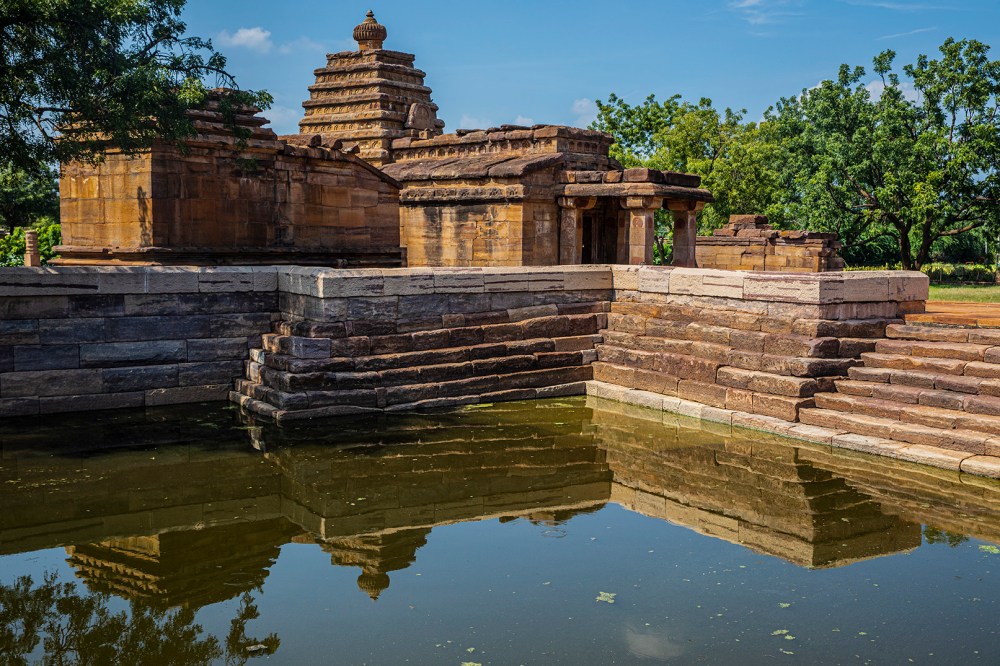
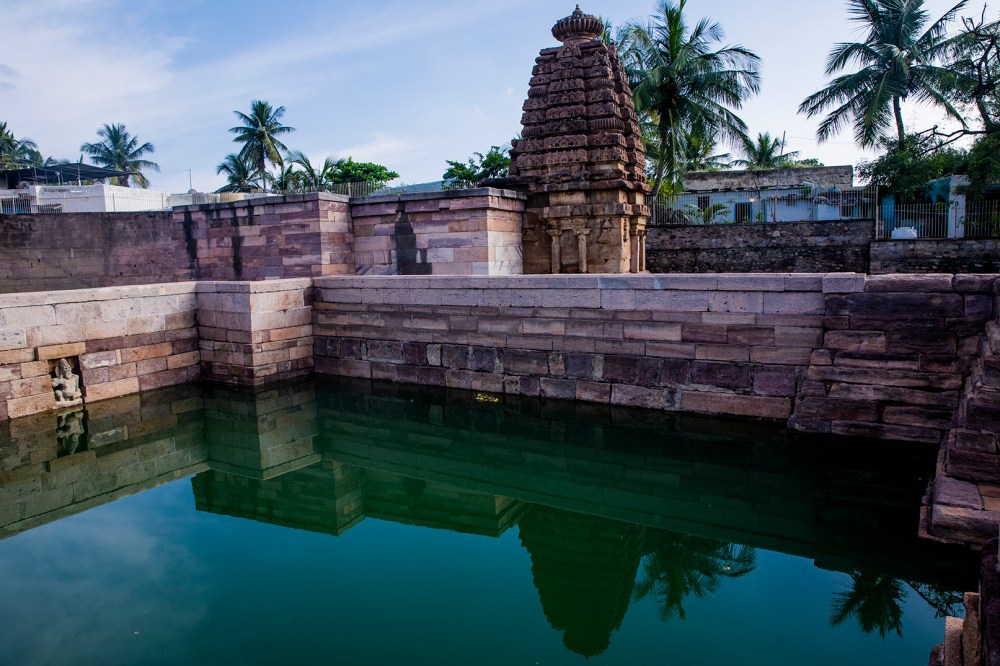
The main shrine has a stepped pyramidal superstructure. The complex also contains a stepped water tank, which caught my attention.
I particularly liked the reflections of the temples in the water. The combination of ancient stone structures, the tank and the surrounding greenery created a peaceful setting.
It was a lovely place to pause and appreciate the quieter side of Aihole.
Ravana Phadi: A Magnificent Rock-Cut Cave Temple
Our next stop was Ravana Phadi, one of the most remarkable monuments at Aihole.
Unlike the structural temples we had been exploring, Ravana Phadi is a rock-cut cave temple, generally dated to the seventh century CE. Dedicated to Shiva, it contains an impressive collection of sculptural panels.
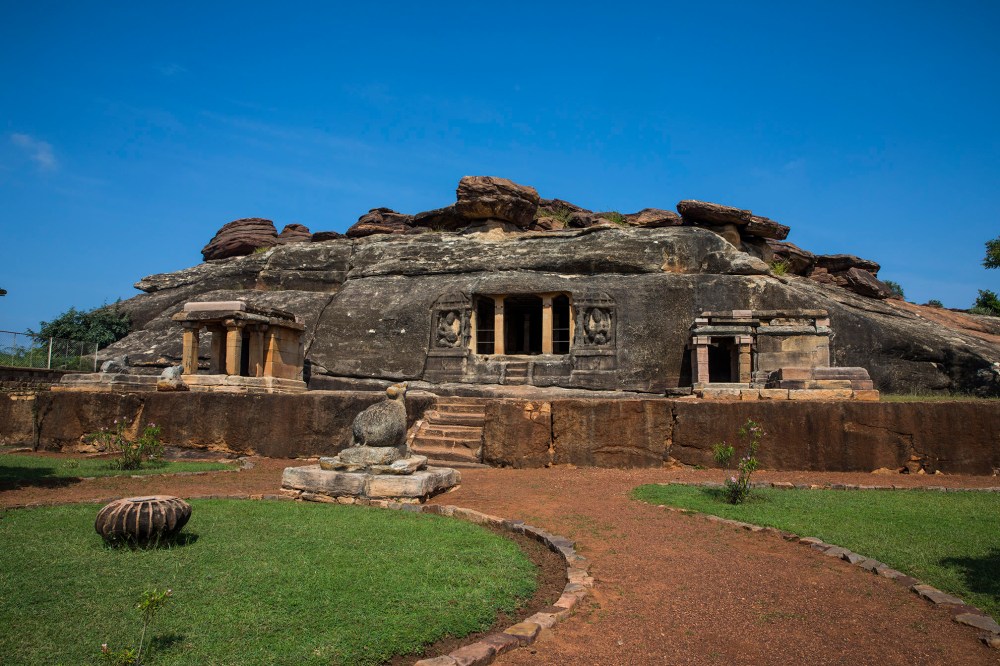
The entrance is preceded by a weathered stone column, a Nandi image and smaller shrines. Although the passage of time has worn away some of the details, the cave still retains much of its artistic character.
Inside, the walls are adorned with magnificent sculptures depicting different forms of Shiva and other deities.

The highlight for me was the large sculpture of Dancing Shiva, or Nataraja. The figure is full of movement and energy. The sculptor has captured the rhythm of the dance in the posture of the deity, making the stone appear almost alive.
The Archaeological Survey of India identifies this as one of the outstanding sculptures of the cave. It is easy to understand why.
I spent some time looking at the details. The scale, composition and artistic expression were remarkable.
Ravana Phadi alone makes Aihole worth visiting.

Hucchimalligudi
A short walk towards the north brought us to Hucchimalligudi.
This temple has a relatively simple exterior, but its superstructure is particularly interesting. The sanctuary and mandapa are enclosed within a rectangular arrangement of walls, while the tower above the shrine displays features associated with the Nagara style.
The contrast between the relatively plain exterior and the architectural treatment of the tower makes it an interesting monument in Aihole’s wider architectural story.
By this time, we were getting hungry.

A Lunch Break at Maurya Yatri Nivasa
After a morning spent exploring temples and climbing Meguti Hill, we decided to stop for lunch at the KSTDC Maurya Yatri Nivasa.
It was a convenient break in our sightseeing schedule. The property also served as an accommodation option for visitors exploring the region.
After lunch, we returned to our heritage trail. The most celebrated monument of Aihole was still waiting for us.
Durga Temple Complex: The Architectural Highlight of Aihole
The Durga Temple Complex is perhaps the best-known group of monuments in Aihole. It contains several temples, including the iconic Durga Temple, Ladkhan Temple, Suryanarayana Temple, Gaudagudi, Chakragudi and other structures. The Archaeological Museum is also located within the complex.
We began with the Durga Temple.

Despite its name, the temple is not generally understood to have been dedicated to Goddess Durga. Its original dedication remains a subject of historical interpretation. The name is commonly associated with the word durg, meaning fort, and the fortified structure that once stood above it.
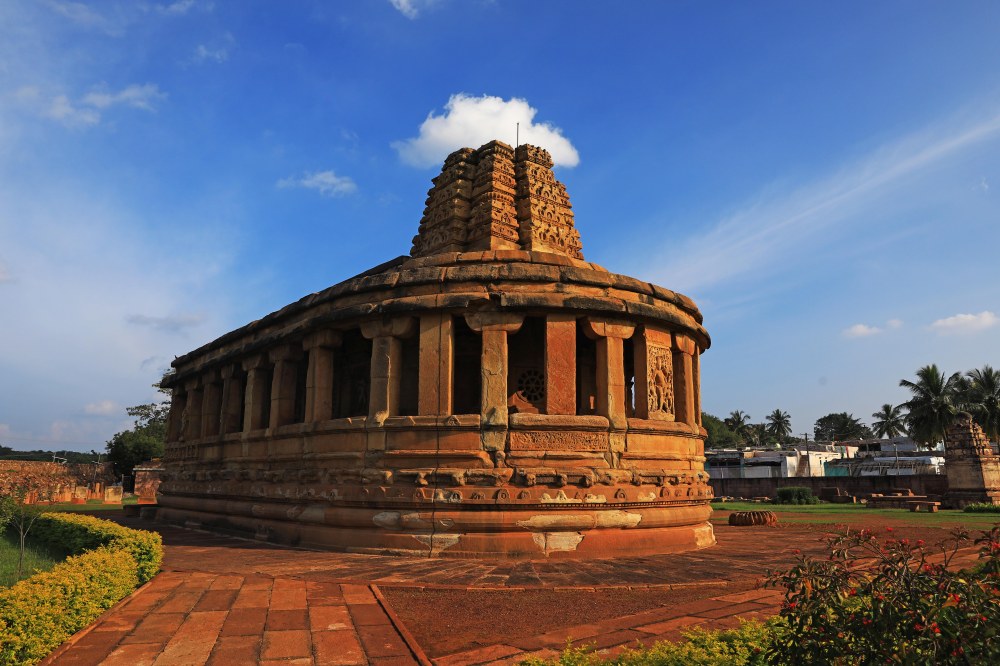
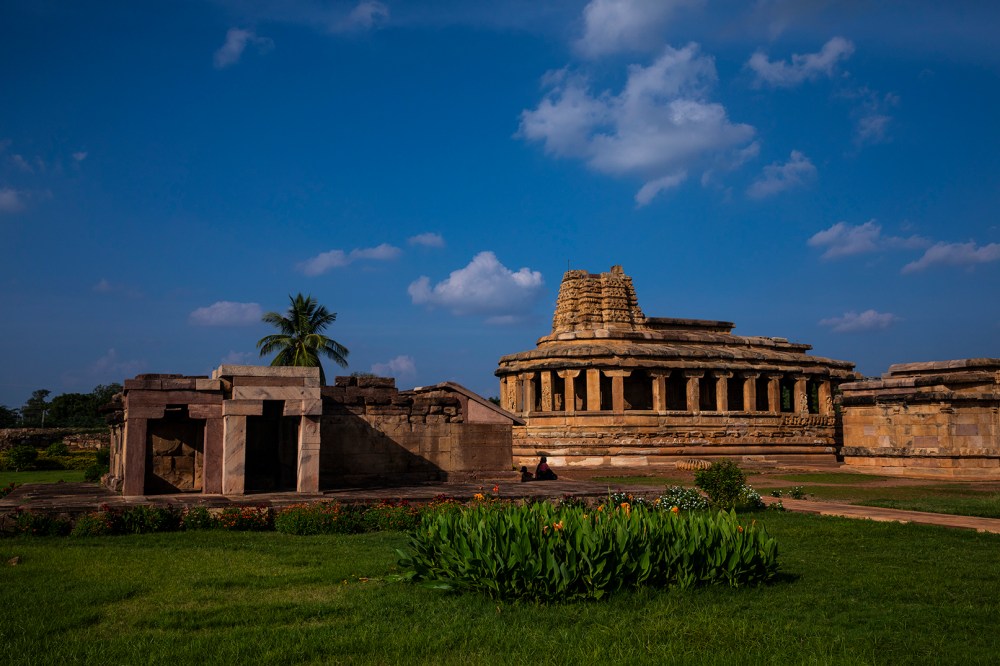
What makes the temple particularly special is its apsidal plan. The rear of the structure has a curved, almost semicircular outline, while a pillared corridor runs around the sanctum.
The architecture is unlike that of many conventional Hindu temples. The long colonnaded passage, the arrangement of the shrine and the sculptural panels create a remarkable sense of movement through the structure.
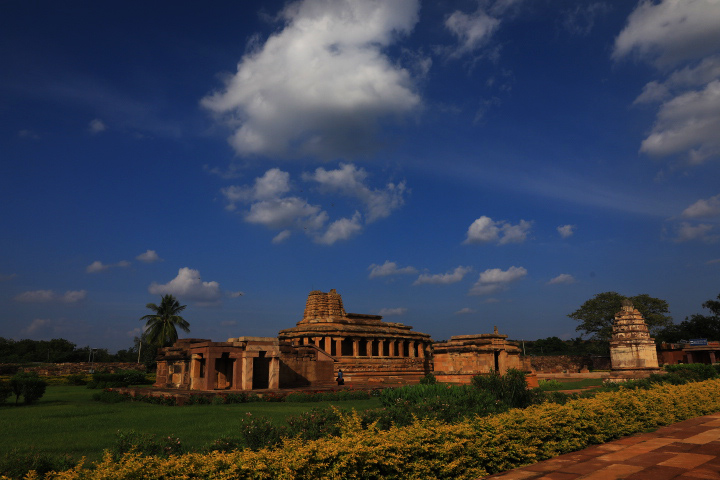
Walking along the verandah was one of the most memorable experiences of our visit. The walls are richly decorated with sculptural representations of Hindu deities, including Shiva, Vishnu, Varaha, Narasimha and Durga.
I was fascinated by the geometry of the temple. The proportions, the arrangement of the pillars and the sculptural details reveal the extraordinary imagination of the architects and artisans.
The Durga Temple is not simply a beautiful monument. It is an important example of the experimentation that made Aihole so significant in the history of Indian temple architecture.
The Archaeological Museum
Within the Durga Temple Complex is the Archaeological Museum of Aihole.
We spent some time exploring its collection of sculptures, architectural fragments and other antiquities recovered from the surrounding monuments.
The displays offer a useful introduction to the artistic traditions of the region. Sculptures from Hindu, Jain and Buddhist traditions provide an understanding of the diverse religious influences that shaped Aihole.
I particularly liked the idea of seeing the architectural heritage of the entire village represented through its archaeological collection. It felt almost like looking at a miniature version of Aihole’s history.
Suryanarayana Temple
Our next stop was the Suryanarayana Temple.
The temple displays features of the Nagara style, particularly in the curved profile of its tower. Although portions of the superstructure are missing, the remaining structure gives an idea of its original architectural character.
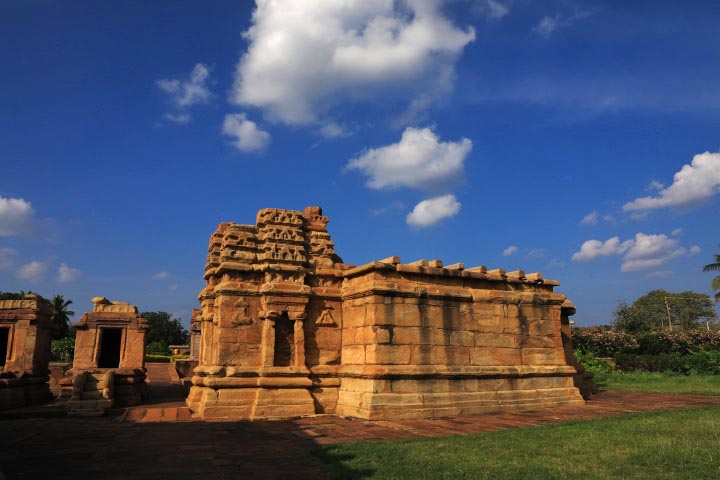
The temple is relatively compact, but its proportions and design make it an interesting addition to the Durga Temple group.

Ladkhan Temple
A short distance away stands Ladkhan Temple, another important monument in Aihole.
The name is unusual for an ancient Hindu temple. It is traditionally associated with a person named Lad Khan, who is believed to have occupied the structure at a later period. The temple itself belongs to a much earlier architectural tradition.

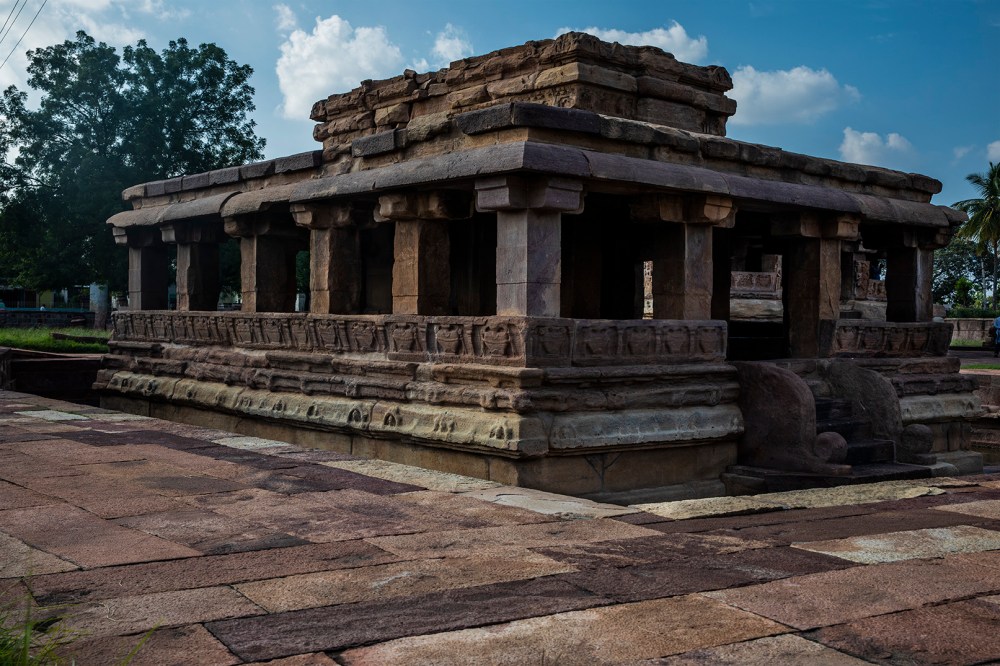
Its design is quite different from that of the Durga Temple. The structure has a rectangular mandapa with a series of pillars and a relatively low profile.
The exterior columns are decorated with carvings, including river goddesses and human figures. Some of the sculptural panels are particularly striking for their expressive treatment.
Ladkhan Temple is often discussed as one of the earliest examples of structural Hindu temple architecture in the region. It is fascinating to see how its relatively simple form differs from the more elaborate temples that came later.

Gaudagudi, Chakragudi and Badigargudi
A few steps away is Gaudagudi, a relatively modest structure with an interesting arrangement of its sanctum and pillared hall.
We then moved towards Chakragudi. Its well-preserved Nagara-style tower, crowned with an amalaka and a finial, makes it one of the more visually appealing temples in the group.
Badigargudi, located towards the southeastern part of the complex, was our next stop. Though less elaborate, it adds another piece to the architectural puzzle of Aihole.
It is remarkable how different temple forms can be found within such a compact area. Each structure represents a different approach to planning, construction and decoration.
Ambiger Gudi Temple Complex
Leaving the Durga Temple Complex, we drove towards the northern part of the village to visit Ambiger Gudi.
The complex consists of three separate structures. The principal temple has a sanctum and mandapa, with a Nagara-style tower and an elaborately decorated doorframe.
The remaining structures are relatively simple, but together they add to the diversity of Aihole’s architectural landscape.
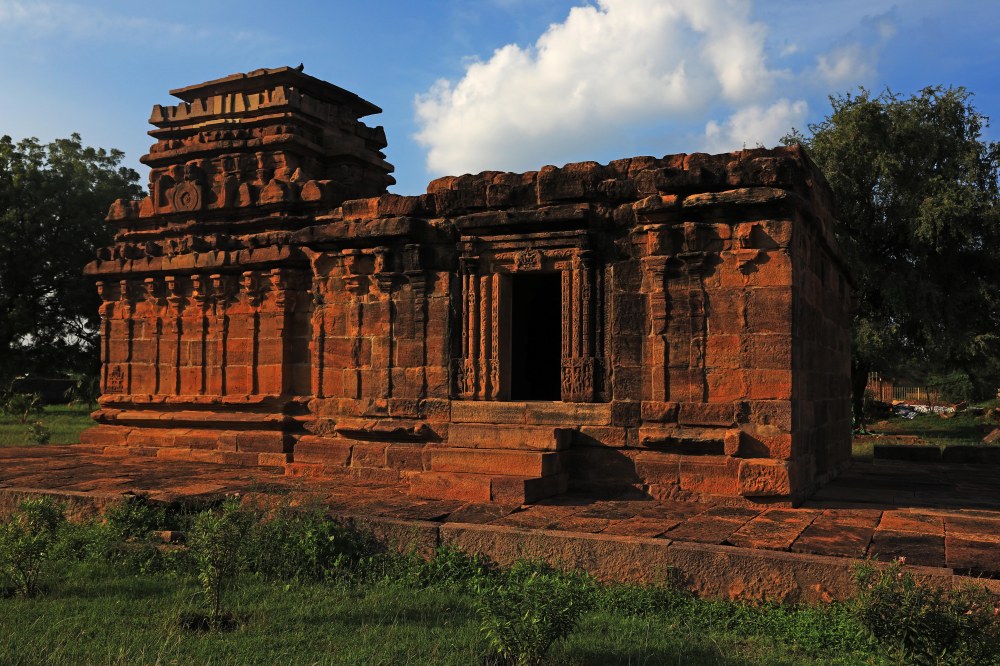
Jyotirlinga Temple Complex
Our final stop was the Jyotirlinga Temple Complex.
The complex contains a principal shrine with a carved pyramidal superstructure, along with several smaller temples.
By now, we had covered a considerable number of monuments. Yet Aihole still seemed to have more to offer.
There are many other temples scattered around the village, some of them tucked away from the more frequently visited groups. Exploring them properly would have required considerably more time.

Aihole: One Day Was Not Enough
We had to bring our exploration of Aihole to an end. Our travel schedule did not allow us to stay longer, and we still had to make our way back towards Hospet to catch our train.
Looking back, I felt that we had only scratched the surface.
Aihole is not a destination that should be rushed. Its temples are spread across different parts of the village, and each group deserves time and attention. Two days would be a much better choice for anyone wishing to explore the monuments in detail.
The journey through Aihole, Badami and Pattadakal offers an extraordinary opportunity to understand the evolution of Indian temple architecture. The monuments are not merely isolated attractions; together, they tell the story of an artistic tradition taking shape over several centuries.
We left Aihole with a sense of admiration for the artisans who transformed stone into such remarkable works of art.
And with one lingering thought: I would love to return someday and explore the temples we had missed.
Tramp’s Tips
- Location: Aihole is in Bagalkot district, Karnataka, on the banks of the Malaprabha River.
- Getting there: Badami is a convenient base for visiting Aihole and Pattadakal. A private vehicle or hired taxi makes it easier to explore the scattered monuments.
- Where to stay: Badami offers a wider choice of accommodation. Aihole can also be considered if suitable accommodation is available for your travel dates.
- How much time to keep: Allow at least a full day for the major monuments. Two days would be better for a more detailed exploration.
- What not to miss: Durga Temple, Meguti Jain Temple, Ravana Phadi Cave, Ladkhan Temple and the Archaeological Museum.
- Food: Plan your meals in advance. Options within the village may be limited, so check availability before setting out.
- Nearby attractions: Combine Aihole with Badami, Pattadakal and Mahakuta for a rewarding North Karnataka heritage circuit.
A small request to fellow travellers: Aihole is an important archaeological and religious landscape. Please respect the monuments, avoid touching or climbing on fragile structures, and follow the instructions of site authorities.
Reference:
1. Badami Aihole Pattadakal by George Michell

