
The western part of Rajasthan, as a Bengali, had been on my bucket list since my teenage years. After reading the book ‘Sonar Kella’ by Satyajit Ray and watching the movie, I dreamed of being there. In lieu of travelling with a team, I intended to be in Jodhpur, Jaisalmer alone. I preferred none with me while strolling around the blue walled lanes in Jodhpur, I wanted nobody in my tent on the sand dune. But travelling to Western part of Rajasthan is always extravagant. Determinately, in the Christmas week of 2022, I made a pocket-friendly DIY plan that covered all my bucket list. In the next 3 posts I will apportion my entire trip to Jodhpur, Jaisalmer and Bikaner.
Please note, I travelled by train, bus and Rapido , and stayed in Zostel, the famous hostel chain in India. A solo traveler, couple or a family with three to four members can follow this while making DIY plans. But for the later cases, obviously you need an auto rickshaw. But a team with weak people must hire a cab. Also, if you can avoid the Christmas week then your cost can be less.

Let’s start the story of my peregrination. As the Duronto Express to Bikaner chugged and commenced from Sealdah Station, I felt goosebumps. Next afternoon the train reached NDLS and after an insipid stay of forty five minutes, it commenced peregrinating towards my dream destination. Passing by the green landscape of rural Haryana the train reached Sadulpur, the first station in Rajasthan. Determinately, with a delay of one and half hours the train arrived at Bikaner. I put up in a hotel near the rail station. It was virtually a sleepless night due to excitation. I got up very early and by an early morning train, conclusively I reached Jodhpur.

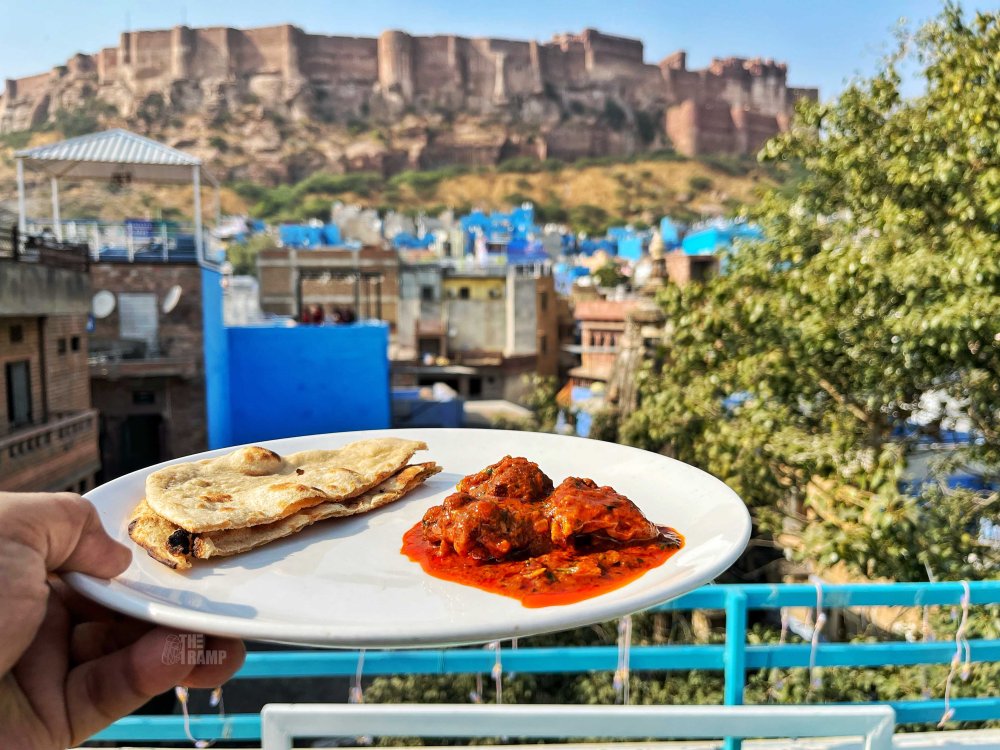
I had to take an auto rickshaw to reach Zostel, located in Sutharo Ka Bass adjacent to Toorji Ka Jhalra. I checked-in, had lunch in the rooftop restaurant. The clear view of Mehrangarh from the restaurant and the exotic taste of Laal Maas (signature dish of Jodhpur) made a great commencement of my peregrination.
I decided to stroll in the local market and explore street victuals. You can check out the details of my exploration of Jodhpur street aliment by clicking here.
Next morning, I got up early and had a sumptuous breakfast with Onion Kachori in Janta Sweets. I peregrinating towards the fort. The auto rickshaw puller asked for 100 rupees. Thus I checked Rapido and reached the fort for 20 rupees only.
Mehrangarh Fort:
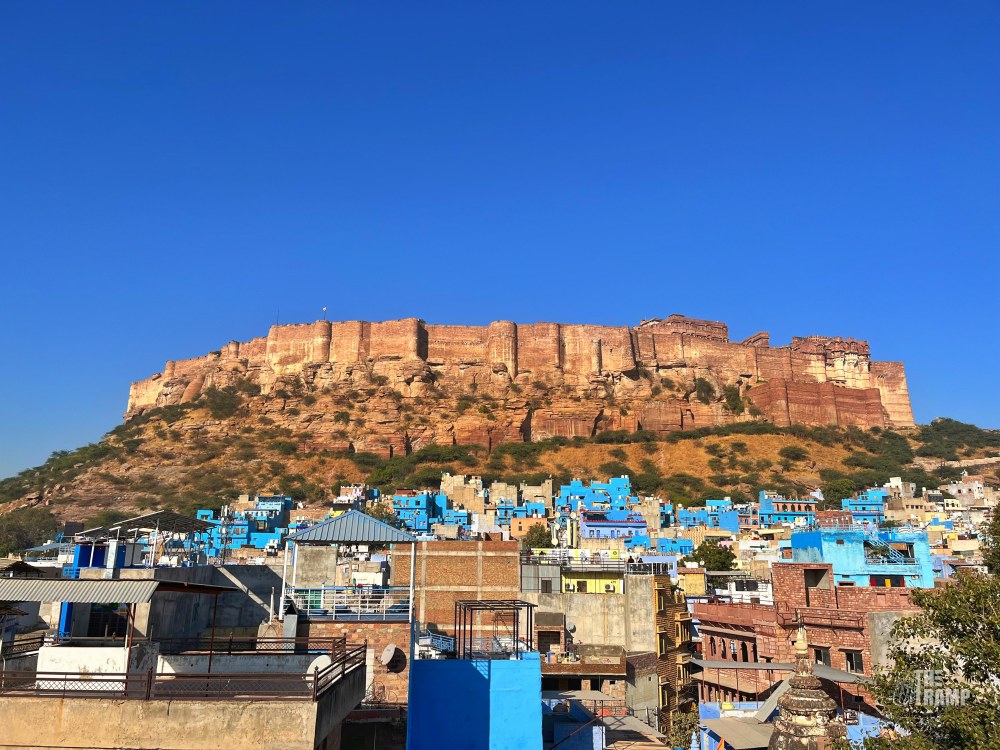
Founded during the regime of Rao Jodha Rathore, the chief of the Rathore clan, the Mehrangarh Fort stands atop a hill. After one year of his coronation, Rao Jodha Rathore decided to move his capital from Mandore to Jodhpur. He found Jodhpur to be a safer place. He founded the city Jodhpur in 1459. In the same year, he gave Rao Nara (a trusted avail of the royal family) the designation of ‘Diwan’. With the avail of Rao Nara, the Fort was founded on the hill top so that the entire city and the wide span of area can be optically canvassed exhaustively. The fort is nowadays the iconic monument of the state and inscribed into UNESCO World Heritage. However, the present generation of the royal family do not stay there. Instead, Umaid Bhavan Palace is their present location. The fort is planarly accommodating the purport of tourism and encloses a museum of the royal family.

I did not take the guided tour because I kenned every tidbit of the fort. Instead, I endeavored to explore by my feet.
There are seven ‘pole’s (gates) – Jai Pol, Fateh Pol, Gopal Pol, Dedh Kangra Pol, Amruti Pol, Loha Pol, Suraj Pol.

The Rapido driver dropped me at the ingress door. Ambulating along the waiting area, I reached the ticket counter. Or to be more precise, I reached at the tail of a long queue. The area was over crowded. Waiting for at least half an hour I managed to get a ticket to go inside.

I entered from Jai Pol. This is the outer ingress. Ambulating a few yards I crossed Suraj Pol, the innermost gate which provides access to the palace intricate and Daulat Khana Chauk. The museum commences from here. The four storied museum echoes the royalty and lavishness of the Rajput Kings.
The fort additionally houses an immensely colossal amassment of Rajput miniature paintings. I spent most of my time in front of the paintings. Phool Mahal, Jenana Mahal, Rao Jodha Palace, Chamunda Mata Temple all have their own architectural resplendency.
During the exit, I stood in front of Suraj Pol. I optically discerned a sea of boxy indigo houses stretching for more than 10 kilometers along the walls of the historic walled old city.

Later In the evening I came back to the fort to witness a magnificent sunset that I will discuss later. Now it is time to discuss the next architecture that I visited – Jaswant Thada.
Jaswant Thada:
Located at a distance of 1 kilometre away from the Mehrangarh Fort, Jaswant Thada is a must go architecture in Jodhpur. I orchestrated to go ambulating. But somehow I felt tired. A middle aged man asked me if I wished I could sit on his scooty. He drove me to Jaswant Thada.

Away from the urban hubbub of the city, Jaswant Thada offered me a placid time. The entire cenotaph was built on a lake by Maharaja Sardar Singh of Jodhpur in 1899. White marble stone was brought from Makrana to build the cenotaph. The view of the city as I found from there was authentically superb.

I found a Sarinda player nearby. He was playing some Rajasthani folk music. I decided to sit in front of him. He is a wondrous musician.
I was scarcely hungry. It was virtually afternoon. I felt hungry but going back to the city won’t be a good decision. Because my orchestration was to witness the sunset from the fort.
Sunset from the Fort:
I came back to the fort by Rapido, climbed up to Suraj Pol and witnessed a lovely sunset.


In the evening, I went to have the Rajasthani Thali in Hotel Gypsy. The details are indited in this post.
Toorji Ka Jhalra:
Next morning I commenced from Toorji Ka Jhalra, just a minute’s walk from Zostel. Built by Maharaja Abhay Singh’s consort, Toorji Ka Jhalra is one of the finest stepped wells of India.
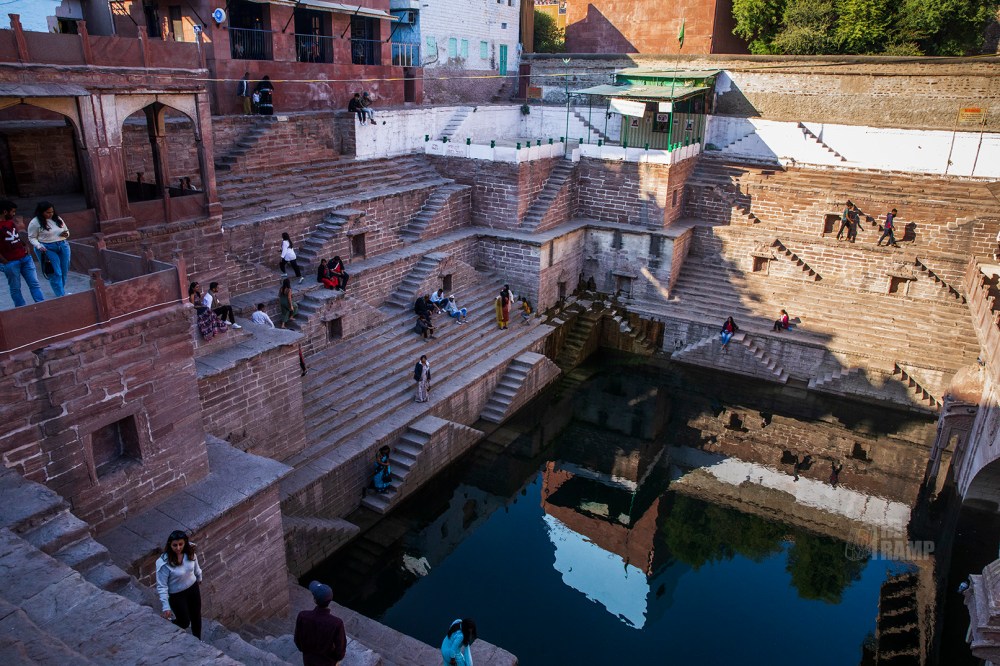
The geometry of the well magnetizes photographers to shoot. When I went there, lots of photographers were diligent pre wedding shoots.
Ghanta Ghar (Clock Tower):
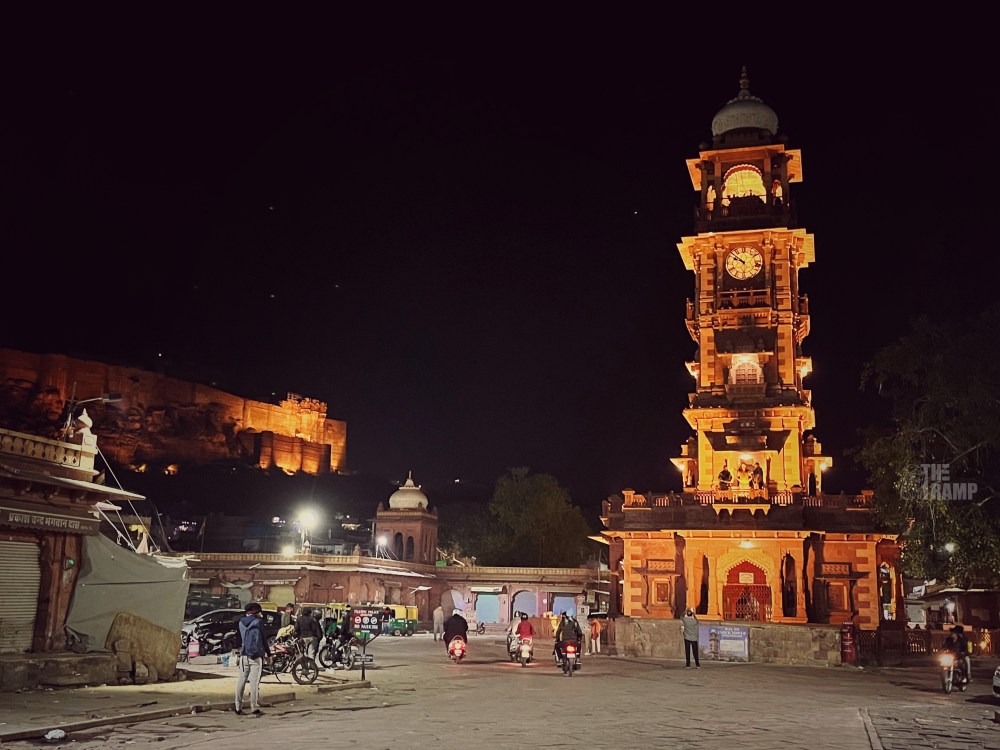
Next I visited Ghanta Ghar. An antediluvian clock tower built by Maharaja Sardar Singh stands tall, preserved in the middle of the city, believed to be the sole source for tracking time for locals in the old days of the city.

The adjacent market, kenned as Sardar Market or the Ghanta Ghar Market, is the most popular market of Rajasthan. The market remains crowded throughout the day and to be very veracious, tourists should visit this market for local purchase.
I had lunch in Gopal Hotel with Gatte Ki Sabzi and Haldi ki Sabzi then peregrinating towards Umaid Bhawan Palace.
Umaid Bhawan Palace:
Umaid Bhawan Palace, one of the world’s most sizably voluminous private residences, is designated after Maharaja Umaid Singh, grandfather of the present owner, Gaj Singh. The palace has 347 rooms and is the principal residence of the former Jodhpur royal family. A component of the palace is managed by Taj Hotels the other part of the palace is a museum.

The Royal museum and garden were intriguing but to me the story abaft the palace seemed to be more fascinating.
The story commences with an imprecation by a saint who had verbalized that a period of drought would follow the good rule of the Rathore Dynasty. Thus, after the terminus of the about 50-year reign of Pratap Singh, Jodhpur faced astringent drought and famine in the 1920s for a period of three consecutive years. The farmers of the area, faced with this hardship, sought the avail of the then Maharaja, Umaid Singh,[ who was the 37th Rathore ruler of Marwar at Jodhpur, to provide them with some employment so that they could survive the rigorous conditions. The Maharaja, in order to avail the farmers, decided to build a lavish palace.
Mandore Garden:
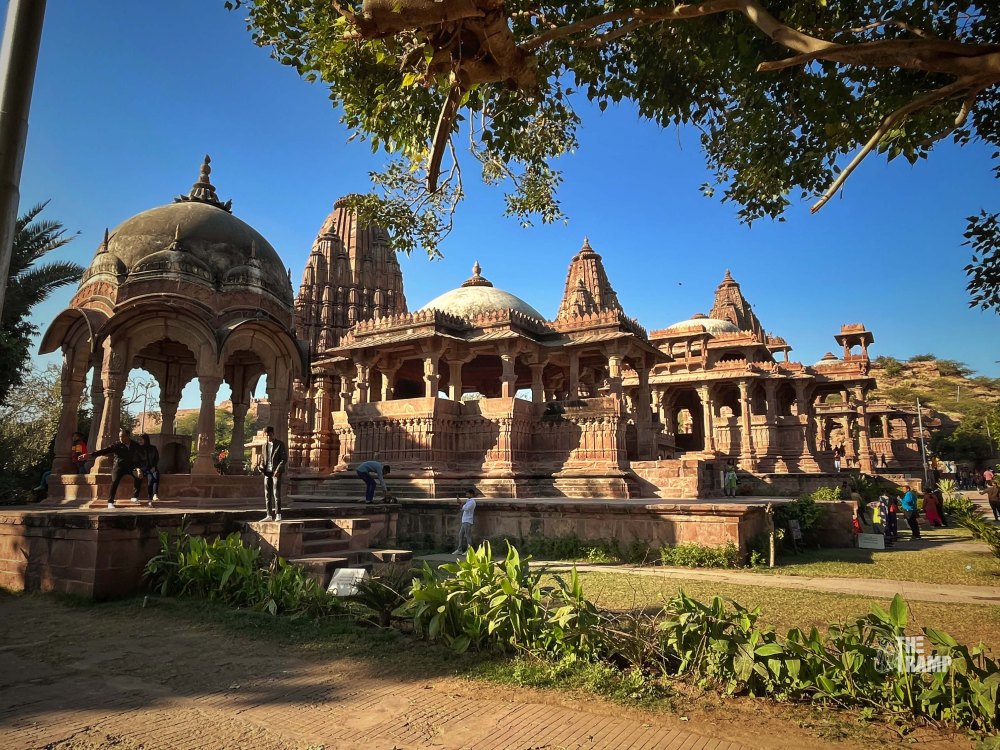
From Umaid Bhavan Palace, I took an auto rickshaw and reached Mandore Garden. The garden is located on the outskirts of Jodhpur. The garden is green and embellished with fountains.

Temples with lovely architecture were found there.


I came back to Zostel from Mandore garden. My roommates had made an orchestration to relish the evening in the rooftop restaurant. A band of local folk musicians performed folk musical compositions. It was a cold evening last week in December. Heedfully aurally perceiving folk musical compositions and consuming warm drinks was a lovely experience. For dinner, we had Laal Maas and bread.
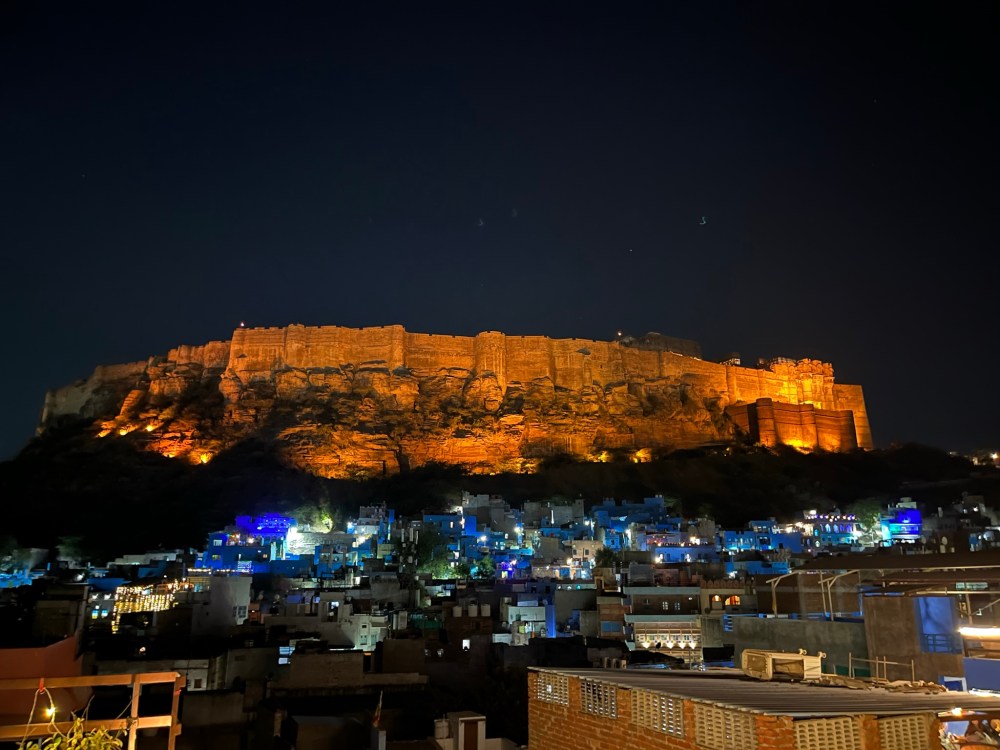
Strolling on the bilanes of the Blue City:
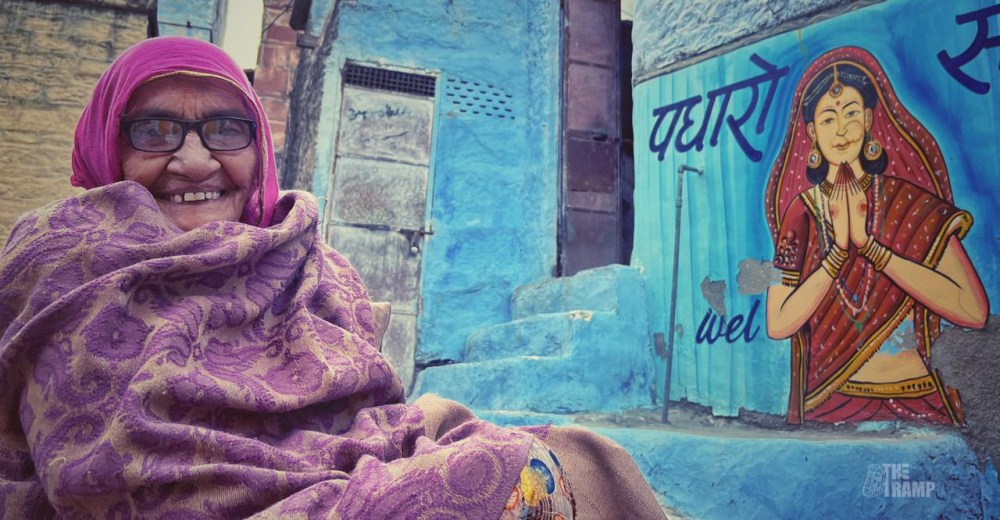
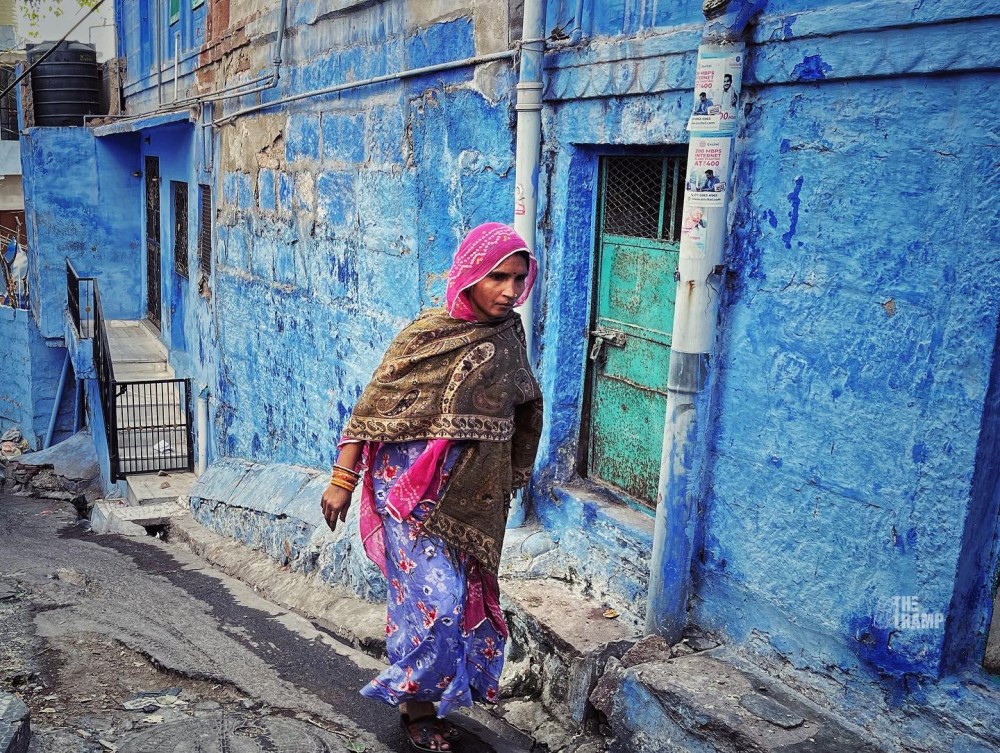
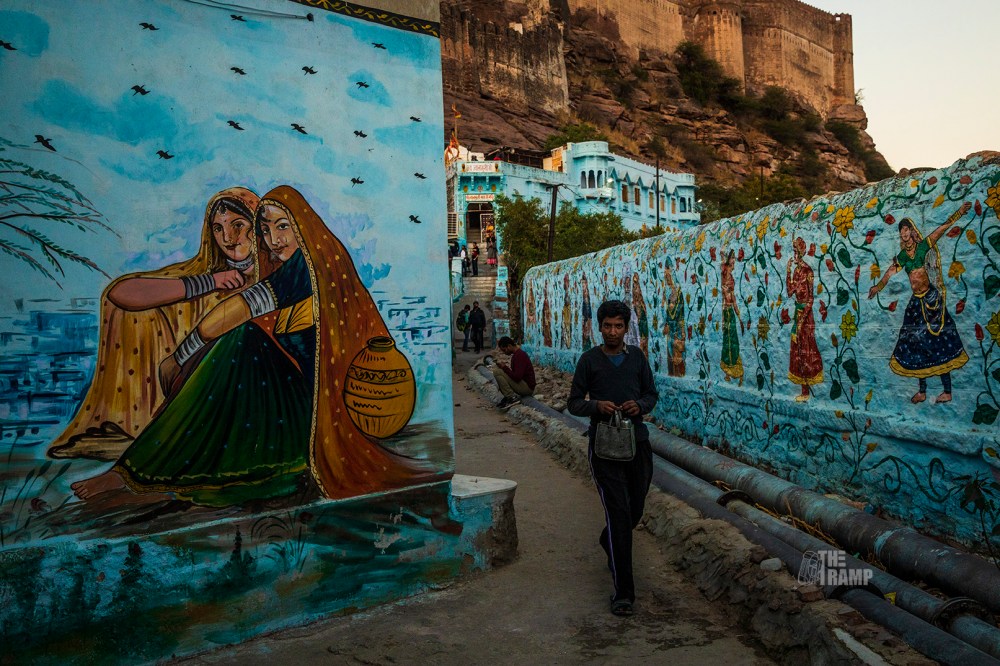
Next day I got up late and spent the entire day in the blue city. There is a story behind the blue walls.

Being a desert town the city was not spread a lot. Thus everybody had to stay within a inhibited vicinity. Casteism is an earnest issue in Rajasthan. If everybody lives in the same area, how can the abode of Bramhins be identified? Then it was decided that the domicile of the Brahmin families should have blue in the outer wall. Since a major population of the city was Brahmin, an entire neighborhood became blue.
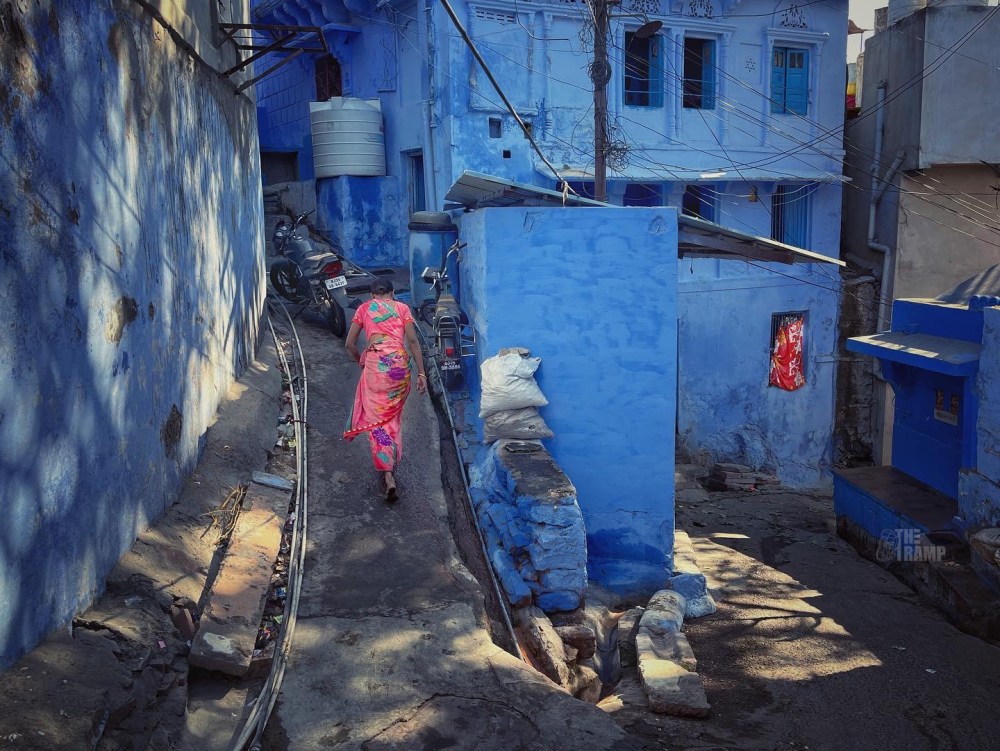
Glimpses of my whole day strolling is given below:



Osian:
Lying at a distance of 69 kilometres, Osian is famous as home to the cluster of ruined Hindu and Jain temples dating from the 8th to 12th centuries. Etymologically Osian is derived from Oasis. During the Gupta Dynasty, this oasis was a major trading centre and later During the Gurjar Pratihar era, the temples were built.
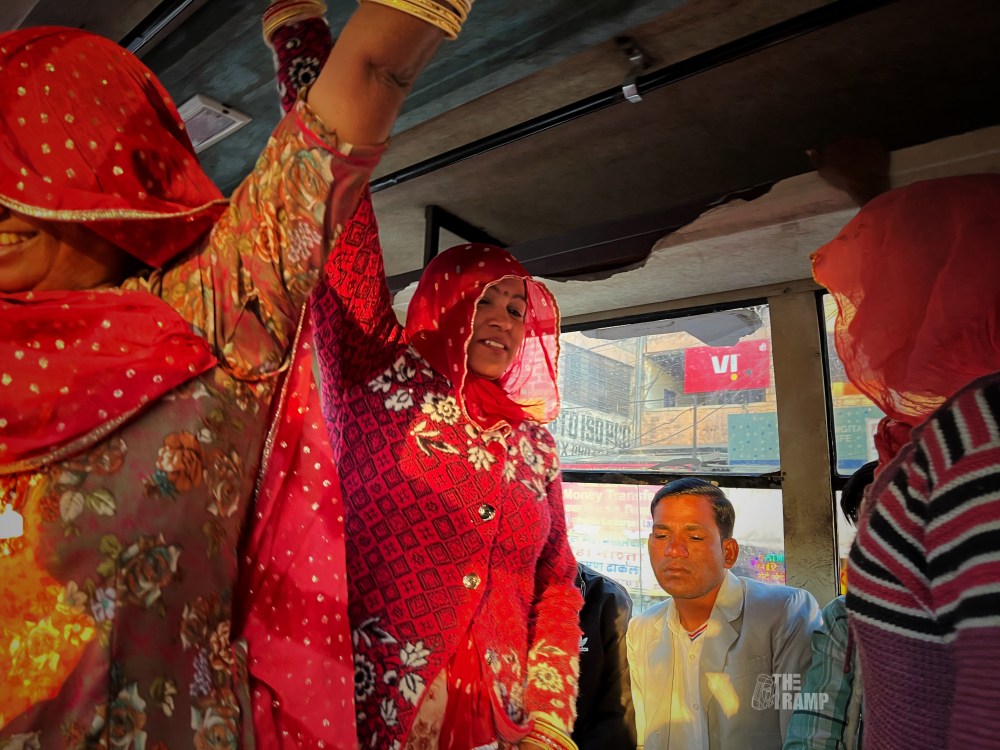
From Jodhpur Bus Terminus, I availed a local bus and reached there.
Osian houses the only temple of the goddess Sachi Devi (Sachiya Mata), the beloved consort of lord Indra. Apart from Sachi Devi’s temple, there are 10 shrines in a group – the Dashamavidya Temples stand out in their grace and architecture.

I spent the entire day in Osian and came back after dusk.
Next morning, I got up at 5.30 and went to the railway station for my next destination Jaisalmer.

Shoppping:
Shopping is an integral part of travelling to Jodhpur. For purchasing woolens (camel woool), fridge magnets, Ghagra-choli, turban and obviously fridge-magnets along with other shouvenirs, Ghanta Ghar Market is the best options. The market starts from Ghanta Ghar and continued towards the fort.
Another market, Nayi Sarak Bazar is also famous. But the market houses a bit expensive shops but the quality is undoubtedly good.
My food exploration:
Jodhpur is a paradise for the foodies like me. Please browse to the following post.

 The Tramp
“Sardar Bazaar mein shopping karna best experience tha. Local log friendly and our market full of culture.”
URL- https://jodhpurtourpackage.com/one-day-jodhpur-tour.php
One-Day Jodhpur Tour
LikeLike