
The midday sun in Hyderabad stretched lazily over the city, its golden heat wrapping itself around the aroma of street-side dosa stalls, chai corners, and bustling markets. I wandered through the lanes, drawn not by the clatter of traffic, but by something deeper—a craving, not just for food, but for a connection to the land.
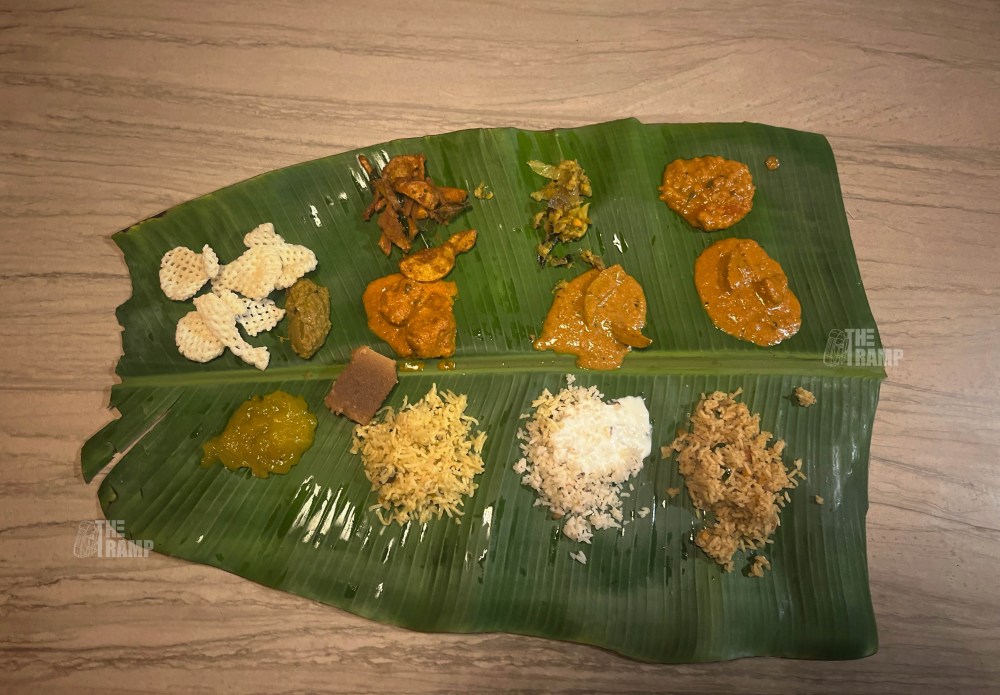
Local thalis had always held a special place in my heart. Sumptuous, nutritious, and reflective of the climate. They weren’t just meals; they were wisdom served on a plate, shaped by centuries of tradition. Today, I sought that wisdom in the famed Subbayya Gari Buddha Bhojanam, where flavors met history, where meals told stories, and where heritage was not just celebrated but lived.
The Ritual Begins
As I stepped inside, the air was thick with the scent of ghee, spice, and slow-cooked nostalgia. The servers moved with a practiced grace, their traditional attire an echo of meals long perfected. A seat was offered, and before me, a banana leaf was placed—glistening with water, its freshness a quiet assurance that this was more than just a meal; it was a ritual.
The first bite was always the most sacred. The podi (spiced powders)—karivepaku podi and kandi podi—mixed with hot rice and ghee melted onto my tongue like a warm whisper from an elder, telling stories of temple offerings and culinary secrets that had endured time.
The mudda pappu (plain dal) arrived, simple yet comforting, much like childhood meals that never changed, a dish that had nourished farmers, kings, and wanderers alike for centuries.
Then, the pulusu (tamarind-based stew) hit my palate—its tangy depth a testament to the Vijayanagara kitchens, where balance wasn’t just a concept but a way of life. I marvelled at how flavors could mirror emotions—sour for longing, spice for excitement, sweetness for nostalgia.
The vankaya kura (brinjal curry) followed, smoky and luscious, carrying whispers from Kakatiya palaces, where brinjal was treated like royalty.
More Than a Meal—A Lesson in Heritage
As the meal unfolded—sambar, rasam, and cooling curd rice—I realized that every dish was a dialogue. The sambar, infused with slow-cooked vegetables, arrived with subtle Persian and Mughal influences, while the rasam, a peppery elixir, bore traces of ancient Ayurvedic wisdom, once served as a healing broth for warriors.
The nethi boorelu (sweet dumplings), once temple offerings, spoke of devotion and abundance.
The buttermilk, a quiet companion, was nature’s answer to the harsh heat of Andhra, soothing, cooling, and familiar.
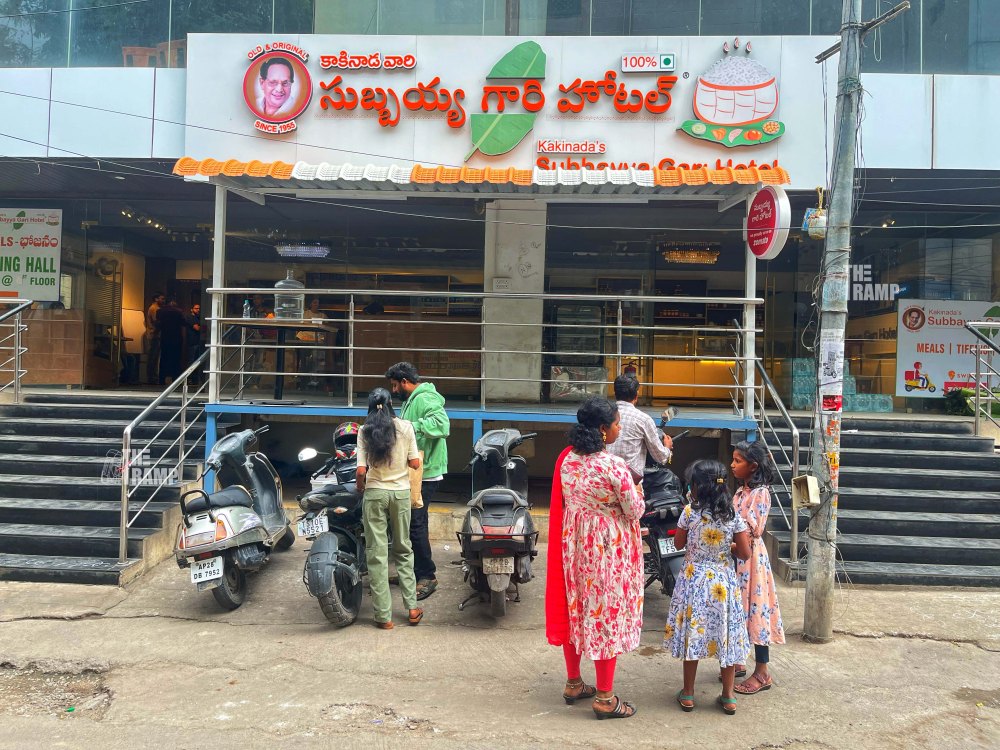
Priced at ₹600 for two, this thali wasn’t just about affordability—it was about access to a piece of history, a connection to something deeper.
As I leaned back, my fingers still bearing the faint scent of ghee and spice, I realized something:
This wasn’t just a meal.
It was an embrace from the past. It provided a lesson in climate-conscious eating. It reminded us that food is memory and that heritage is best experienced through taste.
The Hyderabadi Andhra Thali at Subbayya Gari Buddha Bhojanam was not just nourishment. It was a passage through time, a communion with the generations who perfected these flavors, and an invitation to become part of something eternal.
Tramp’s Tips:
- Located at Ameerpet, Kakinada Subbayya Gari Hotel can easily be reached by Metro Rail. Nearest station Ameerpet (The crossing of Blue Line and Red Line) is at a walkable distance.
- Busses are available from various locations. Nearest stopage is Ameerpet or Sheesh Mahal.
 The Tramp