
Aurangabad, often referred to as the depot of ancient Indian art, captures the essence of India’s rich cultural tapestry. Sidhu Jyatha, the informative character from Satyajit Ray’s Feluda series, wasn’t wrong when he called Aurangabad the gateway of the crowning jewel of ancient Indian Art. This historic city is a melting pot of fascinating history, ancient dynasties, medieval Sultani influences, and the grandeur of Mughal emperors, making it a paradise for explorers with a thirst for culture.

Aurangabad is in the heart of Maharashtra. It is easily accessible by rail and air from major cities like Mumbai and Hyderabad. As a devoted train enthusiast, We (my mom and I) chose rail as our mode of transport, traveling to this captivating city. Here is the first part of our trip.
Our pre-booked car was waiting for us outside the Aurangabad railway station. Our base for the week-long exploration was the MTDC hotel. After a quick refresh, we started our exciting seven-day journey, which included visits to Aurangabad, Ellora, and Ajanta.

Day 1:
Exploring Aurangabad Caves:
The story of our journey unfolded at the Aurangabad Caves, ancient creations carved by Buddhist monks during the Vakataka and Kalachuri periods. These caves, each filled with history and artistry, were grouped into Western, Eastern, and Northern clusters.

Our exploration began with the Western Group. A kind man at the ticket counter reminded us to keep our tickets safe as they would be needed again for the Eastern caves. Excitement bubbled up as we entered Cave 5, a peaceful monastery with a small shrine and a sacred walkway. Each cave held its own wonder. Cave 4 revealed ceilings with ribbed patterns. Cave 3 showcased columns with intricate carvings. Cave 2 displayed an impressive Dwarapala adorned with five Nagas.
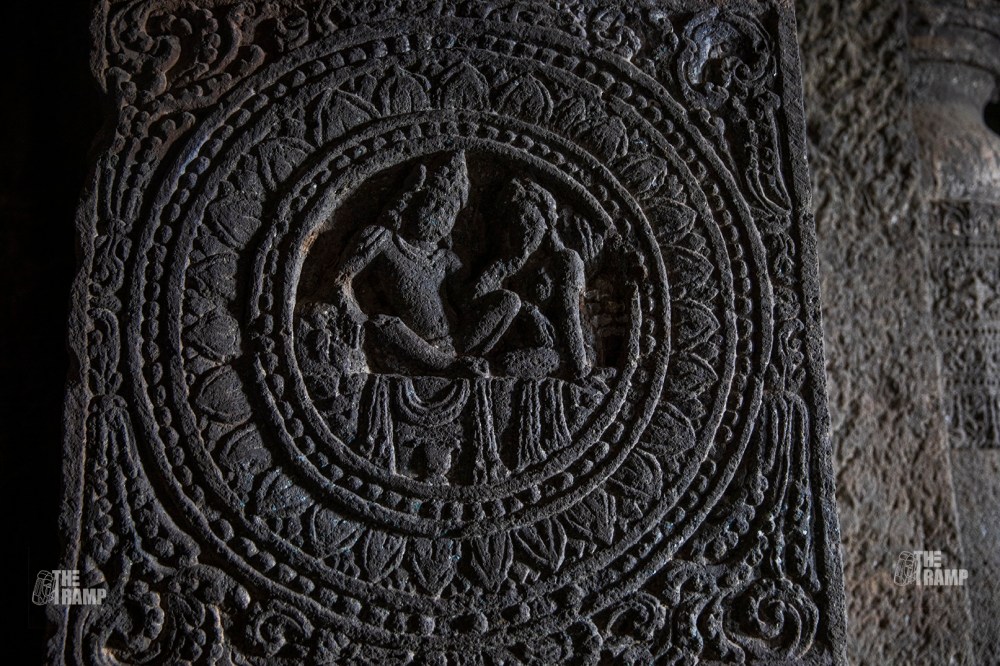

Though we could not enter Cave 1 due to loose rocks, its mystique tempted me to capture it with my camera. A stern voice from the security guard warned me against doing so, but my curiosity remained unshaken.

The Eastern Group offered more marvels. Cave 7, reminiscent of Brahmanical temples, presented sculptures inspired by Mahayana mythology, including figures of Padmapani and Avalokiteswara. Cave 6 dazzled with depictions of Buddha and beautifully sculpted goddesses like Saraswati and Manjusree.
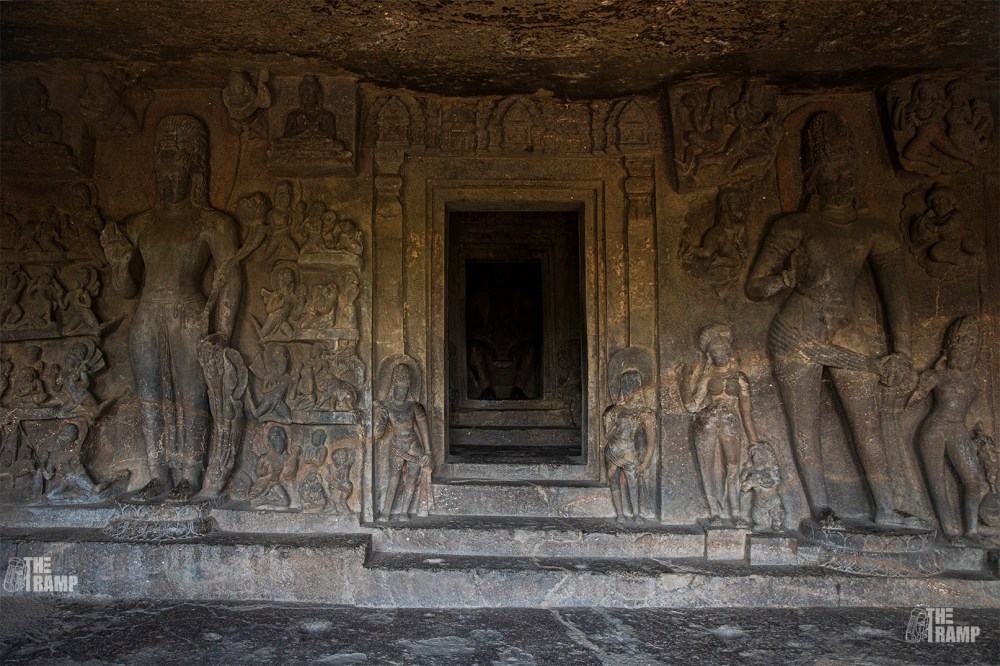
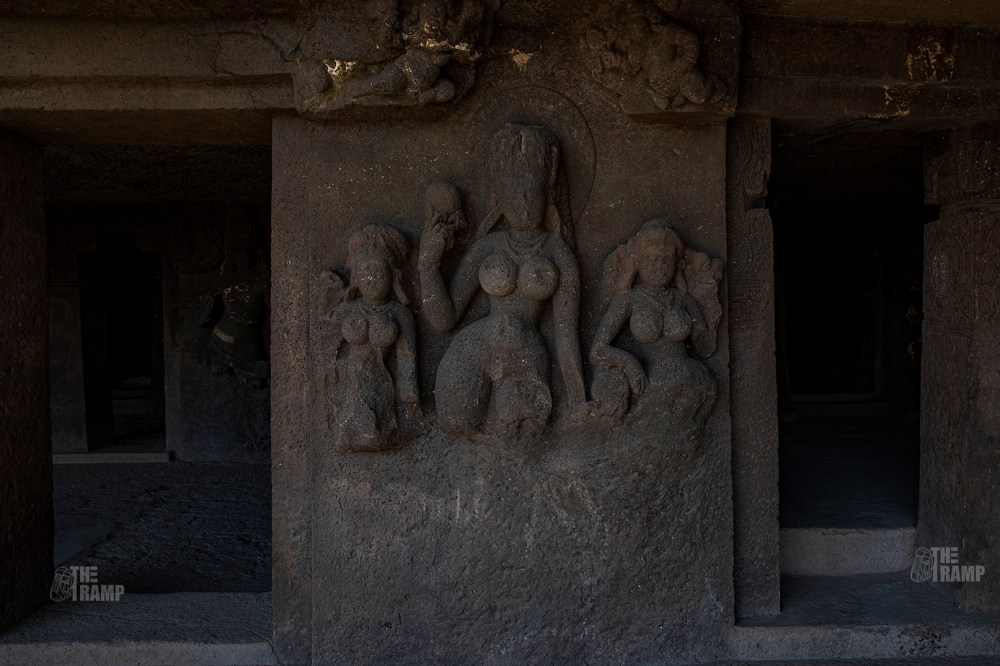
Every step brought us closer to the magic of the past, weaving a story of adventure, discovery, and awe.
Maharashtrian Thali:
By lunchtime, hunger pangs led us to ‘Maharashtrian Bhojonalaya,’ where we relished a delectable Maratha-style Thali. Please click here to know more about Maharashtrian Thali. Detail of the Maharashtrian Thali can be found here.

The afternoon awaited with more architectural wonders.
Soneri Mahal: A Golden Legacy:
The Soneri Mahal, or “Golden Palace,” beckoned us with its splendor, a jewel of 17th-century Mughal architecture nestled against the scenic slopes of Aurangabad’s outskirts. The palace stood proudly, its magnificence framed by the greenery of the hill and the elegance of its structure.
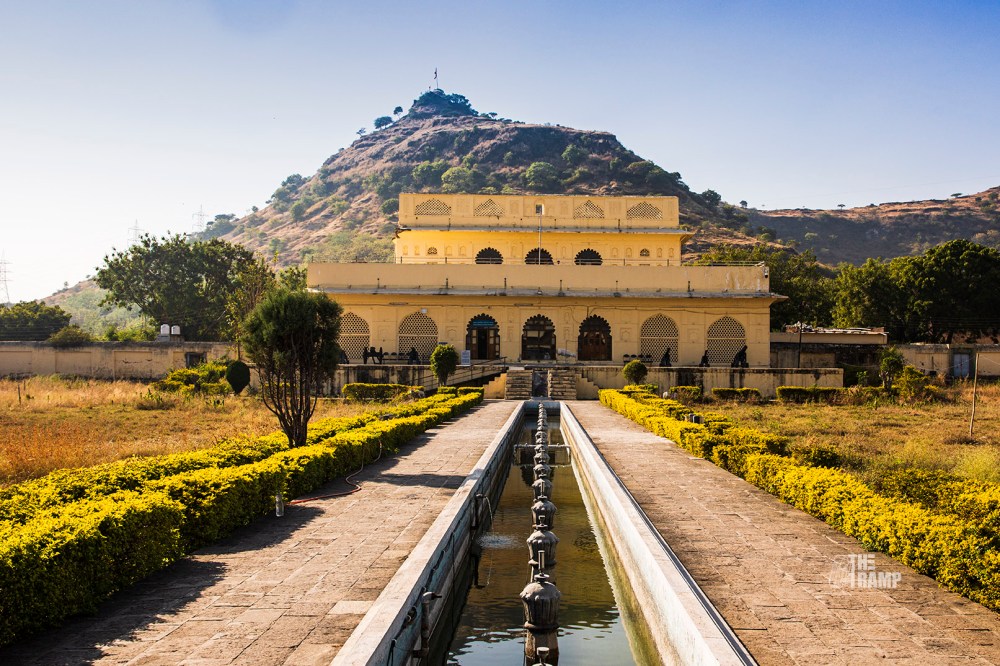
As we approached, a wide central pathway unfolded before us, flanked by lush gardens that breathed life into the surroundings. The pathway guided us to a serene rectangular water reservoir, its surface reflecting the sky above like a mirror. Though the museum and library housed within the palace were closed for renovations, their absence did little to dull the enchantment of the site.
The intricate details of the palace’s design whispered tales of a bygone era, and its regal aura enveloped us, leaving us mesmerized by the timeless beauty it offered. Each corner seemed to hold a story waiting to be discovered, as if the Golden Palace itself had become a part of our adventure.
Biwi Ka Maqbara – The Taj of the Deccan:
Aurangabad boasts a jewel in its crown—the Bibi ka Maqbara, fondly called the “Taj Mahal of the Deccan.” Nestled in Begumpura, this historic mausoleum is a tribute to Dilras Banu Begum (Posthumous title: Rabia-ud-Durrani), the beloved wife of Mughal Emperor Aurangzeb.

Aurangzeb sought inspiration from the Taj Mahal to honor his wife, crafting this magnificent tomb. The mausoleum is set within a stunning charbagh-style garden, presenting a serene landscape that leads to its grandeur. While Crown Prince Azam Shah dreamed of rivaling the splendor of the Taj Mahal, resource limitations confined the structure’s lavishness. The dome, the heart of this tomb, is carved entirely in marble, while the remaining construction relies on plaster—stones sourced from Jaipur’s famed mines.
Designed by Ataullah, the mausoleum is built on a high square platform, flanked by four elegant minarets. Its enclosing wall features intricately crenelated recesses and bastions, adorned with delicate pilasters and crowned by ornamental minarets. The Baradaris—pillared pavilions—stand gracefully on the northern, eastern, and western sides of the walls.
We entered through the southern gate, marveling at its intricate foliage designs etched on brass plates. Beyond, a serene tank and a screened pathway with cascading fountains welcomed us, leading up to the tomb’s plinth. Marble encases the tomb up to its dado level, transitioning to basaltic trap with exquisite stucco adornments.

The resting place of Rabia Durrani lies on the ground floor. It is surrounded by an intricately pierced marble screen. The screen forms an octagon. Descending steps revealed this tranquil chamber—a sight uniquely viewable through the octagonal opening above, offering a glimpse of timeless devotion. Bibi ka Maqbara enchants not merely as a monument. It stands as a story sculpted in stone—a tale of love, artistry, and perseverance.
City of Gates:
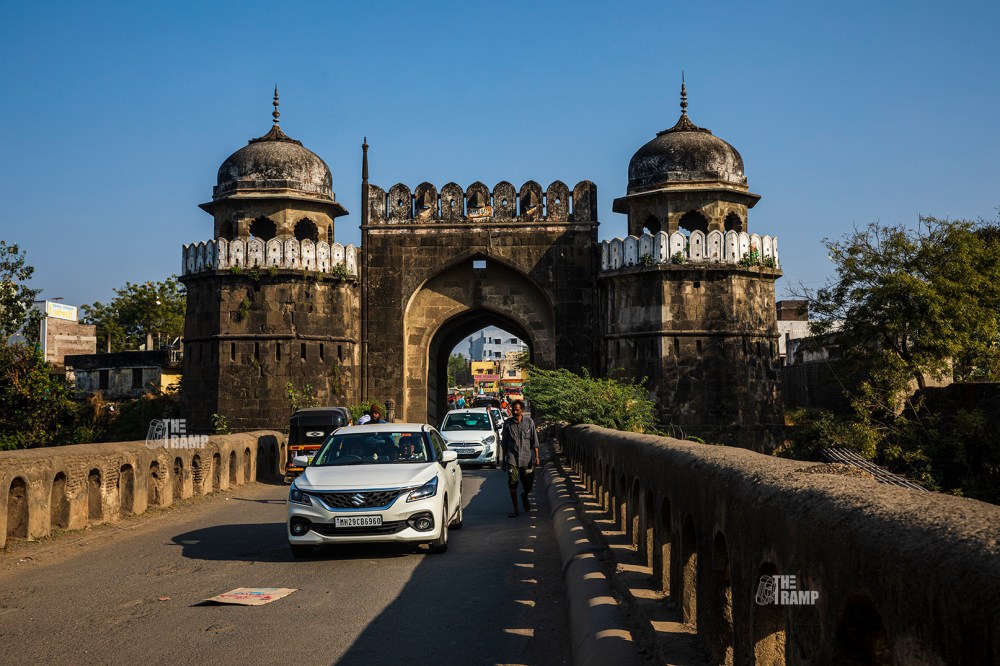
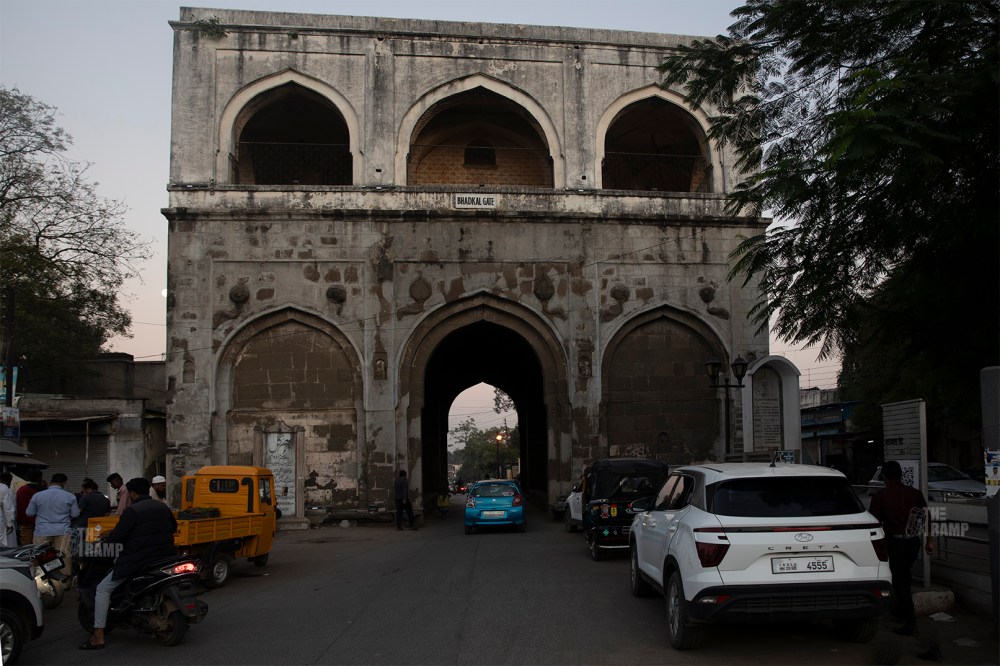
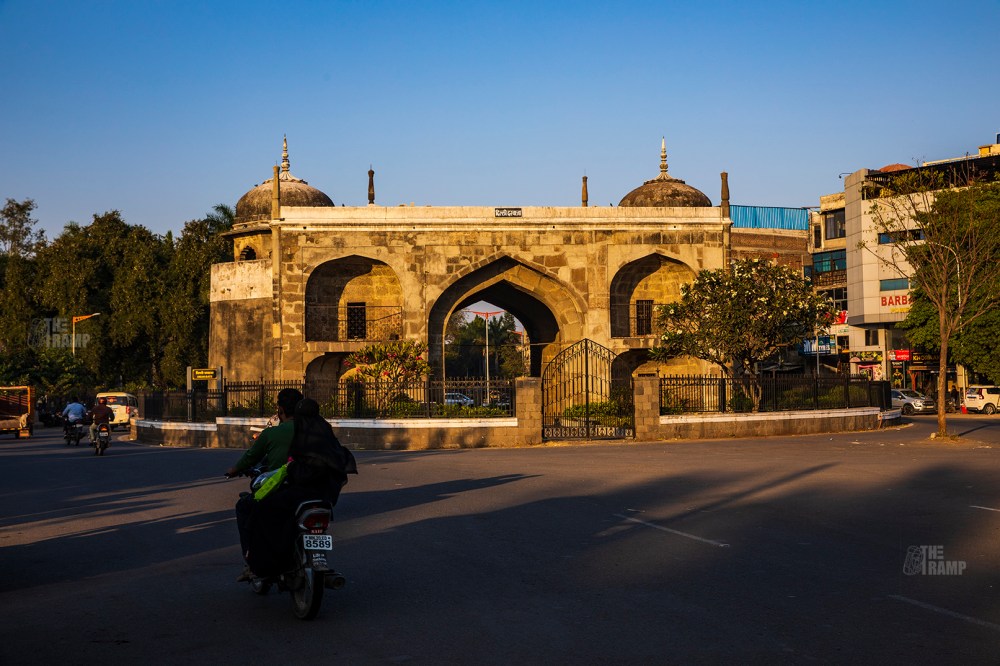
Aurangabad’s nickname, the “City of Gates,” reflects its historic legacy of 52 gates, many of which still stand tall. These gateways embody the city’s architectural and cultural wealth, creating a sense of time travel as you navigate through them.

Himayat Bagh and Salim Ali Lake:
Our exploration concluded with a visit to Himayat Bagh, a Mughal Garden once brimming with royal splendor but now serving as an agricultural research center. Though much of its glory has faded, the Baradari (pillared pavilion) still stands as a remnant of the past but the condition is dilapidated.

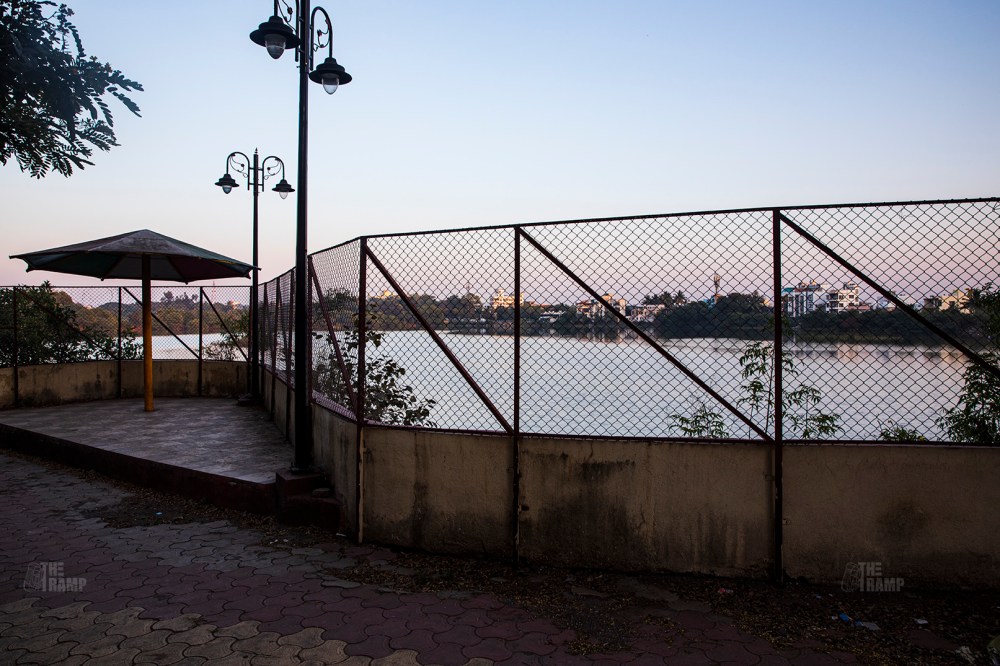
As dusk settled, we arrived at Salim Ali Lake, named after India’s eminent ornithologist. Surrounded by chirping birds and a serene ambiance, the lake was a reminder of the simpler joys of life. My mother’s keen bird-watching skills identified species as I watched the graceful flight of birds against the setting sun.
Thus ended our first day in Aurangabad. The city had already revealed its layers of history and culture, leaving us eager for the treasures awaiting us on the next day’s itinerary – Daulatabad Fort, Bani Begum Garden and Aurangzeb’s Tomb. Stay tuned for more adventures as we dive deeper into Aurangabad’s mystique.
Tramp’s Tips:
- MTDC Aurangabad Resort is not at all tourist friendly. I like to stay in Government accommodation and I have great memories of staying in Government Hotels. But this experience I will try to forget soon. The Government Hotels in Ellora and Ajanta are really great.
- Please try to visit Bibi Ka Maqbara in the second half for better light
- The climate of Aurangabad is dry. Please carry a water bottle and keep yourself hydrated.
 The Tramp