
Art is a whisper from the past, a murmur of devotion frozen in stone. As my mother and I stood before the entrance to Ajanta’s caves, I felt a quiet reverence settle within me. These were not mere carvings and paintings—they were echoes of human passion, the toil of unseen artists who chiseled their devotion into permanence.
The road to Ajanta wound through lush landscapes, the greenery embracing the cliffs as though guarding a sacred realm. The sun, gentle yet golden, cast a diffused glow upon the rock-cut monasteries, revealing glimpses of an era where artistry was prayer, and every stroke on the walls bore the weight of faith.
Brief History
The Ajanta Caves were developed in two distinct phases. The earliest caves date back to the Satavahana dynasty (2nd century BCE to 1st century CE), when Buddhist monks carved the first rock-cut structures as monastic retreats. The second phase, which saw the creation of the most elaborate and richly decorated caves, occurred during the reign of the Vakataka dynasty, particularly under King Harisena (circa 460–480 CE).
The Journey Begins
From the car park, we boarded an electric bus—the only way to reach the caves. The journey was quiet, save for the rhythmic hum of the vehicle and the occasional murmur of anticipation from fellow travelers. My mother looked out at the towering rock formations, their rugged surfaces concealing masterpieces within.

“There is patience in these stones,” she said, almost to herself. And indeed, Ajanta was patience—the patience of artists, monks, and craftsmen who had labored with devotion, carving their beliefs into eternity.
Cave 1–5: The Dawn of Buddhist Art
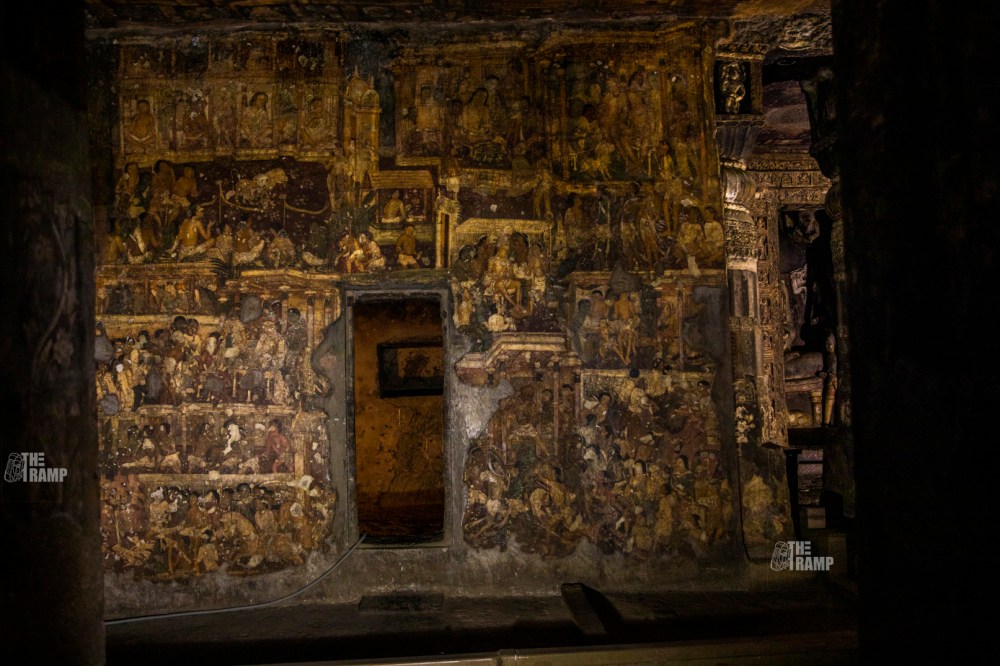
We stepped into Cave 1, where the remnants of ancient grandeur stood unfazed by time. The entrance was flanked by guardian figures, their expressions both fierce and welcoming, as if standing watch over centuries of contemplation. Inside, dim light filtered through, revealing exquisite murals—stories of the Buddha’s past lives painted with delicate precision.

Cave 2 held a spectacle of sculptural beauty—goddesses adorned the ceilings, their celestial grace untouched by decay. The vivid hues of red, ochre, and deep blue whispered the secrets of a time when brushes moved with devotion, where hands created without hesitation.

Caves 3, 4, and 5 continued the theme of monastic serenity, the stone cells and prayer halls speaking of an era when silence was sacred. Here, the paintings, though faded, retained their soul—the expressions of the figures still profound, their eyes telling tales lost to time.
Cave 6–12: The Masterpieces Unfold
Cave 6 introduced us to layers of artistry—two stories of sculptures, each figure carved with meticulous detail. My mother ran her fingers lightly over a pillar, tracing the delicate lines etched by hands long gone. “Imagine the concentration it took,” she said.
Cave 9 held one of the oldest chaitya halls, its ribbed ceiling mimicking wooden beams. The play of light through the entrance lent the space a hushed grandeur, an aura of contemplation.

Then came Cave 10, where artistry leapt beyond stone—paintings graced the walls, depicting Jataka tales with a vibrancy that defied centuries. One fresco showed the Bodhisattva in royal robes, his serene gaze holding wisdom too deep for words.

Cave 12, a monastery filled with simplicity, contrasted the ornate brilliance of the earlier caves. Here, simplicity itself was a masterpiece.
Cave 13–29: The Pinnacle of Ajanta’s Art
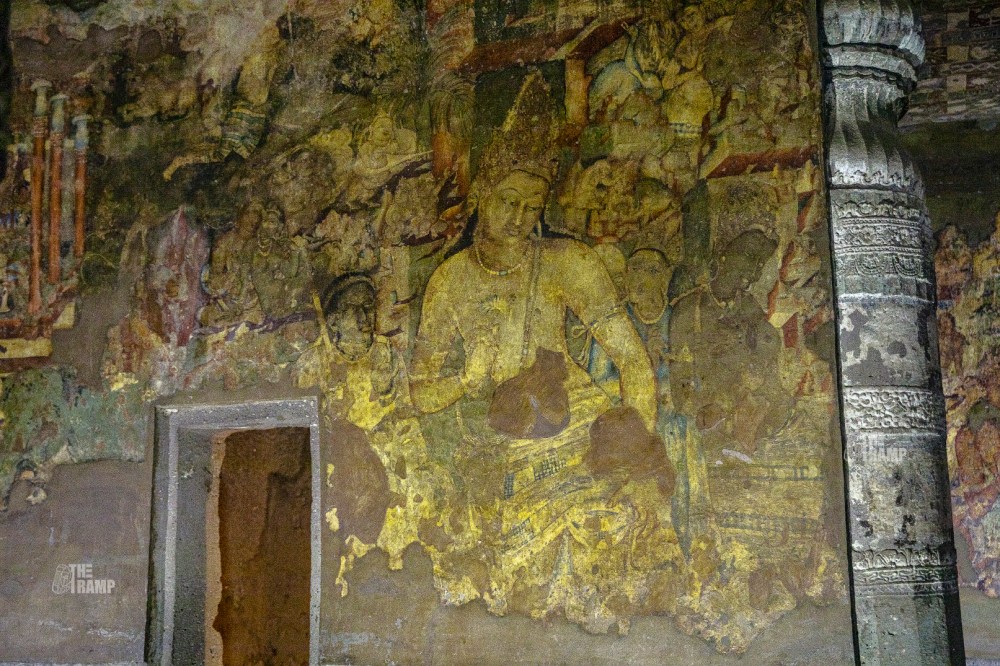
Cave 16 took my breath away—a painting of Padmapani, the Bodhisattva, his expression tranquil, his presence almost tangible. The delicate lines of his face, the gentle curve of his fingers holding a lotus—it was as if time had frozen in devotion.
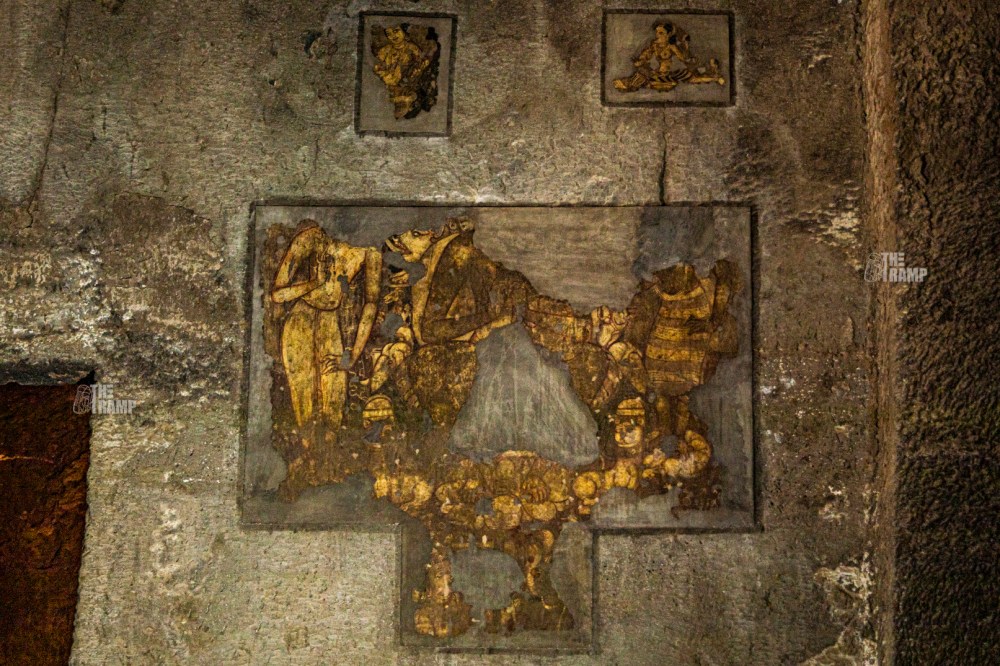
Cave 17 unveiled yet another marvel—Vajrapani, powerful and wise, standing beside the Buddha. His form radiated strength, yet his eyes held a tenderness reserved for the enlightened.

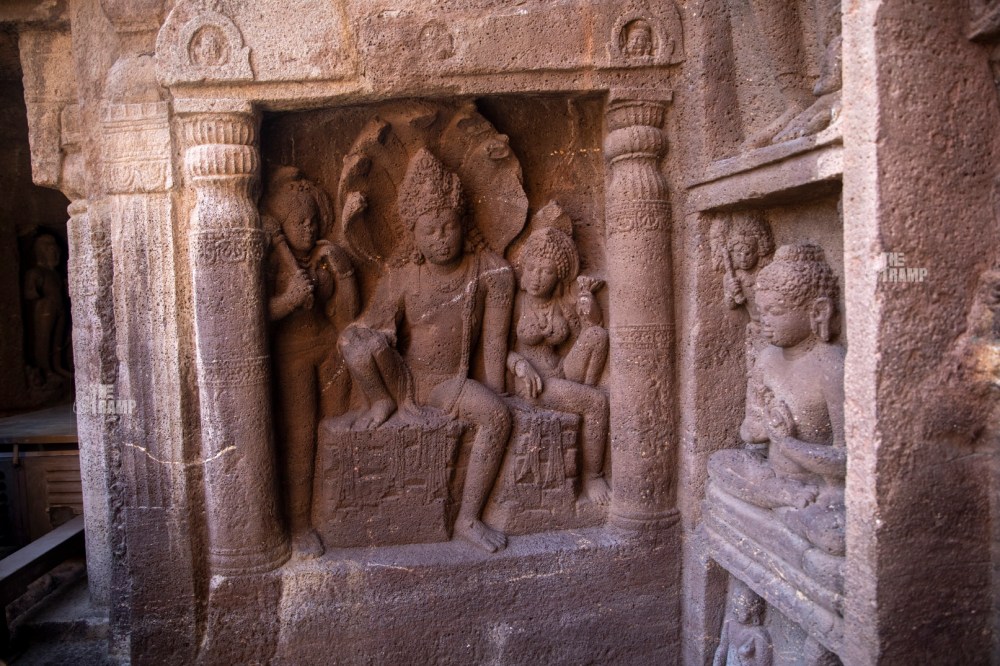
In Cave 19, a standing Buddha watched over the chamber, his form grand yet gentle. Here, stone and emotion fused seamlessly, as if the sculptor had poured his soul into every contour.
Cave 26 was an orchestration of skill—the reclining Buddha depicted at the moment of Mahaparinirvana. My mother stood in quiet admiration, her gaze lingering on the folds of the robes, the delicate hands resting in final peace.
A Journey Etched in Memory
As the evening sun painted the cliffs in soft gold, we sat on a ledge overlooking Ajanta’s timeless grandeur.

“This isn’t just art,” I said, looking at the painted figures one last time. “This is devotion made visible.”
The caves had given us their stories, their whispers of patience and passion. And as we left, I carried Ajanta with me—not just in memory, but in understanding.
Tramp’s Tips:
- MTDC Ajanta is the best option to stay. The location is superb and the staffs are well behaved, jovial and very helpful. There is no other hotel for staying.
- There is no food option after dusk. Please plan accordingly. We had all of our meals in MTDC Ajanta Hotel. The food was tasty. But let them know your plan well in advance. There is no market from where they can arrange anything instantly.
- Ellora Cave Complex remains open Tuesday to Sunday from 9 AM to 5.30 PM. Tuesday is weekly off. Please plan accordingly.
- From car parking, bus is the only option to visit the caves. Fare – INR 60
- Ajanta caves ticket costs INR 80.
- Please do not litter, change shoes while entering the caves. Photography using flash is strictly prohibited.
- No cafeteria is there inside the cave complex. You will get some snacks and soft drinks on the other side of the river. But If you go out, again you need to buy ticket.
- Please carry water bottle. Stay hydrated.
Bibliography:
- Ajanta Aparoopa by Narayan Sanyal
- World Heritage Series Ellora by Archaeological Survey of India
- Ajanta by Archaeological Survey of India
 The Tramp