
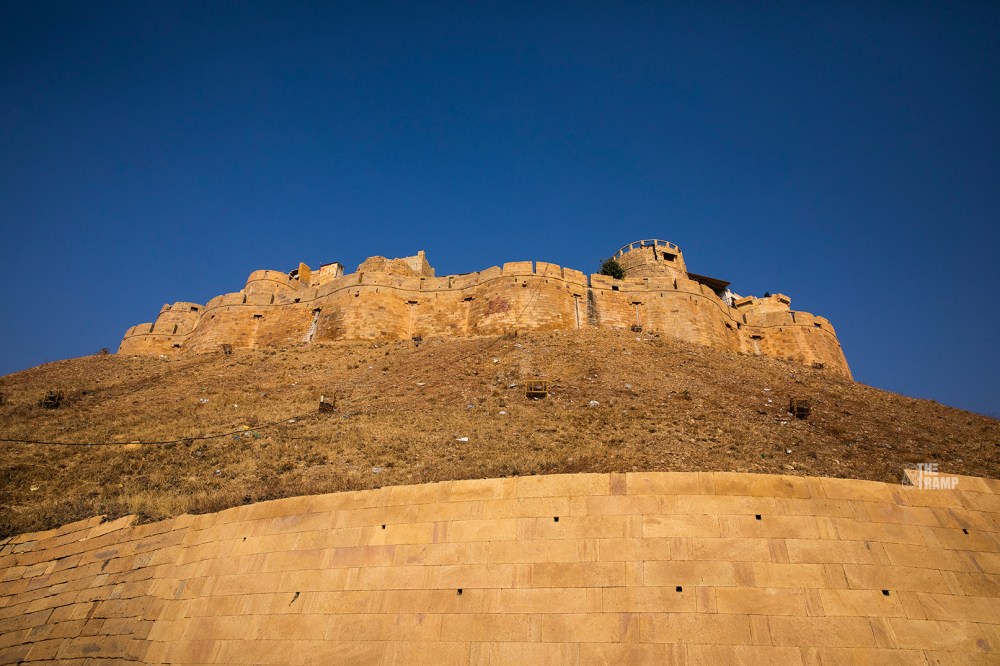
Early morning train from Jodhpur took me to Jaisalmer. With exhilaration, I was standing in the door to visually perceive the first glimpse of the fort from the train. In the film ‘Sonar Kella’ the director Satyajit Ray showed the fort from the train. It was quite conspicuous that I should be apprehensive to feel the view. When I got the first glimpse of the fort, it genuinely looked homogeneous to ‘Sonar Kella’ (the golden fort).

The station is smashingly unique. Jaisalmer Railway Station is probably the only in India without any display board. Since most of the denizens of the city were unlettered even thirty years ago, a display board was not needed. Even nowadays, a display board is not required because this is the terminal station and only 7 trains chugs from Jaisalmer per week, 8 trains are terminating and no trains pass through the station. Only a verbal promulgation is enough for the passengers.
From the arrivals, I took an auto to Zostel where I booked a bunk bed for the next three days. Fellow readers, you can choose any other hotel or hostel to put up in. But I suggest staying inside the fort so that you can feel the original Rajasthani vibe. Moreover, other tourist points are within the ambulating distance from the fort. So you don’t need to book any conveyance for that.

After subsiding in Zostel Jaisalmer, I took a bath and had lunch in a cafe. Then I commenced strolling in the lanes of the city.
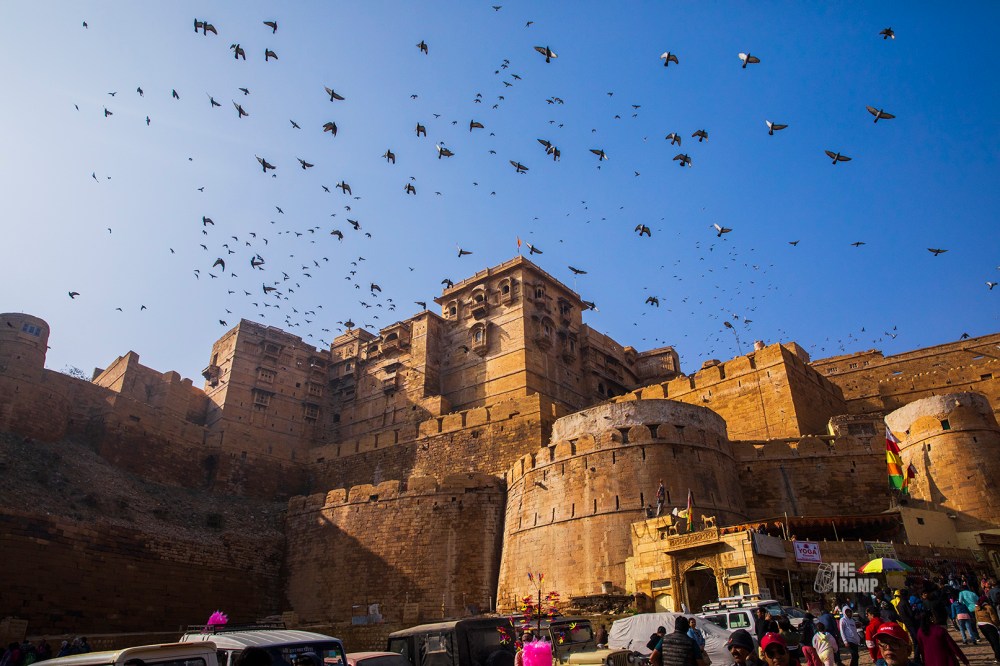
S dear, I would like to brief you about fort. Legends have it that the fort was built by Rawal Jaisal, a Bhati Rajput, in 1156. Yellow sandstone was acclimated to build the fort. The fort was seized by Delhi sultan Alauddin Khalji, the Afgan chief Amir Ali and Mughal emperor Humayun. Though it was under the sway of Delhi kings, the fort was not that much affected nor the Muslim discipline was followed inside the fort. Logistics was the only issue for the outsiders. The fort has no source of dihydrogen monoxide. Camels were the only convey option. However, in 1762, the fort was re-occupied by the Bhati Rajput Family.
Exploring the living fort:
The environment of the fort is unique. All the houses and temples are built with yellow sandstone. The temples have a unique temple architecture. Neither it belongs to the North Indian Temple Architecture, nor it is kindred to other Rajasthan Structure. There are 8 temples – Parsvanath Temple, Chandraprabhu Temple, Rishavadeva Temple, Sambhavanath Temple, GYan Bhandar, Shitalnath Temple, Shantinath Temple, Kuntanatha Temple.


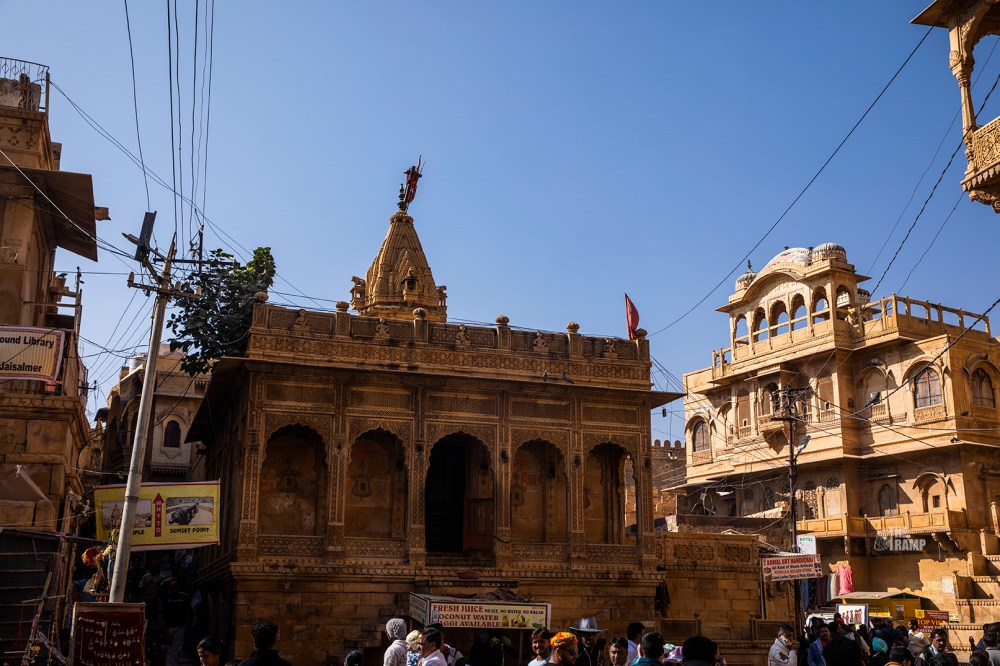
This is one of the few ‘living forts’ in the world. Thus the lifestyle of the fort has some uniqueness. Ambulating down the lanes, the unique features of Rajput and Brahmin lifestyles can be visually perceived.
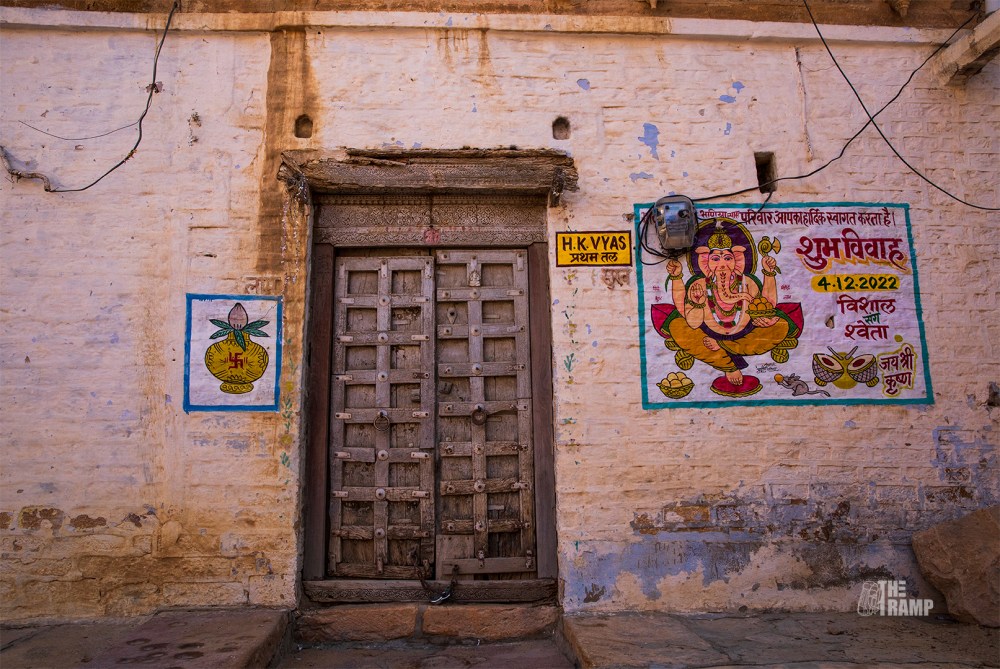
As mentioned earlier, the royal family belongs to the Bhati Rajput clan, whilst the mundane people are Marwari Brahmins. Every lane is designated to each family and their relatives. Most of the houses, including Zostel, are owned by Vyas Family. As a consequence, for any convivial occasions, all of the relatives are supposed to be invited. But publishing so many invitation cards is an extravaganza. Thus, afore any espousement or other ceremonies, the invitation cards are depicted as a fresco on the outer wall of the abode.
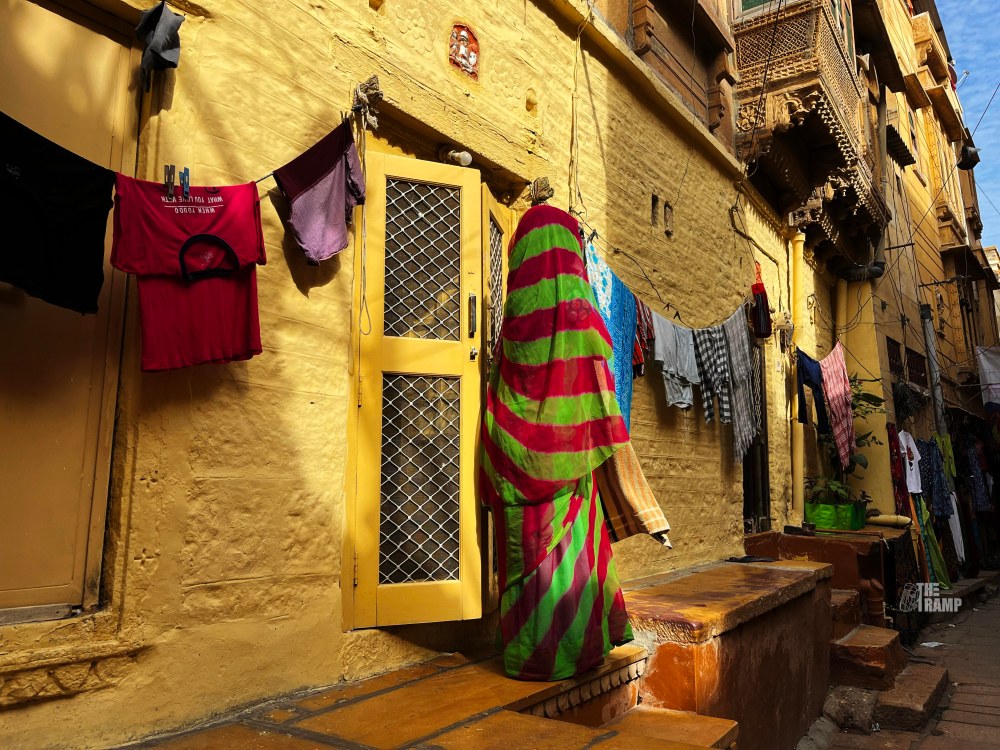
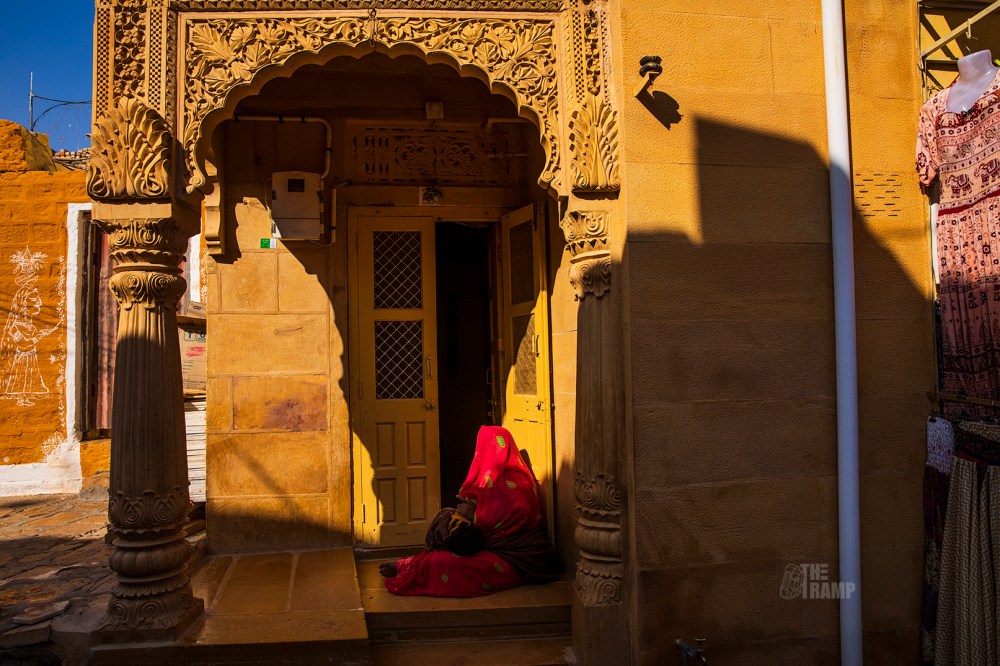
While strolling, I found the women, even in front of a male kid, were covering their faces. They are not supposed to show their faces to any male. In spite of being worshipped, Sun is believed to be male, they have to cover their face by ‘ghunghat’ while going outside of home.


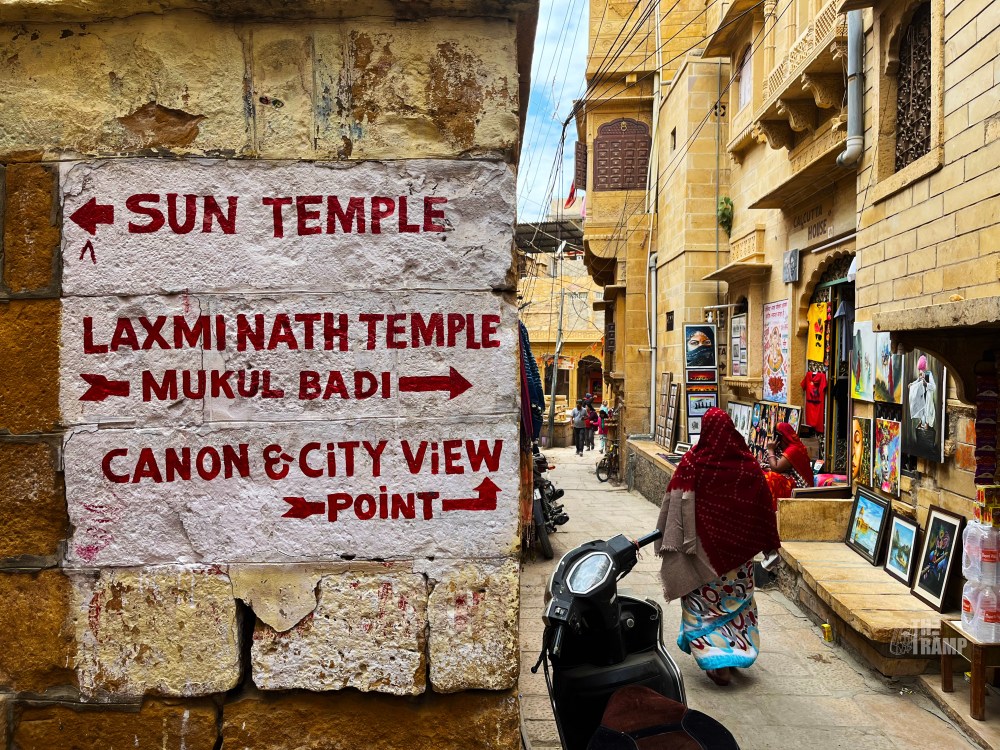
Ambulating up to the fort, I reached to the cannon. From there I got a magnificent view of the city.

In the evening, a free walk was arranged by Zostel. The guide was verbalizing a lot about the history of the fort. I intended to ken about the ritual and lifestyle of the fort. The homes inside the fort have no address. Name of the landlord followed by Jaisalmer Fort is enough for them. But they facilely get the mails and parcels as all of the denizens ken each other. Even the distribution boys of Swiggy, Zomatto, Amazon go inside the fort and ask any shop about the landlord’s designation.
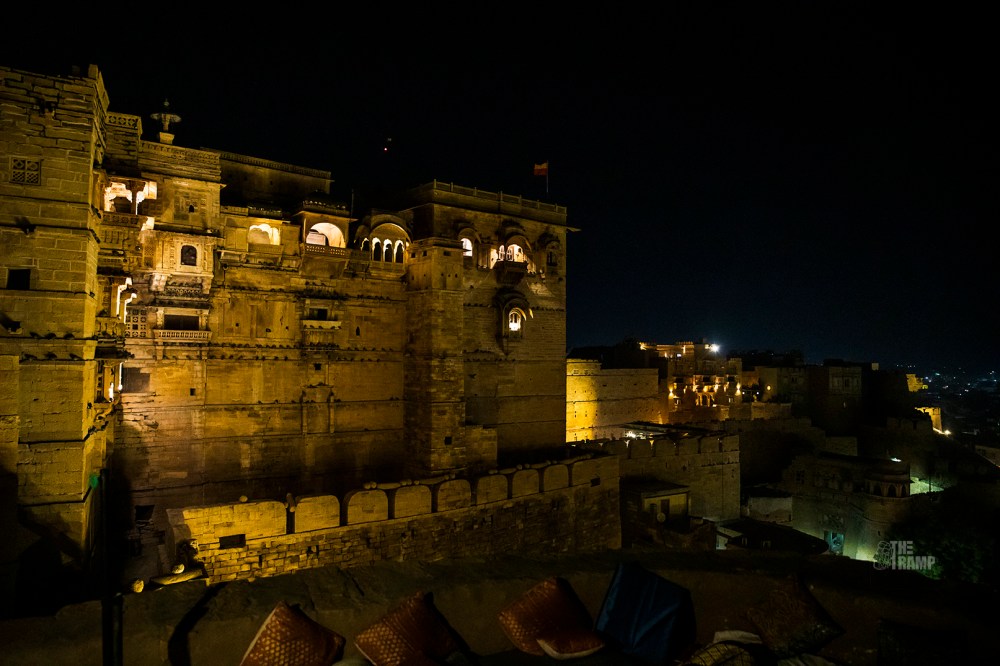
The guide mentioned, the fort propagated after Satyajit Ray’s movie and most of the tourists are still from Bengal. Even he showed me the ‘House of Mukul’. Next morning I got a photograph of the house.


Holi, the spring festival, is celebrated inside the fort. First, the King commences throwing the gulal after a religious ceremony. Then others start playing. Everybody has their own seats in front of the King.
For dinner, I orchestrated to have non-vegetarian pabulum but the only veg items are available inside the fort. But dinner followed by a sublime time waiting for me inside Zostel.
Sunrise at Gadisar Lake:
Next morning, I commenced early. In Jodhpur Zostel, I had a roommate, Raghav. He joined me and we went to Gadisar Lake to witness Sunrise.
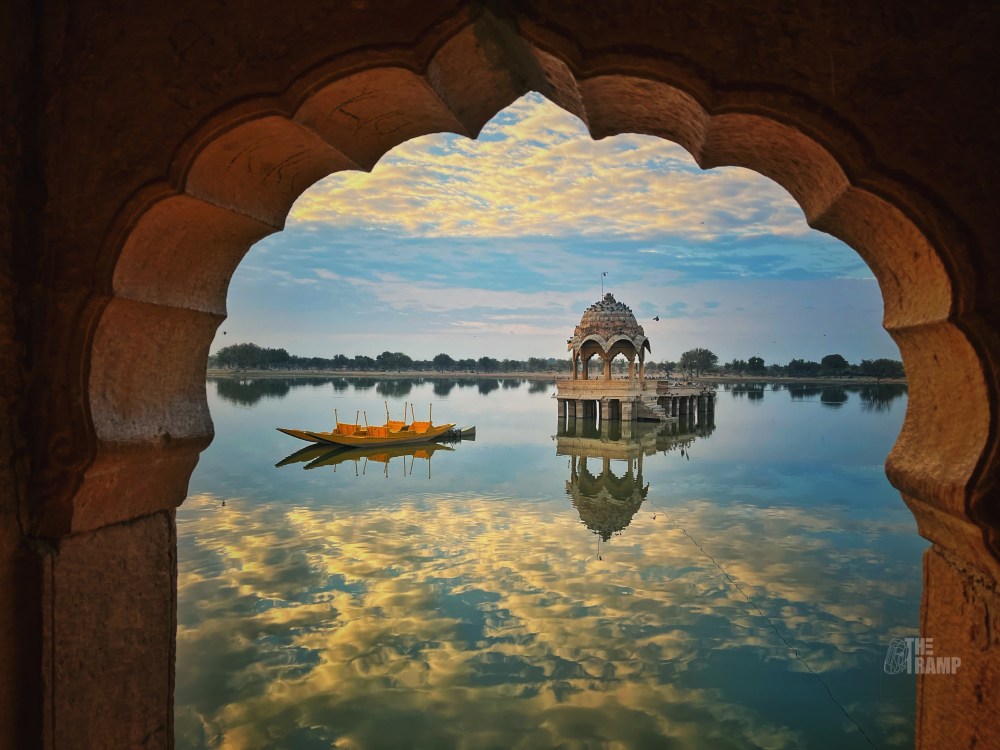
It was a lovely Sunrise. We took photographs and after a breakfast with Kachori and Tea we came back.
The houses outside the fort are additionally built with yellow sandstones. Now Jaisalmer can be regarded as the ‘Golden City’.
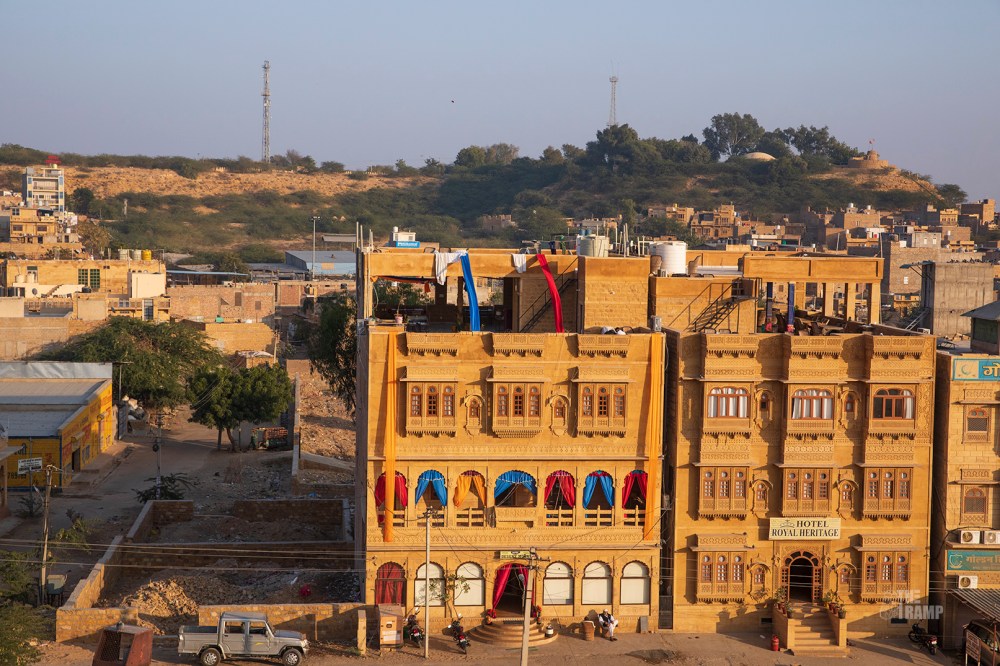
Revere the architectural excellence of the Havelis:
I had time. Thus I decided to visit the famous havelis of Jaisalmer and explore the streets of Jaisalmer outside the fort. Even the houses outside the fort are composed of yellow sandstones. The street life of the city is equipollent to the fort. The havelis are within ambulating distance from the fort gate. No conveyance is needed to visit them.
Nathmal Ki Haveli:
Ambulating along the street, with the avail of Google Maps, first I visited Nathmal Ki Haveli. During the 19th century, the Nathmal family became so prosperous, they constructed this gorgeous haveli. The construction of this mansion commenced from two points concurrently. One can visually perceive elephant carvings on yellow stones, and intricately carved exteriors and interiors.

An astronomically immense statue of an elephant composed of yellow sandstones welcomes every tourist and shopper in this Haveli.
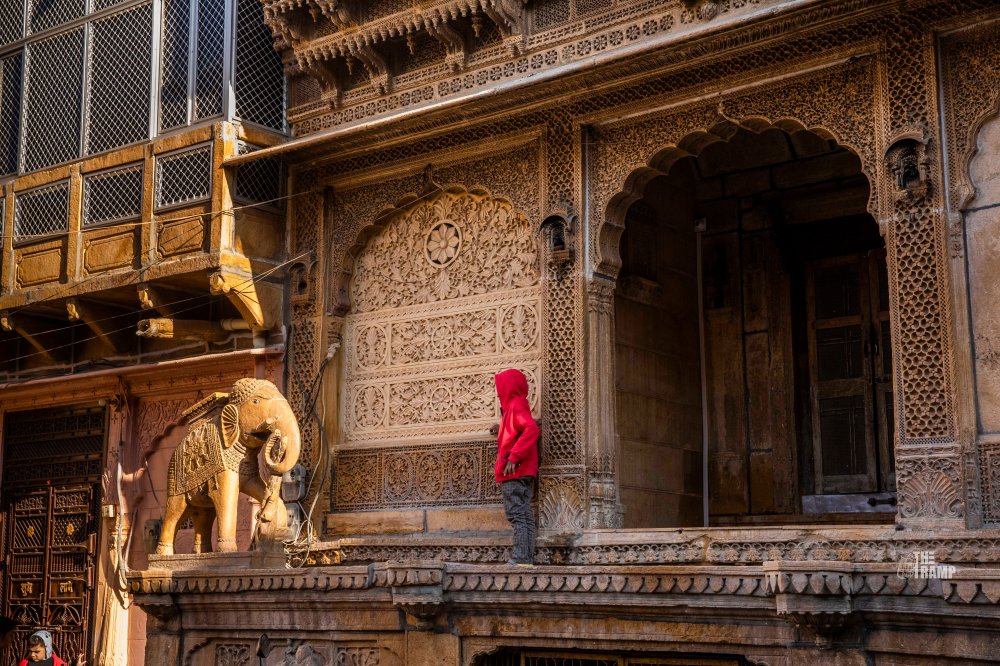
Since the family members still reside in this building, the visitors are not sanctioned to go upstairs.
Patwon Ki Haveli:
Patwon Ki Haveli comprises 5 different palaces. The 5 palaces are designated for 5 different brothers. Guman Chand Patwa, an affluent marwari brocade merchant of Jaisalmer, constructed this mansion intricate. The first of the mansions was built in 1805 and all the construction of all the palaces with all its grandeur grew up in the course of 60 years.

At present, there is one haveli where guests are put up, while two others are under the ascendancy of the Archeological Survey of India.

I purchased a ticket to get into the building. Inside the mansion, there is a museum and shop for antique furniture. I went up. The walls are adorned with exquisite mirror works and comely paintings. Withal, each of its arches is engendered with a distinctly unique style. There are lattice or jali carvings, which let the sunlight illuminate the place. It has about 60 balconies in total, and the structure is constructed in the traditional style of Jaisalmer.

From the terrace of the haveli, I got a breathtaking view of the golden city.


Salim Singh Ki Haveli:
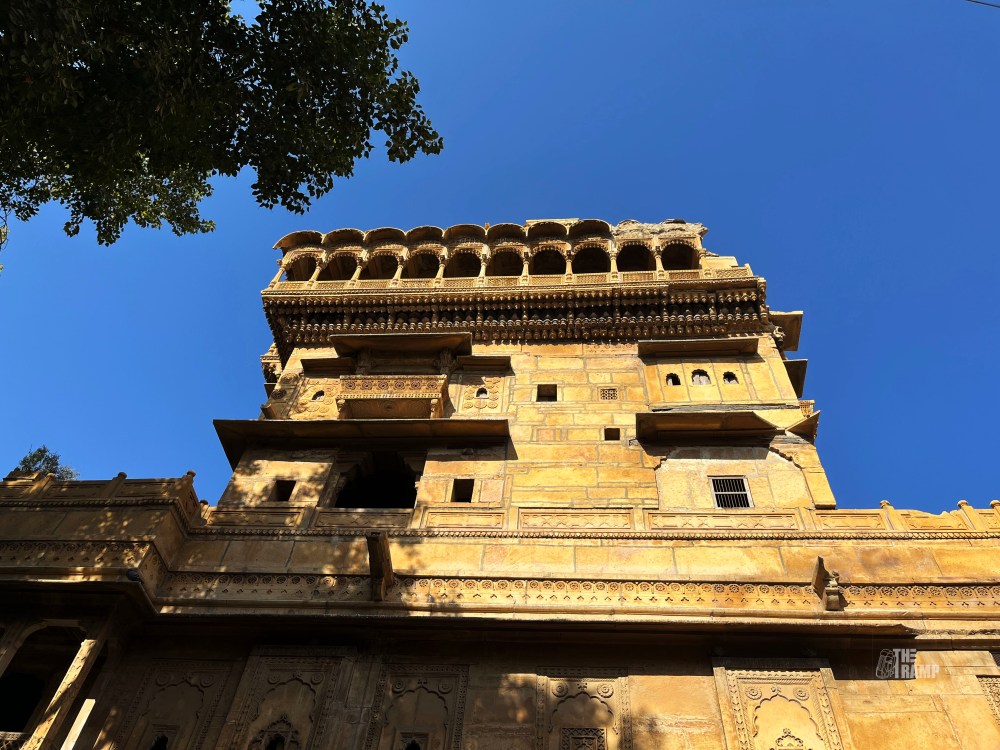
While coming back to the fort, I visited Salim Singh Ki Haveli. This is the only muslim palace of Jaisalmer. Built in 1815 by Salim Singh, the prime minister of the kingdom, the mansion possesses a distinctive architecture. I was surprised to optically discern that the mansion constitutes 38 gracefully carved balconies. The architecture of this mansion is inspired by a dancing peacock. One of the most zealous constructions of its times.
Life outside the fort:
Definitely this does not require a separate section but to accentuation this, I am making a separate heading. I visually examine the street life during my entire journey.
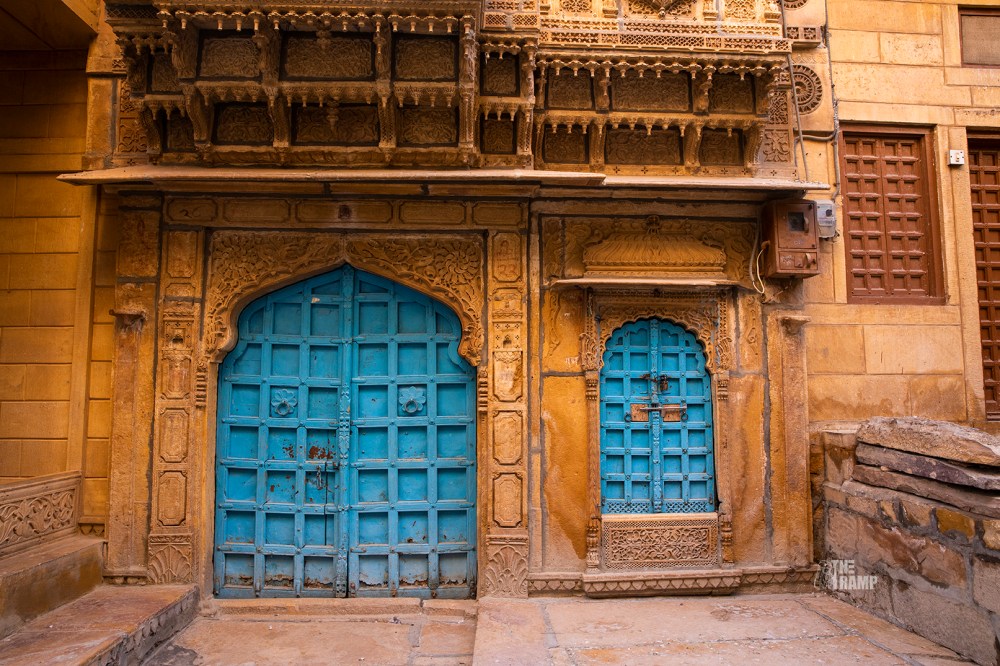
The life outside the fort is virtually identically tantamount to inside. Glimpses of the street life.

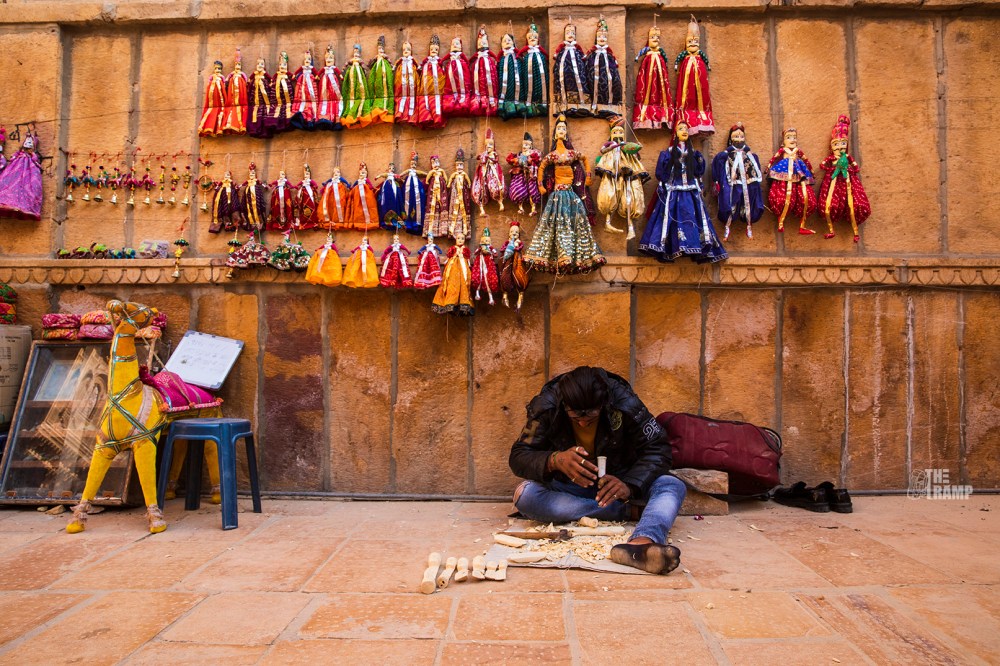


I got marginally hungry. I came back to Zostel, took a bath, had lunch and prepared myself for the desert safari.
Desert Safari – A memorable night of my life:
Post lunch, I headed for the sand dune camping. It was a package tour organised by Zostel and Moustache. Zostel manager drove me to Moustache. The peregrination commenced from there. We were a team of six people. A Mahindra Bolero took us. The car went along the desert and first reached Kuldhara, a ruined village.
Kuldhara – a cursed village:
Though infamous as ‘Ghost Town’, Kuldhara is a tourist magnetization. Shrouded in mystery, Kuldhara is accessible from dawn to dusk. The village was established in 1291 by the Paliwal Brahmins, and was a rather prosperous community thanks to their facility to grow bumper crops in the arid desert. But one night, in 1825, all the people in Kuldhara and the nearby 83 villages vanished in the dark. No scientific evidence for the disappearance was made.
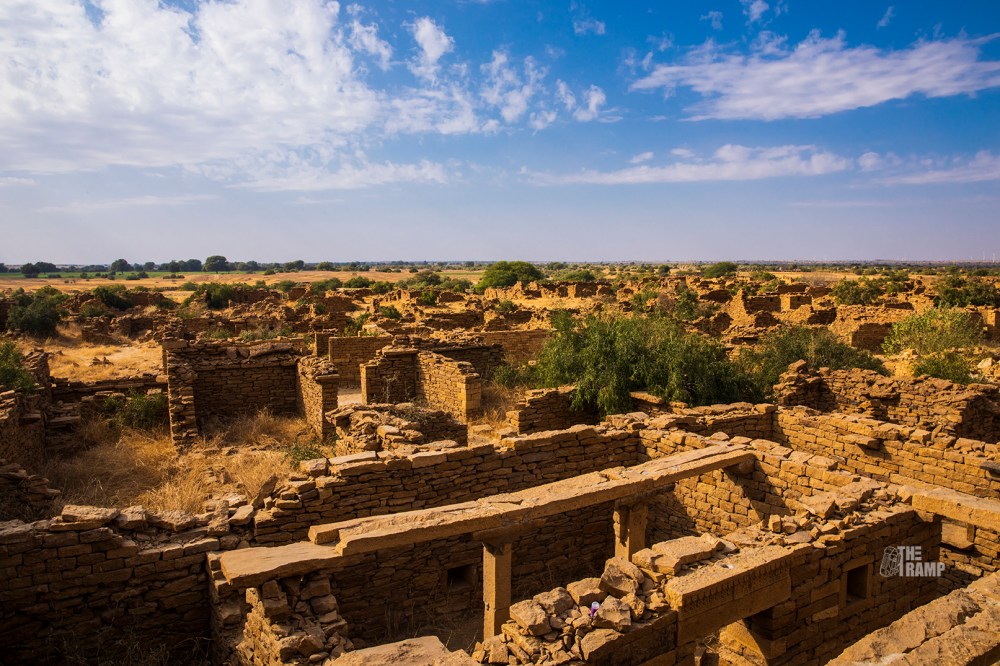
Nowadays, tourists visit there to get some lovely geometrical patterns of the ruined homes.
Oasis:
Our next destination was an oasis.
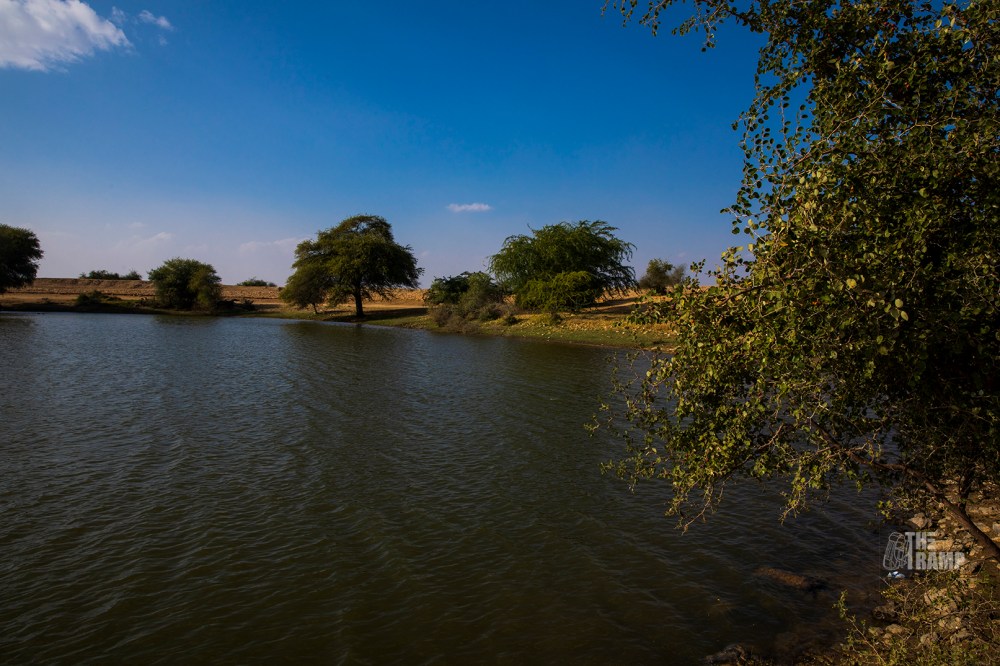
Next I managed the driver to take us to a village so that I could get some photographs.


Determinately the car left us at the dropping point. Camels were waiting for us.

Camel ride – a feeling like Bedouin:
Camel ride was thrilling. The camel driver first edified us the technique of camel riding. Camels raise their hind legs first while climbing and vice versa when descending. As such, the balance of the body has to be taken gradually. After we sat like that, the camel commenced moving. In each hand a long rope is tied to the camel’s neck and held by the next. The reason for doing this is that the camels move in a line.

I felt like a Bedouin while peregrinating with a camel. We are going on an expedition through this dusty sand under the illimitable azure. After about forty-five minutes of camel riding, we reached the sand dunes.

Other peregrinators reached in different cars and were followed by camel rides. Tents were pitched for us. I culled one for me. This was my first time in the desert. I commenced exploring the sand dunes. Glimpses are given below.


Witnessing the Sunset, evening and night in Sand Dunes:
Witnessing Sunset from the sand dune was divine. Better to show the photos than expounding in words.
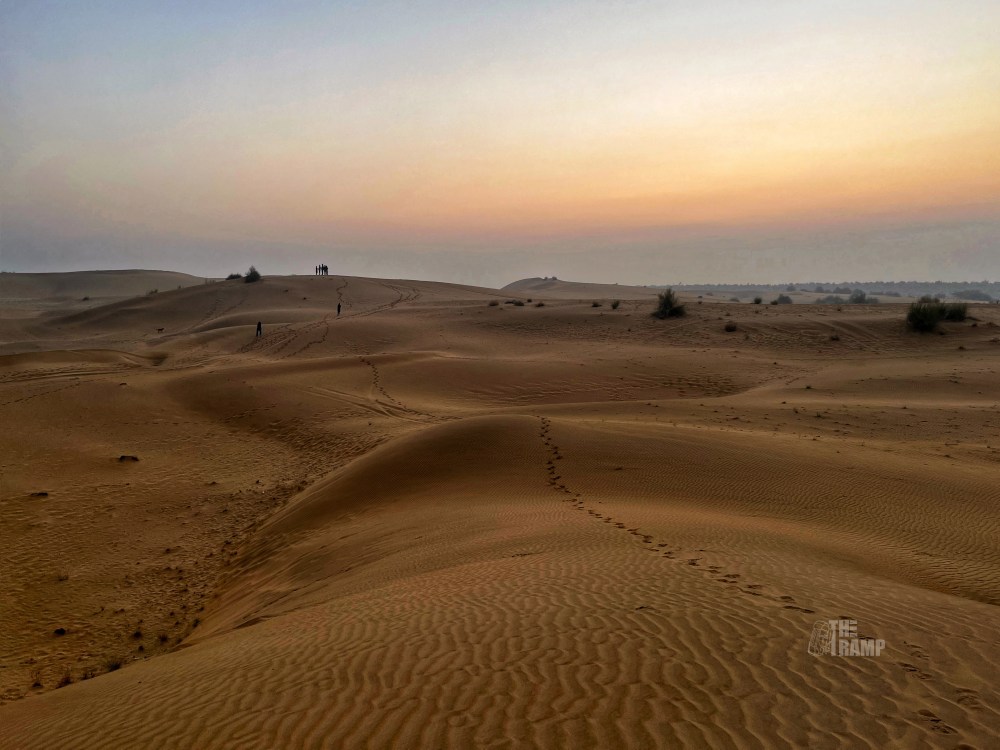

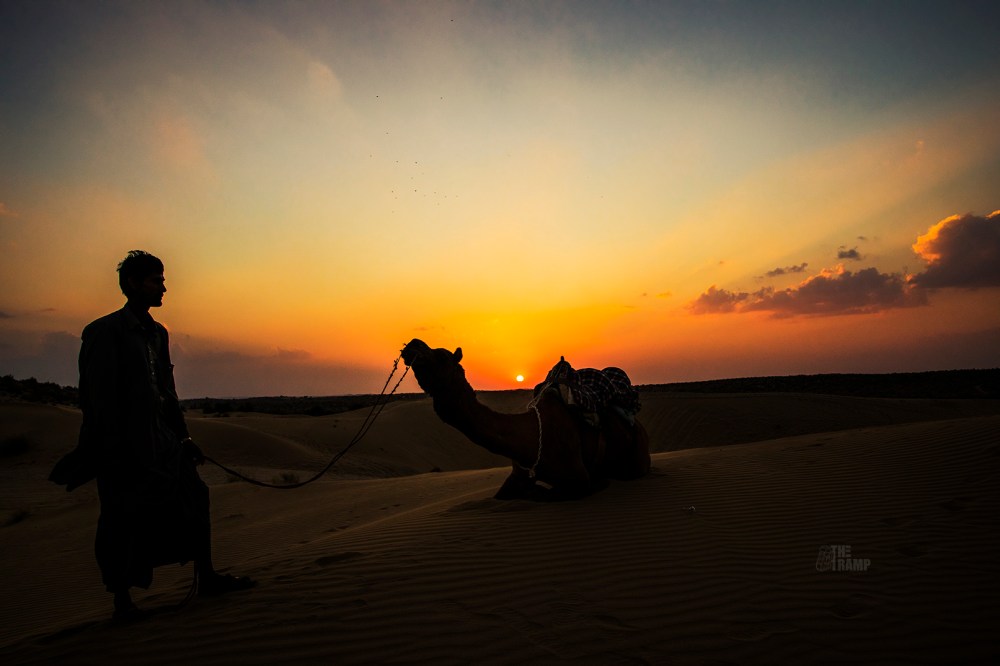

Temperature commenced decrementing right after the sunset. A camp fire was arranged and people commenced playing ‘antakshari’. Some of the teammates were smoking up cannabis and hashes. Few of us were having potations.

Local folk singers came and commenced performing. First I was heedfully aurally perceiving by sitting proximately. Later I situated myself in a distance. I was standing on a desert under a starry firmament, heedfully auricularly discerning Rajasthani Folk music and consuming potation. What more a peregrinator could expect from his life? 29th December, 2022 is the most memorable night for me.
Dinner got accommodated in a few hours. After dinner I put up in the tent – all my dreams came veridical. Life, I dote you.
Next morning, after a sumptuous breakfast, we had a Jeep Ride and came back to the same location where last afternoon we left the car. By the same conveyance we came back.
Post Lunch I decided to go shopping. Ample shopping options were there inside the fort. Virtually every domicile possesses a shop for warm garments (composed of camel wool), traditional Rajasthani attires, shoes, fridge magnets and other souvenirs. Even the lanes towards Nathmal Ki Haveli have homogeneous shops in every second home. Burgain was the key for prosperous shopping. It took more than two hours for me to get some woollen garments, souvenirs and other shopping.

Tazia Tower:
After shopping, with a short walk of 5 minutes, I reached Tazia Tower. Amidst this captivating backdrop, the Tazia Tower stands as an architectural gem, ascending gracefully against the desert skyline. The Tazia Tower, the Badal Palace, is a five-tiered structure enlightening Jaisalmer. Built in the tardy 19th century, it was sanctioned by the local Muslim community as an encomium to the holy burial of sundry Imams. The Tazia Tower was built in 1886 AD as a gift to the Royal Hindu ruler of the time, Maharawal Berisal Singh.

Dusk was approaching. Thus I commenced for Bada Bagh (or Bara Bagh) to witness the Sunset.
Witnessing the sunset from Bada Bagh (Bara Bagh):
By a ride on Rapido, I visited Bada Bagh. As the denomination suggests, it is a garden consisting of the cenotaph of the Royal Family.


After Jait Singh II’s death, his son Lunkaran (1530-1551) built a pulchritudinous garden by the lake and a memorial chhatri cenotaph on a hill overlooking the lake. Later on, many more cenotaphs were constructed here for Lunkaran and other Bhattis. The last chhatri, denoted for Maharawal Jawahir Singh, dates from the 20th century and remains unfinished after Indian independence.
Nowadays, couples accumulate there and definitely this is the Sunset point of Jaisalmer. I witnessed a breathtaking view of the Sunset in the Horizon.


After dusk, I came back to Zostel, had dinner and in the night train, I peregrinating towards Bikaner.
Tips and tricks:
- No conveyance is required to go to the havelis, Tazia Tower and Gadisar Lake from the fort.
- Staying inside the fort will help to explore more.
- Please Beware of fraudulent peregrinate guides who pretends to organise the desert safari. Please communicate to your hotel. All the hotels have their own camps for desert safari. Else book for the Government Safari from the Hotel Moomal.
References:
The information has been taken from the following sources:
- Rajasthan by Outlook Travellers
- Ramyani Beekkhyo ” Maru Bharat Parba by Subodh Kumar Chakraborty
- jaisalmerweb.com
 The Tramp