
In my previous post, I spoke about the architectural rebirth of Lucknow under Asaf-ud-Daula and the grandeur of Bara Imambara. That was the beginning of Lucknow’s renaissance.
But every renaissance needs continuity.
After the demise of Asaf-ud-Daula in 1797, his successors — Wazir Ali Khan, Saadat Ali Khan II, Rafa’at-ud-Daula, and Abul-Mansur Qutb-ud-din Sulaiman Jah — carried the baton forward. They contributed to the growth of Awadh, though many focused more on administrative buildings and residential palaces.
Then came a ruler who once again turned toward monumental architecture.
His name was Muhammad Ali Shah.
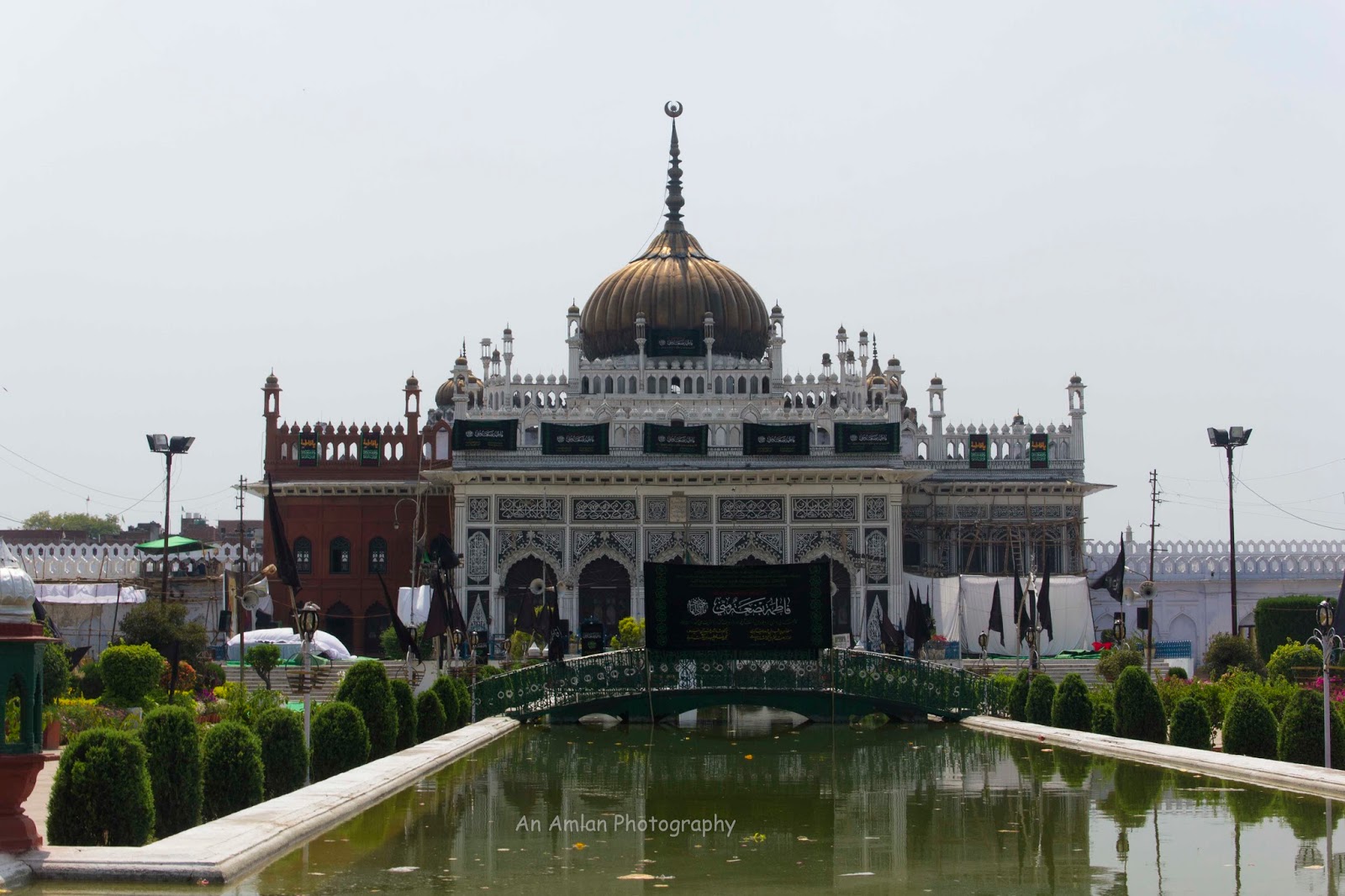
Chhota Imambara: A Jewel of Hussainabad
When Muhammad Ali Shah ascended the throne, he envisioned a structure that would complement the legacy of Bara Imambara. He did not intend to compete with Asaf-ud-Daula. Instead, he wanted to strengthen the cultural engine already in motion.
And thus was built the magnificent Chota Imambara, also known as Hussainabad Imambara — one of the most beautiful monuments in Lucknow.
If you are visiting Bara Imambara, you can explore Chhota Imambara on the same day. Cross the iconic Rumi Darwaza by tonga, and continue your journey. No need to buy a new ticket. The same entry ticket is valid.
The ride itself feels like time travel.
First Glimpse: Courtyard and Water Channel
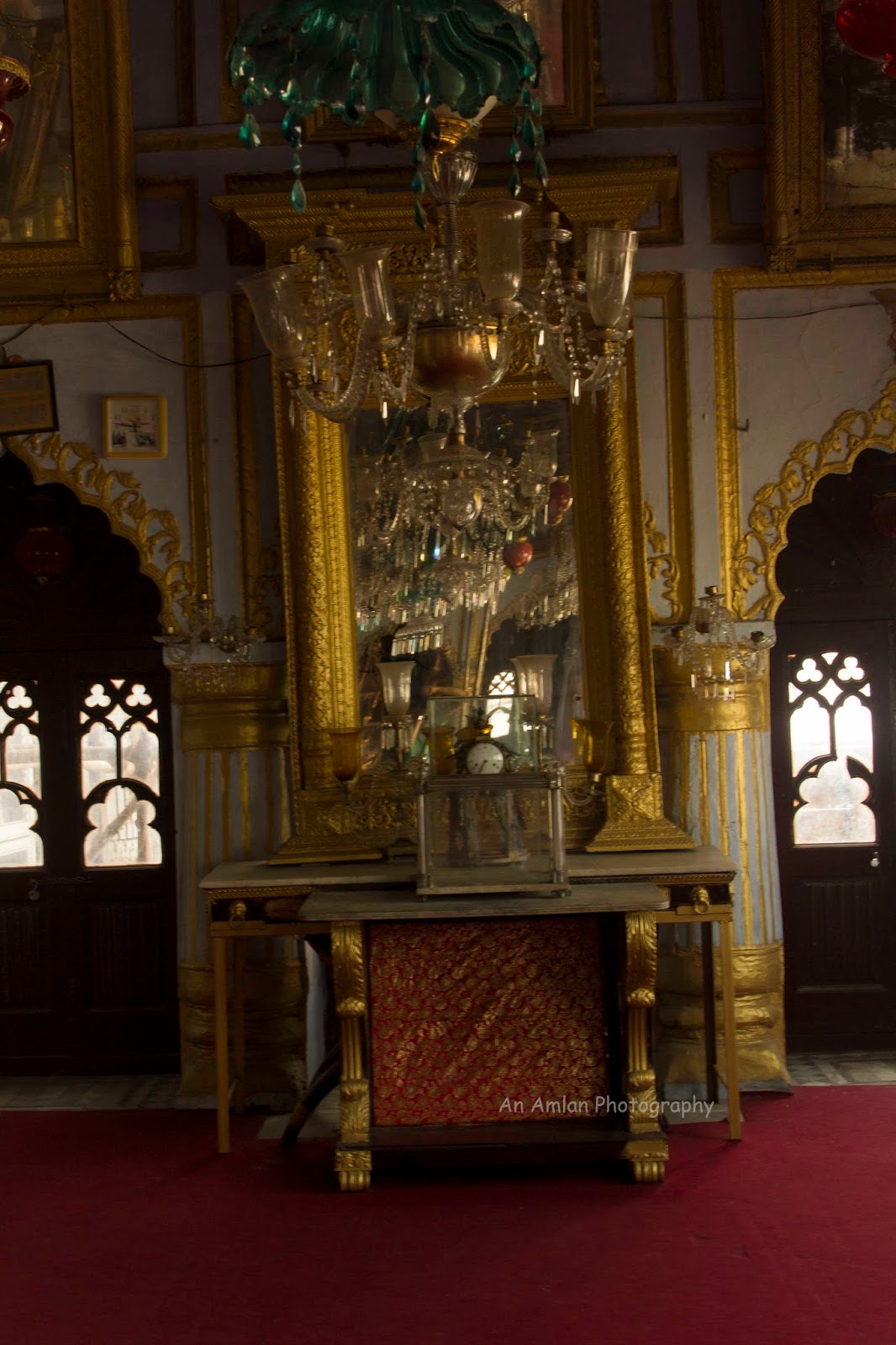
After entering through the north gate — the only gate open to tourists — you reach the main courtyard.
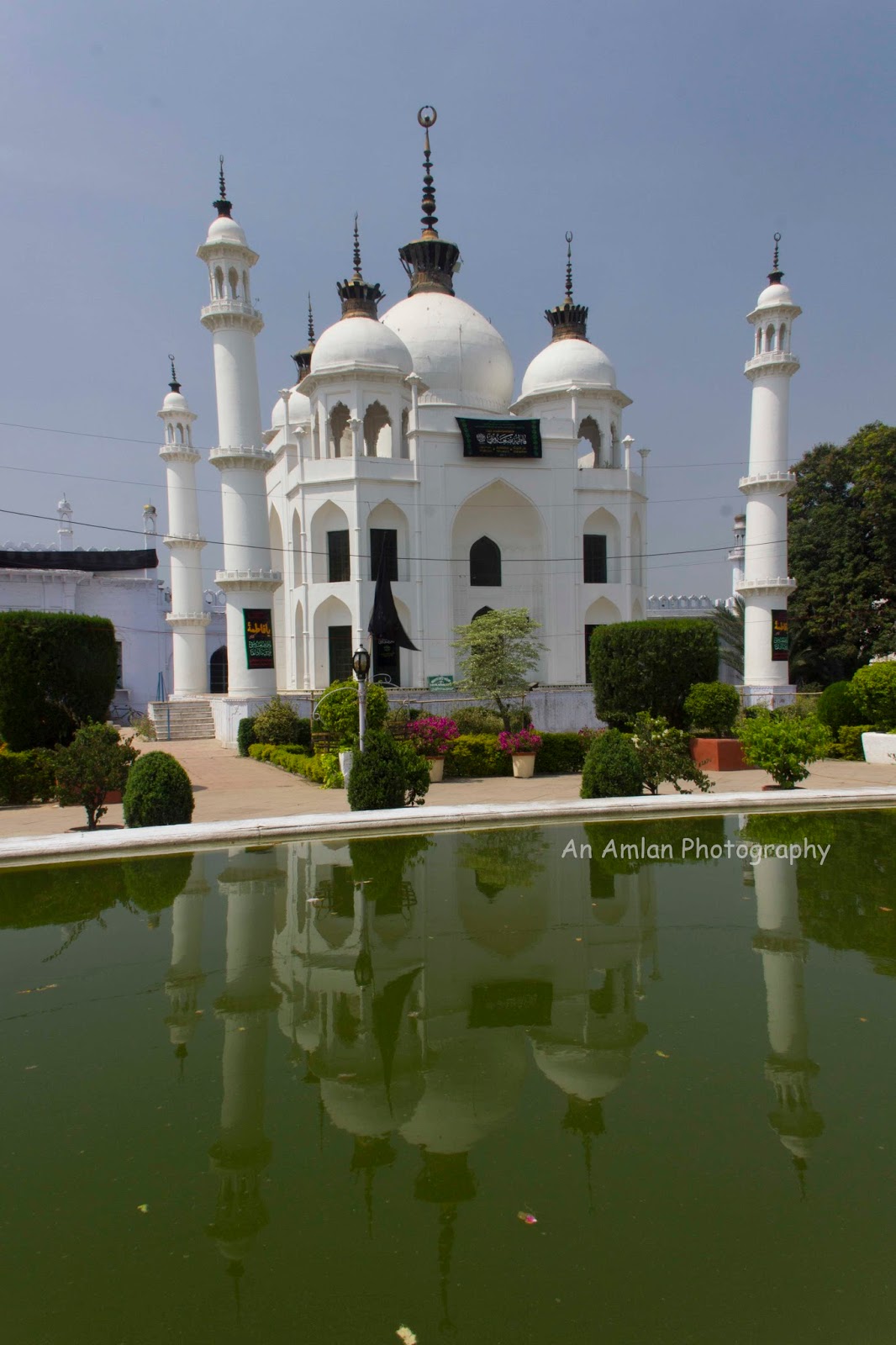
In front of you flows a long water channel. The Imambara stands gracefully on the opposite side. You can approach it from either side of the channel. On both sides are mousollas (prayer platforms). A small mosque rests quietly in the north-west corner.
The symmetry is soothing. The reflection of the structure in the water adds to the elegance.
On the western side of the tank are hammams. The guide explained the hot and cold water pipe system used during that era. I was genuinely surprised. The level of engineering and scientific understanding in 19th-century Lucknow was impressive.
Inside the Chhota Imambara
The Chhota Imambara consists of seven main chambers.
The southern wall of the main hall has the Shem Shashan, where the Tazia is placed during Muharram. The eastern and western sides contain smaller rectangular chambers.
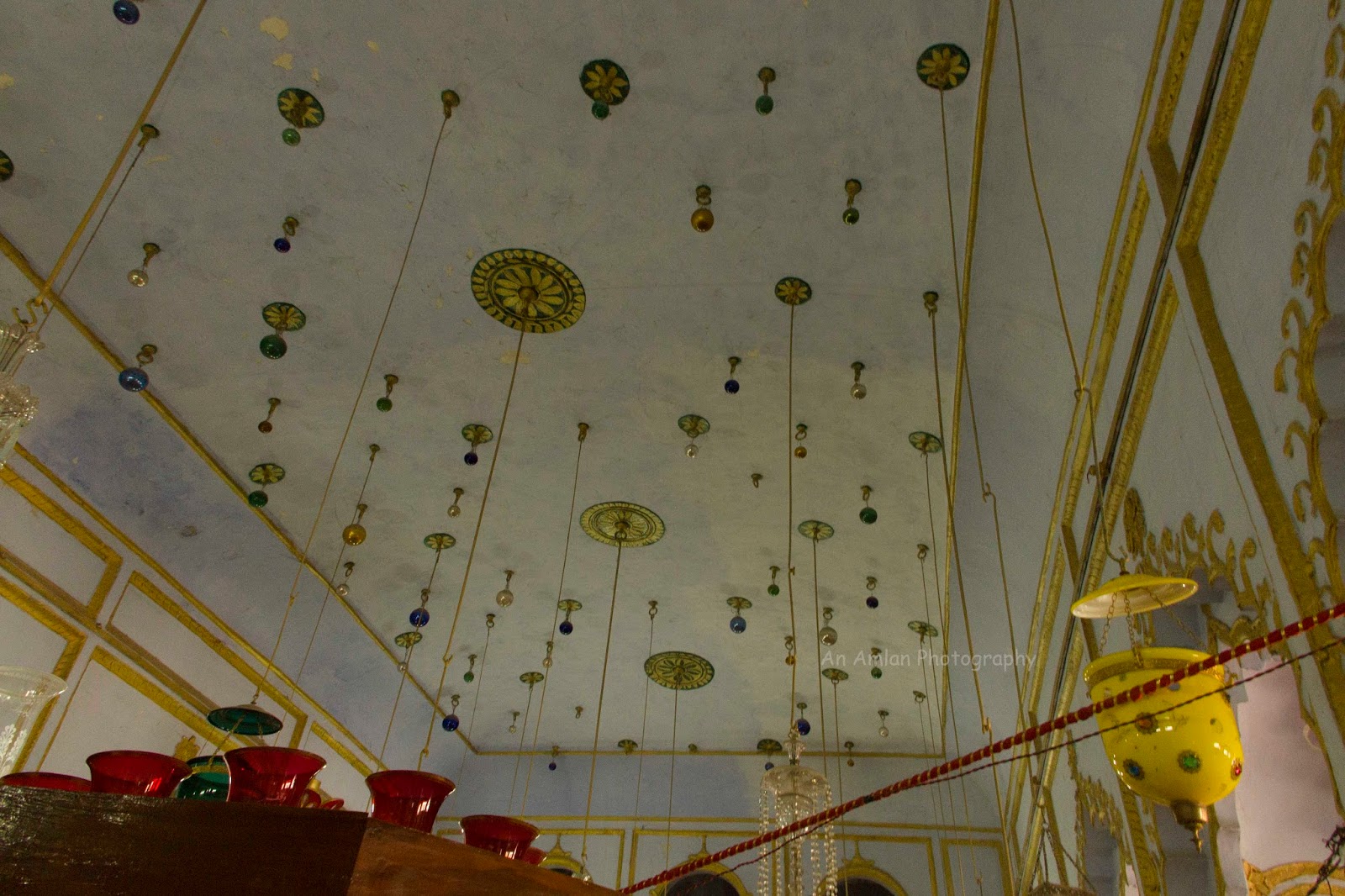
The interiors are dazzling.
Zari, Alam, Tazia, Panja, and other ritual objects are beautifully displayed. The hall glows with Belgian glass chandeliers, intricate mirrors, paintings, and photographs. That is why Chhota Imambara is often called the “Palace of Lights.”
Inside the main chamber lie the tombs of Muhammad Ali Shah and his mother. The atmosphere is peaceful and solemn.
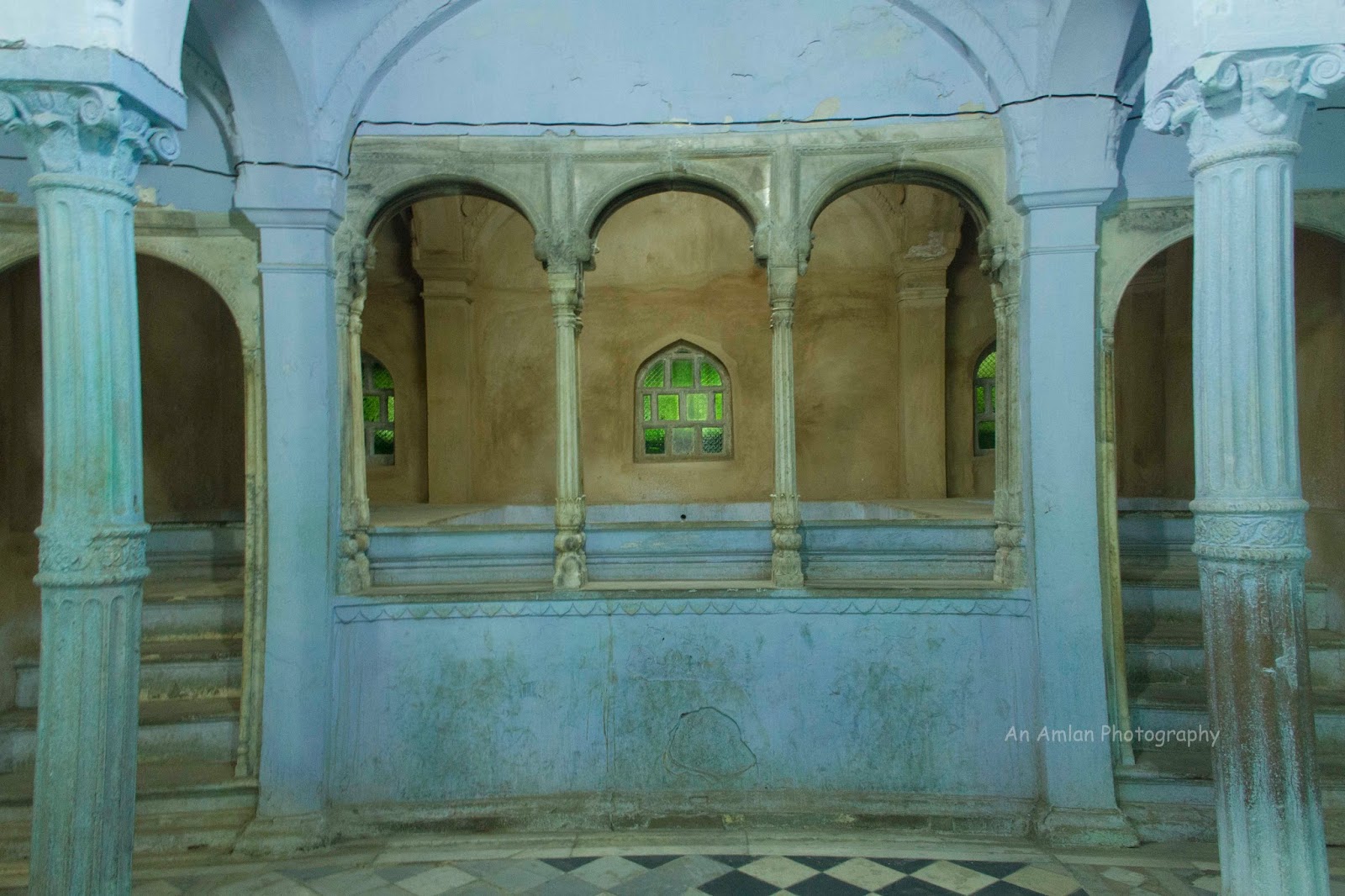
Dear readers, after Chhota Imambara, let’s see two other monuments located just opposite to it.
Hussainabad Tank and Surroundings
Just opposite the Imambara stands the historic Hussainabad Tank. Built during the reign of Muhammad Ali Shah, this polygonal tank enhances the charm of the entire Hussainabad complex.
When I visited, the tank was under renovation. Still, the setting was impressive.
To the north of the tank are the ruins of Satkhanda. Some historians believe it was constructed to observe the moon during the holy month of Ramzan. Though incomplete, it adds mystery to the skyline.
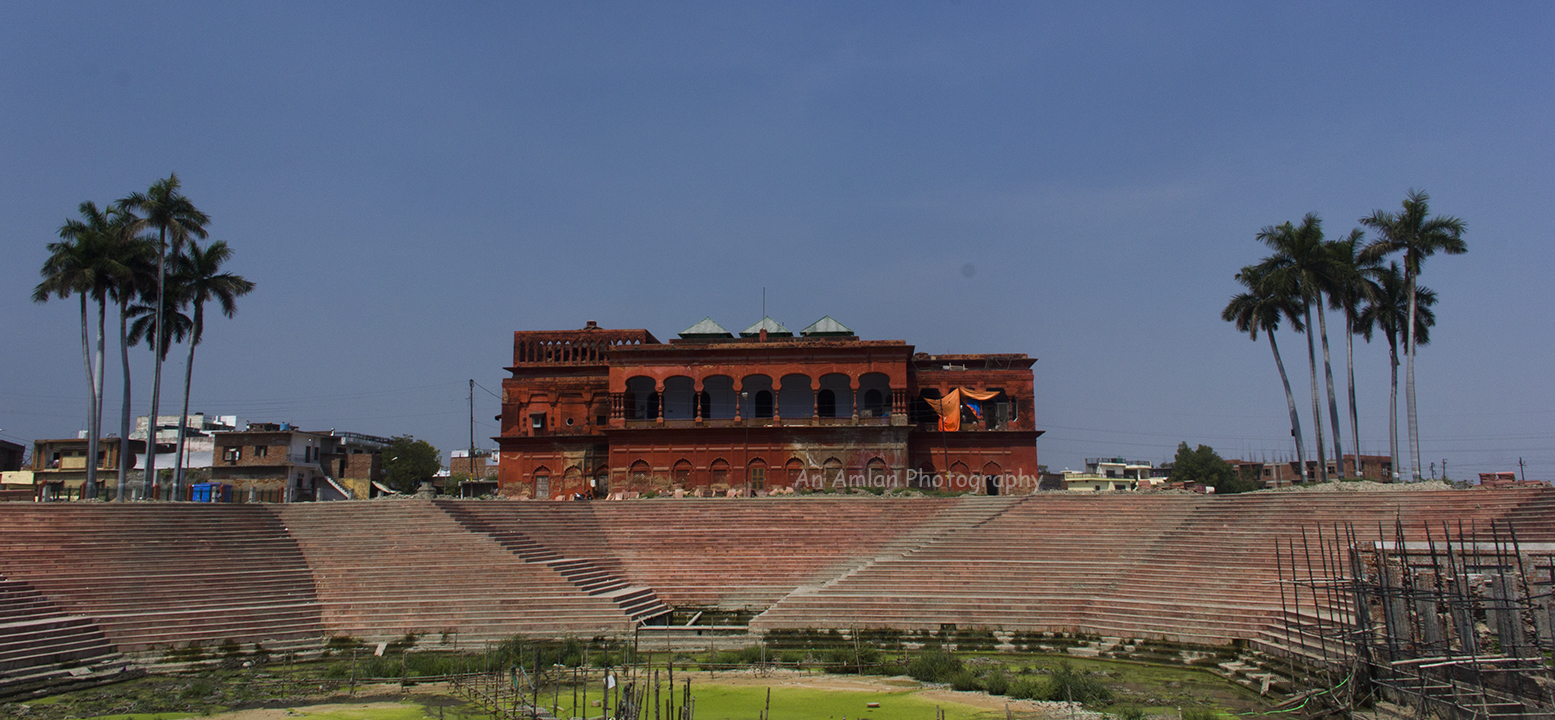
Nearby stands the Picture Gallery, also known as the Baradari, built with Lakhori bricks. It was closed during my visit, but its colonial-era portraits are well known among Lucknow heritage lovers.
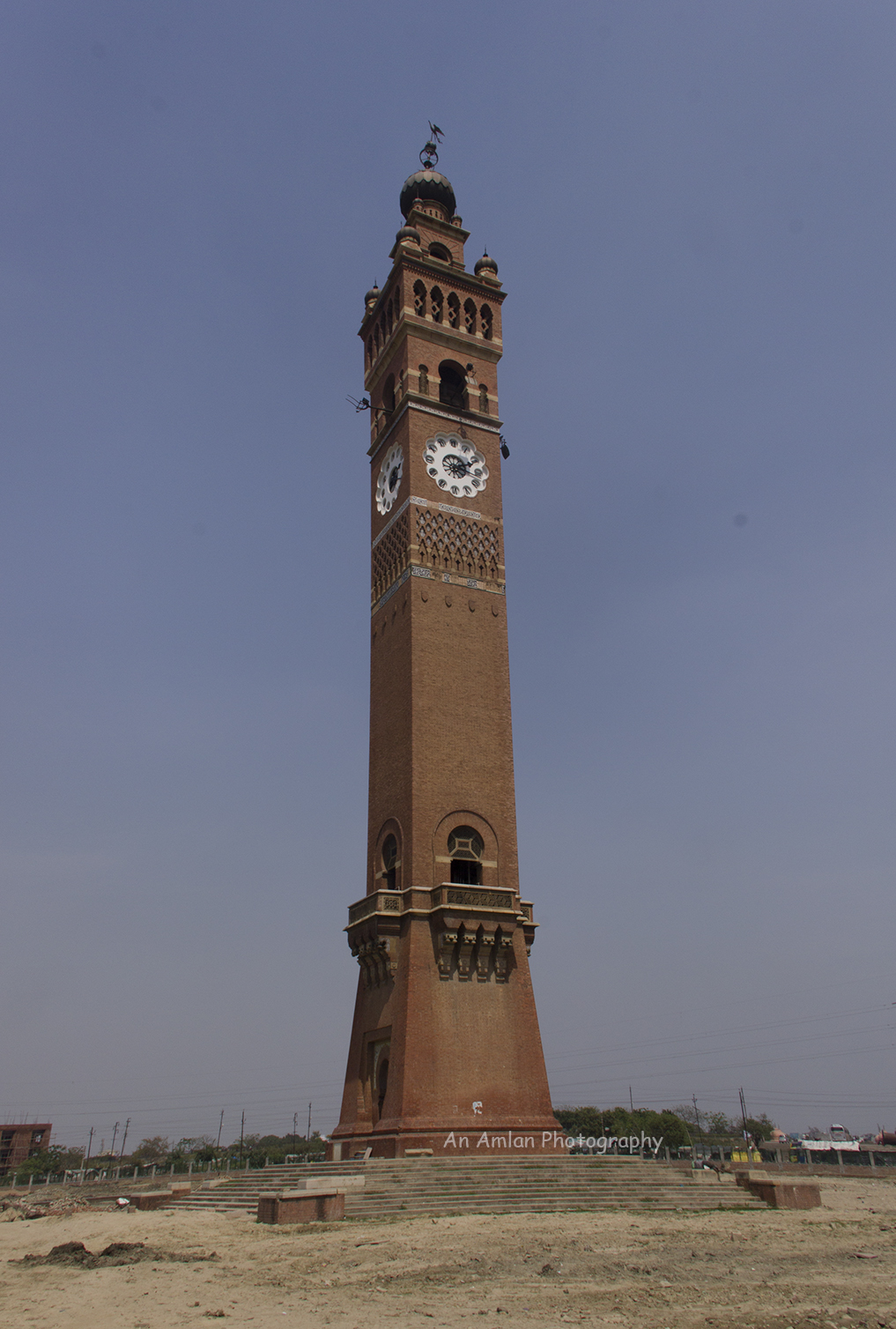
And then, rising tall beside the tank, is the iconic Hussainabad Clock Tower. Built in 1881 to mark the arrival of Sir George Couper, it is considered the tallest clock tower in India. Its Victorian design contrasts yet harmonizes with Awadhi architecture.
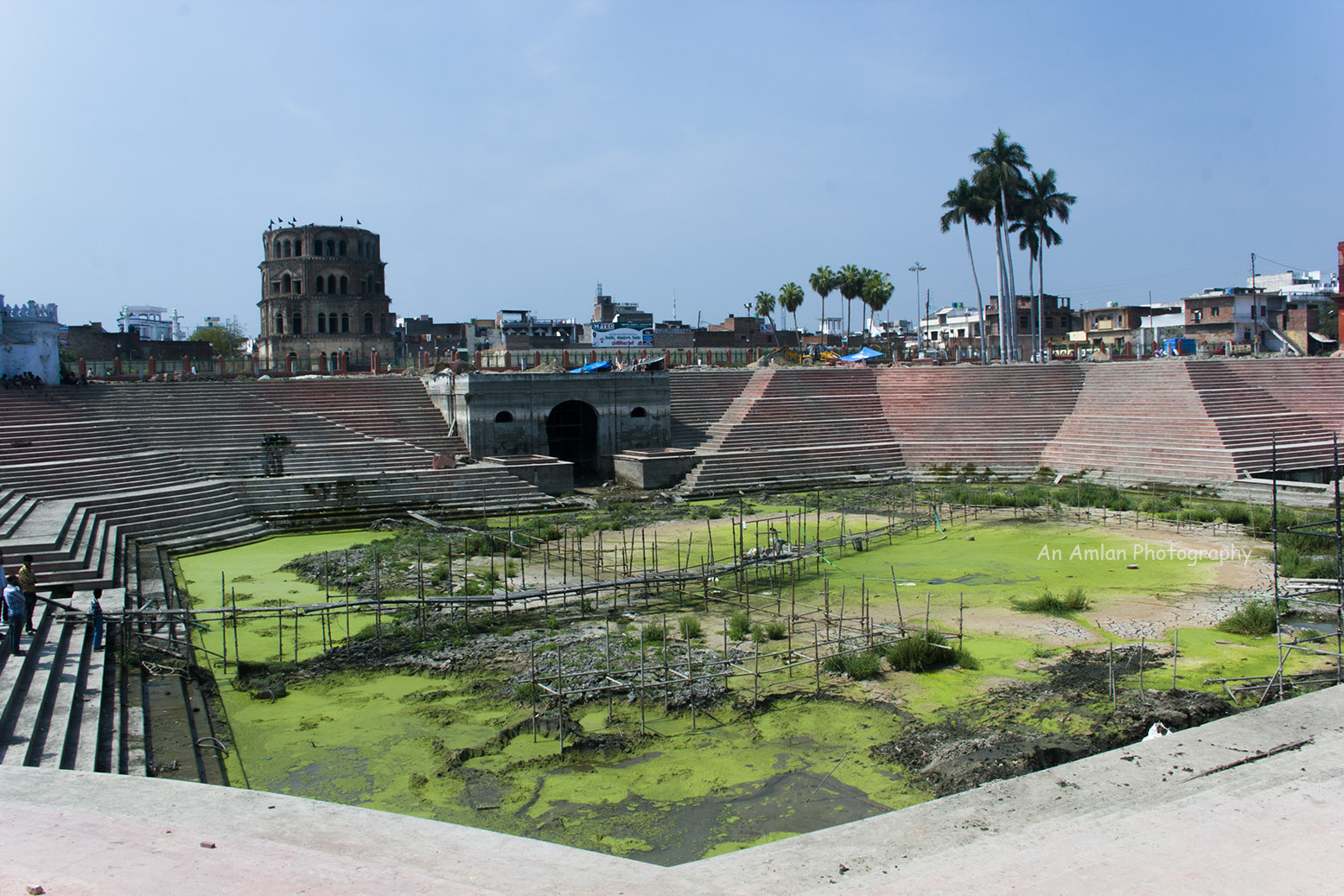
Satkhanda is located on the north to Hussainabad Tank and some historians think that it was built to observe moon during the holy month of Ramzan.
Picture Gallery:
Picture gallery or Baradari was constructed by Lakhuri Brick. When I visited there, it was closed.
Clock Tower:
Clock Tower or Ghanta Ghar is the largest clock tower of India. It was built in 1881 to mark the arrival of Sir George Couper, the 1st Lieutenant Governor of Awadh.
A Living Heritage Walk
Chhota Imambara and the Hussainabad Complex complete the story that began at Bara Imambara.
If the first was about structural genius, the second is about decorative brilliance.
Together, they define Lucknow’s architectural heritage, its cultural pride, and its refined Awadhi elegance.
As I stood between the water channel and the glowing façade of Chhota Imambara, I felt that the Gomti was still speaking.
And the story of Lucknow was not over yet. Next part: Lucknow Tour: Part 3 – Residency: The silent witness of Sepoy Mutiny
Reference:
- Monuments of Lucknow by R S Fonia (published by Archaeological Survey of India)
 The Tramp
Nice Blog! Great Information Dear, Thank you so much for sharing. I am also write article on Rahu Kaal Today topic, it is amazing topic retated to Hindu Astrology. Dear, if you are interested please check my site mpanchang.
LikeLike
[…] Second part of the day is mentioned here: Lucknow Tour: Part 2 – Hussainabad Imambara (Chhota Imambara), Clock Tower, Picture Gallery an… […]
LikeLike
[…] Lucknow Tour: Part 2 – Hussainabad Imambara (Chhota Imambara), Clock Tower, Picture Gallery and Hu… […]
LikeLike
[…] my previous posts, I shared the detailed stories of Bara Imambara, Chhota Imambara, and the Residency. This two-day Lucknow itinerary is a simple guide. No deep architectural […]
LikeLike